Chunky Crochet Blanket for Beginners: Easy One-Stitch Pattern
Make a cozy chunky crochet blanket with one easy stitch. Includes three sizes, yarn estimates, a simple border and how to work out your own stitch count for any size.
By AlixaPublished 10 min read
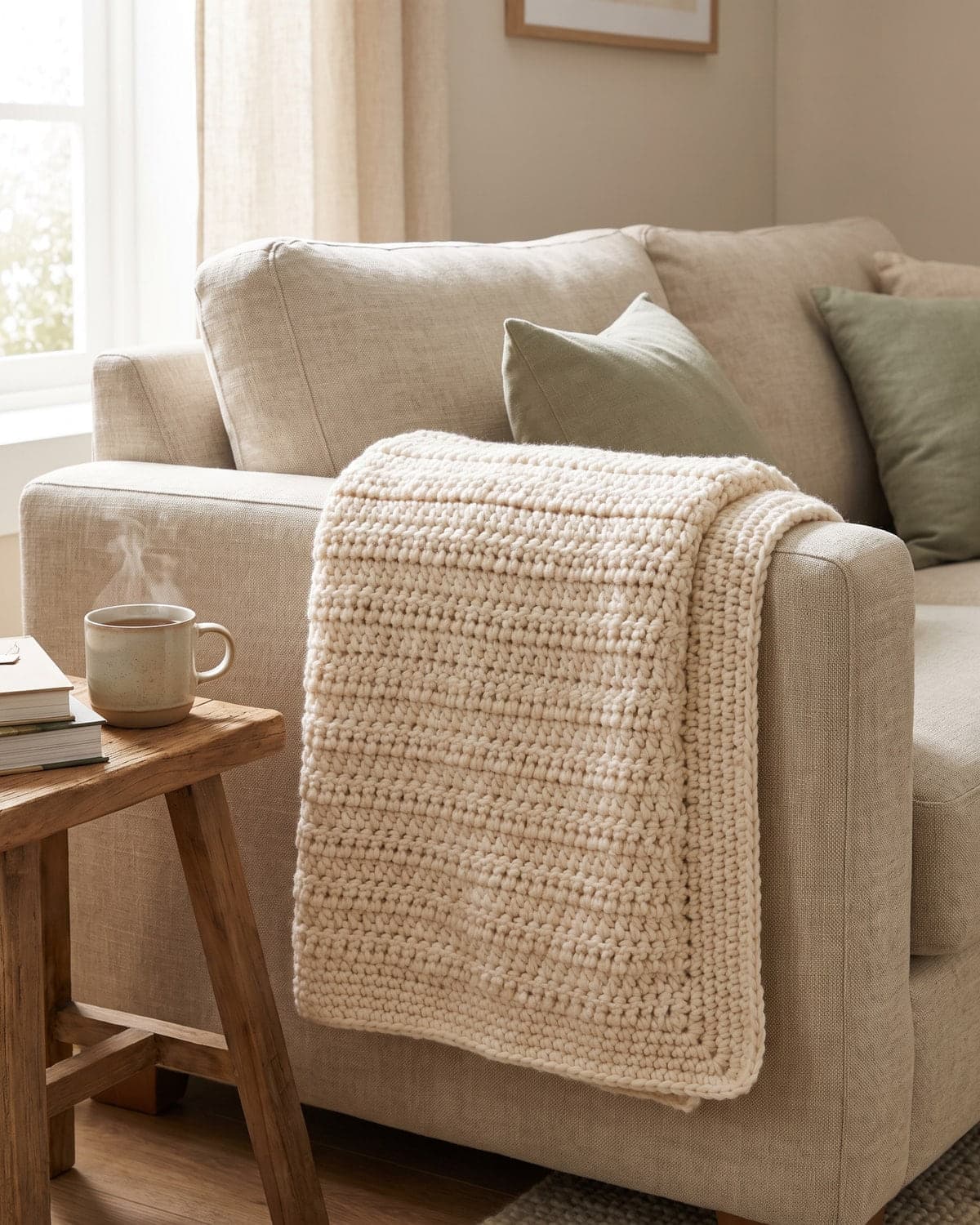
A chunky crochet blanket is one of the most satisfying first big projects. Thick yarn and a large hook mean every row adds real length, the stitches are easy to see, and small wobbles disappear into the texture. This tutorial uses one stitch from the first row to the last, so if you can make a chain and a half double crochet, you can make this blanket.
Terms used here: US crochet terms. Half double crochet (hdc) is called half treble (htr) in UK terms.
A note on numbers: the stitch counts below come from the stated gauge by simple arithmetic. Yarn amounts are estimates, and they vary a lot between yarns and crocheters. The section on working out your own numbers shows how to check both before you buy a full blanket's worth of yarn.
At a glance
| Skill level | Beginner |
| Stitch | Half double crochet in rows |
| Yarn | Super bulky (weight 6) |
| Hook | 10 mm (US N/P-15) |
| Example gauge | About 8 hdc and 6 rows to 10 cm (4 in) |
| Sizes | Baby, lap throw, sofa throw (easy to adjust) |
What you need
- Super bulky yarn, marked with a 6 on the label. See the estimates below for how much.
- A 10 mm crochet hook (US N/P-15). Wooden or plastic hooks are lighter in the hand at this size.
- Scissors.
- A large-eyed tapestry needle, big enough for thick yarn. If you can't find one, you can weave ends in with a smaller crochet hook.
- A tape measure.
- Stitch markers (optional), to mark the first stitch of each row.
Choosing yarn for a chunky blanket
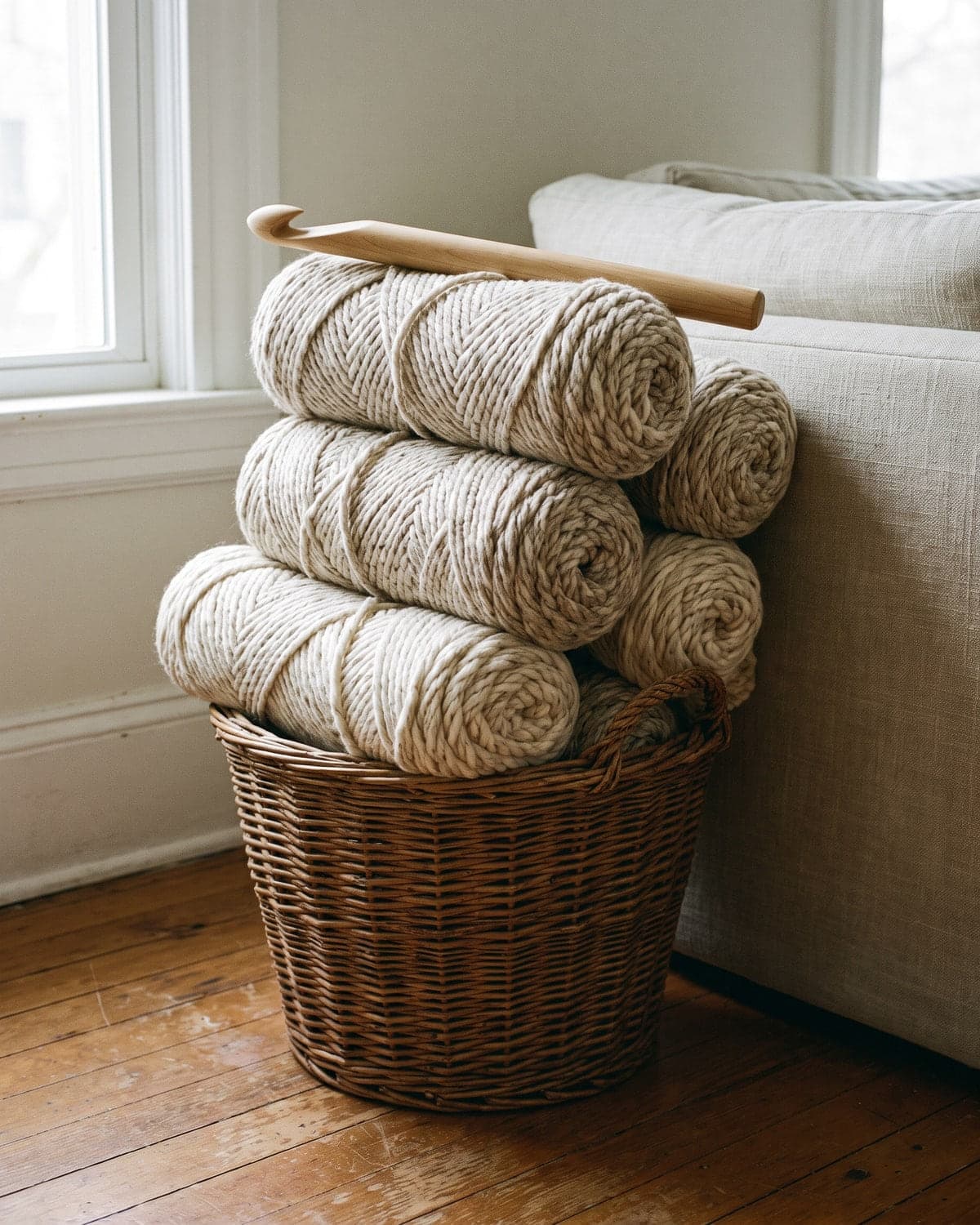
The label's weight number is the thing to check. Super bulky is weight 6 in the Craft Yarn Council's yarn weight system. Within that, fibre changes how the blanket behaves:
- Acrylic is affordable, light and machine washable. A good choice for a first blanket and for anything a child or pet will use.
- Wool and wool blends are warmer and springier, and usually more expensive. Check the washing instructions; many need a gentle cycle or hand washing.
- Chenille or velvet-style yarn is very soft, but its stitches are hard to see and it can "worm" (loops popping out). It's better as a second project.
- Cotton is heavy at this thickness. A cotton super bulky blanket can stretch under its own weight.
Pick a smooth, plied yarn in a light or mid colour for your first one. You'll see each stitch clearly and find your place easily.
Buy all the yarn at once, and check that the dye lot numbers on the labels match. Skeins from different dye lots can differ slightly in shade, and it shows as a stripe across a plain blanket.
How much yarn will you need?
These are estimates for plain half double crochet in super bulky yarn at the example gauge. Your yarn, hook and tension will change them.
| Size | Finished size | Estimated yarn |
|---|---|---|
| Baby | 75 × 90 cm (30 × 36 in) | 320 to 410 m (350 to 450 yd) |
| Lap throw | 100 × 125 cm (40 × 50 in) | 640 to 820 m (700 to 900 yd) |
| Sofa throw | 125 × 150 cm (50 × 60 in) | 960 to 1,190 m (1,050 to 1,300 yd) |
Always buy one skein more than you think you'll need. Most shops take back unused skeins with a receipt, and running out near the end is far more annoying than returning one.
Gauge, and why it matters less here
Gauge is how many stitches and rows fit into a 10 cm (4 in) square. For a blanket, nothing has to fit a body, so a slightly different gauge only changes the finished size and how much yarn you use.
The example gauge is about 8 hdc and 6 rows to 10 cm (4 in). To check yours:
- Chain 14. Work hdc in the 3rd chain from the hook and in each chain across (12 stitches).
- Work 8 more rows of hdc.
- Lay the swatch flat without stretching it. Measure how many stitches fit across 10 cm (4 in) in the middle, and how many rows fit in 10 cm (4 in) of height.
If the fabric feels stiff, go up a hook size. If it's floppy and full of gaps, go down one. A blanket should drape, not stand up on its own.
The half double crochet stitch
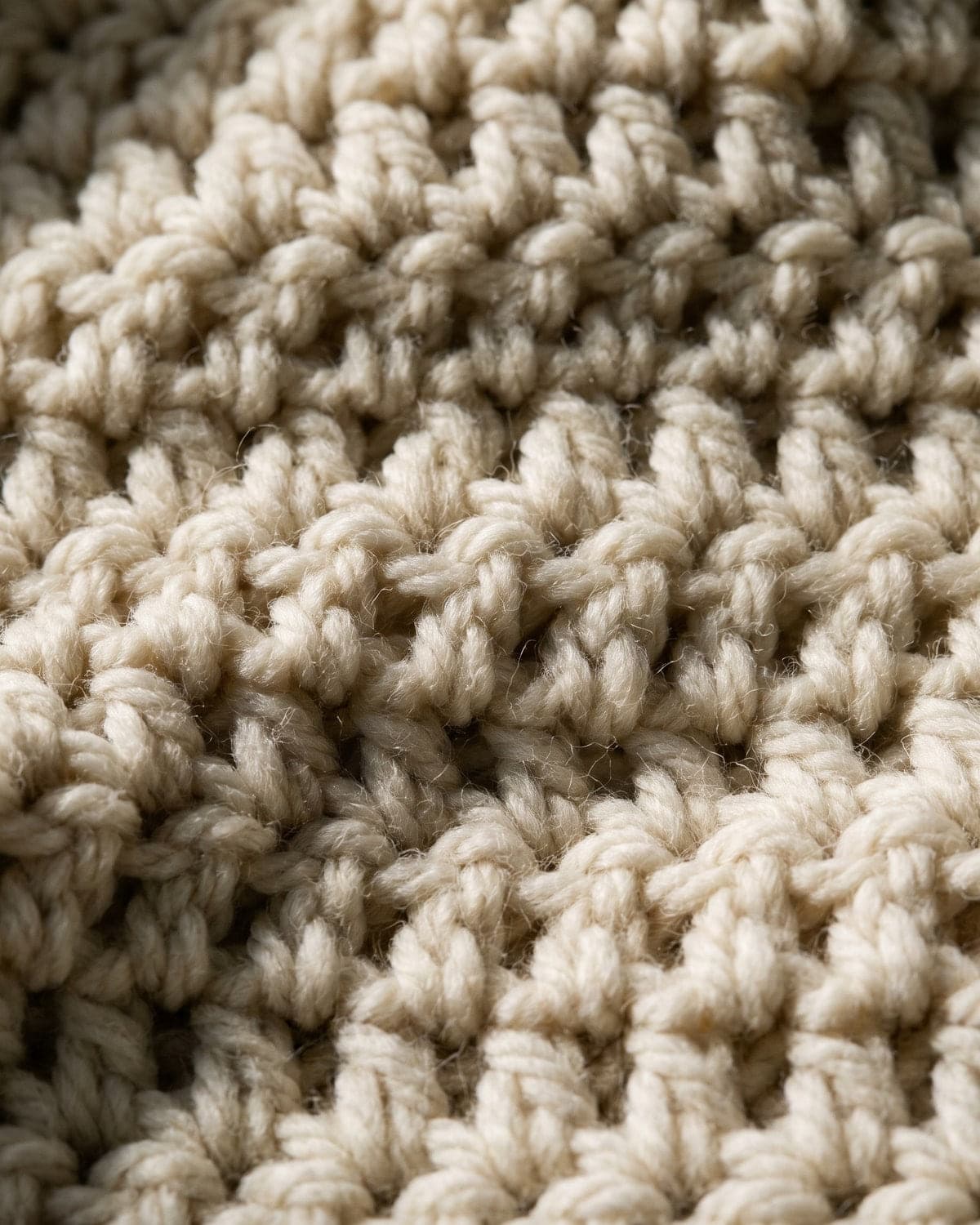
If you need a refresher, half double crochet goes like this:
- Yarn over.
- Insert the hook into the stitch.
- Yarn over and pull up a loop. You have three loops on the hook.
- Yarn over and pull through all three loops.
There's more detail, and a comparison with the other basic stitches, in easy crochet stitches for beginners.
Chunky crochet blanket pattern
Pattern notes
- The chain 2 at the start of each row does not count as a stitch.
- The first hdc of every row goes into the very first stitch, at the base of the chain 2.
- The stitch count stays the same on every row.
Stitch counts for each size
| Size | Foundation chain | Stitches per row | Approximate rows |
|---|---|---|---|
| Baby, 75 × 90 cm (30 × 36 in) | 62 | 60 | 54 |
| Lap throw, 100 × 125 cm (40 × 50 in) | 82 | 80 | 75 |
| Sofa throw, 125 × 150 cm (50 × 60 in) | 102 | 100 | 90 |
The row numbers are approximate on purpose. Stop when the blanket is the length you want.
Foundation
Chain the number for your size. Keep the chain loose. If your chains tend to be tight, make them with a 12 mm hook and switch back to the 10 mm for Row 1. A tight foundation pulls the bottom edge in, and it's the one thing you can't fix later.
Row 1
Hdc in the 3rd chain from the hook, then hdc in every chain to the end. Count your stitches. You should have 60, 80 or 100, depending on your size.
Counting 80 stitches is easier if you clip a stitch marker into every 20th stitch as you go.
Row 2
Chain 2 and turn. Hdc in the first stitch and in each stitch across. Count again.
Repeat
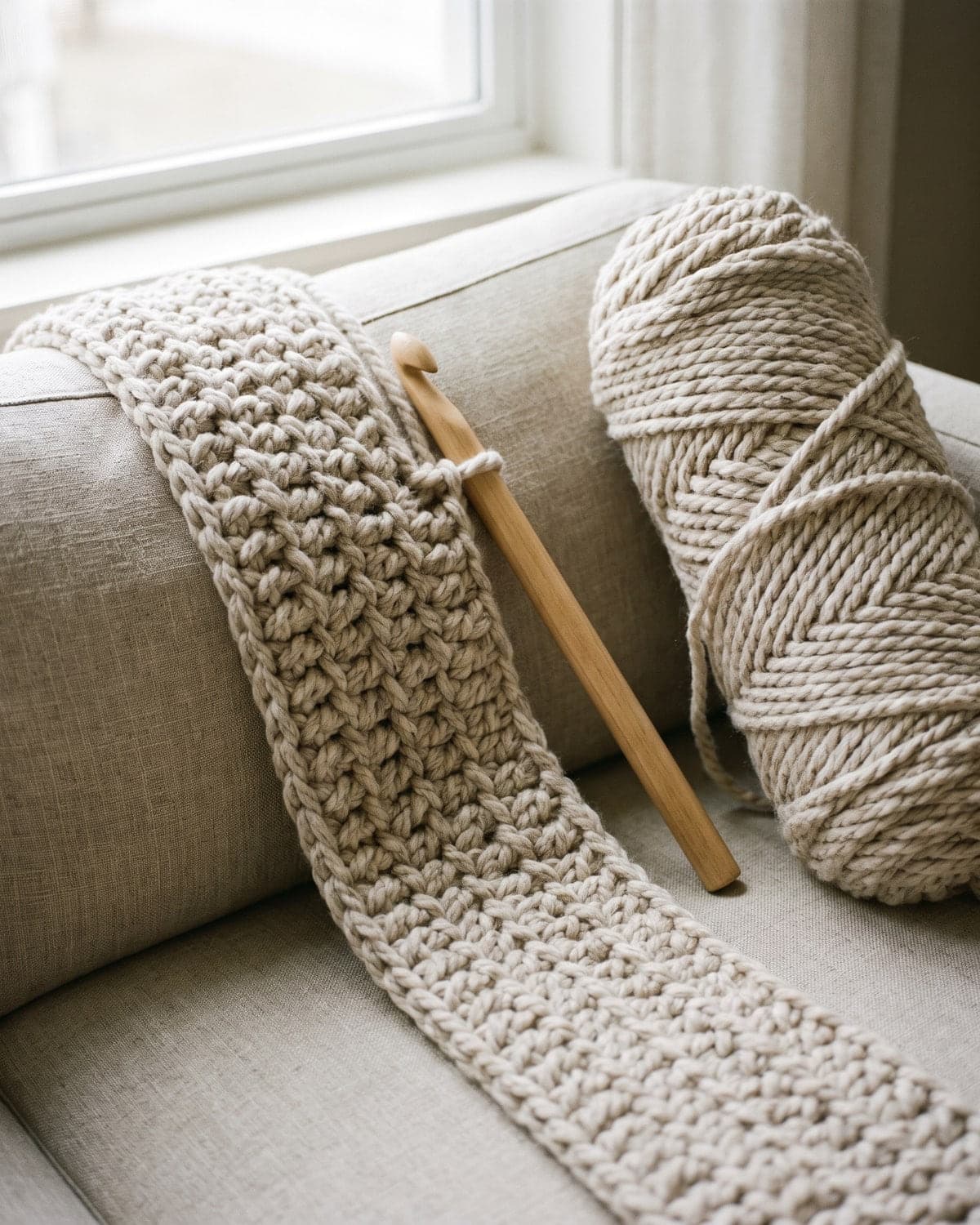
Repeat Row 2 until the blanket reaches the length you want. Measure it lying flat, not hanging from your hands, because chunky fabric stretches under its own weight.
Joining a new skein
When about 15 cm (6 in) of the old yarn is left, start the next hdc as normal and stop when three loops are on the hook. Drop the old yarn, yarn over with the new one, and pull it through all three loops. Carry on with the new yarn. Leave both tails long enough to weave in.
Joining at the end of a row hides the change best. If you join mid-row, weave the two tails in opposite directions.
Finishing
When the blanket is long enough, cut the yarn leaving a 20 cm (8 in) tail. Yarn over and pull the tail right through the loop on your hook.
Adding a simple border (optional)
A border straightens the sides and gives the blanket a finished frame. One round of single crochet is enough.
- Don't fasten off after the last row. Chain 1, and don't turn.
- Work 3 sc into the corner stitch.
- Work down the side of the blanket, placing your stitches into the ends of the rows. For half double crochet, about 3 sc for every 2 rows usually lies flat. If the edge ruffles, use fewer; if it pulls in, use more.
- Put 3 sc in each corner.
- Along the bottom, work 1 sc into the underside of each foundation chain. Along the top, work 1 sc into each stitch.
- Join to the first sc with a slip stitch and fasten off.
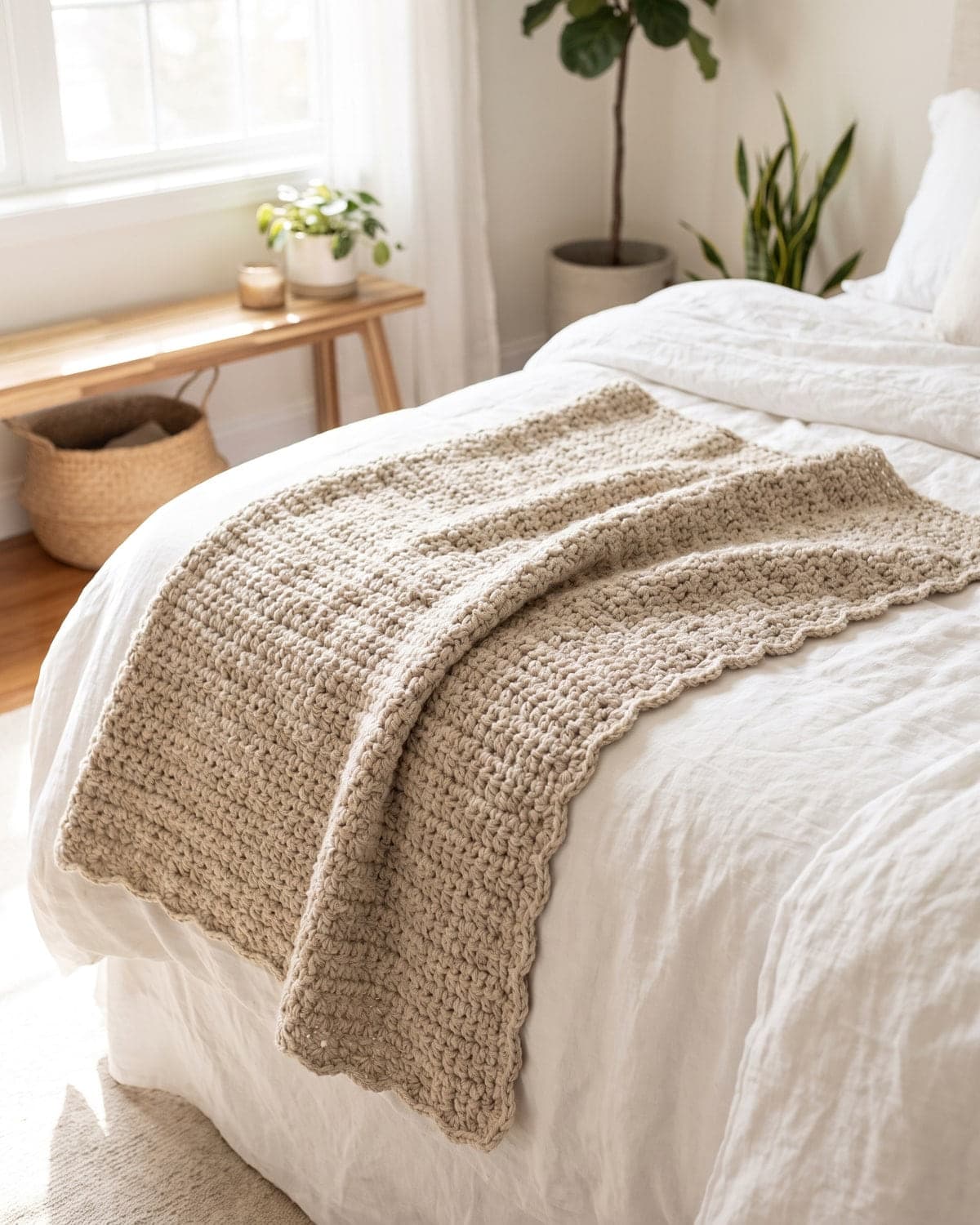
Weaving in ends in thick yarn
Thick yarn ends are slippery and bulky, so give them extra length. Thread the tail onto your needle and run it through the centre of the stitches along a row for about 10 cm (4 in), then turn and go back in the opposite direction for 5 cm (2 in) through a neighbouring row. Trim close to the fabric and stretch the area gently so the cut end disappears.
How to work out your own numbers
You can make this blanket in any size, with any thick yarn, using two measurements from your gauge swatch.
Stitches to chain:
- Count how many stitches fit in 10 cm (4 in) of your swatch.
- Divide by 10 to get stitches per centimetre (or by 4 for stitches per inch).
- Multiply by the width you want.
- Add 2 for the foundation chain.
Example: 8 stitches in 10 cm is 0.8 per centimetre. For a 100 cm wide throw, 0.8 × 100 = 80 stitches, so chain 82.
Yarn needed:
- Weigh your finished swatch on kitchen scales.
- Measure its width and height and multiply them to get its area.
- Work out the area of your planned blanket the same way.
- Divide the blanket's area by the swatch's area, then multiply by the swatch's weight.
That gives the weight of yarn you'll need. Add about 10% for the border, joins and tension changes, then check the skein weight on the label to see how many to buy. This method is more reliable than any chart, because it uses your yarn and your hands.
Tips for straight edges
- Count every row for the first ten rows. After that, count every few rows.
- Mark the first stitch of each row with a stitch marker. When you come back along the next row, the marked stitch is your last one.
- Don't work into the turning chain. In this pattern it isn't a stitch.
- Look for the last stitch. It leans sideways and is easy to miss. If your count is one short, that's where it went.
If you find a mistake several rows down, you have two honest options: pull back to it, or leave it. In a chunky blanket, one missing stitch at the edge is barely visible once there's a border.
Variations
- Stripes. Change colour at the end of a row, using the same method as joining a new skein. Two or four rows per stripe looks tidy, and even-numbered stripes keep all the tails on one side.
- Ribbed texture. Work every row in the back loop only. The blanket becomes stretchier and gets horizontal ridges.
- Moss stitch. Alternating single crochet and chain 1 gives a woven look that drapes well in thick yarn. The pattern repeat is in the stitch guide.
- Tassels or fringe. Cut lengths of yarn, fold a bundle in half, and pull the fold through a corner or edge stitch with your hook. Pass the ends through the fold and tighten.
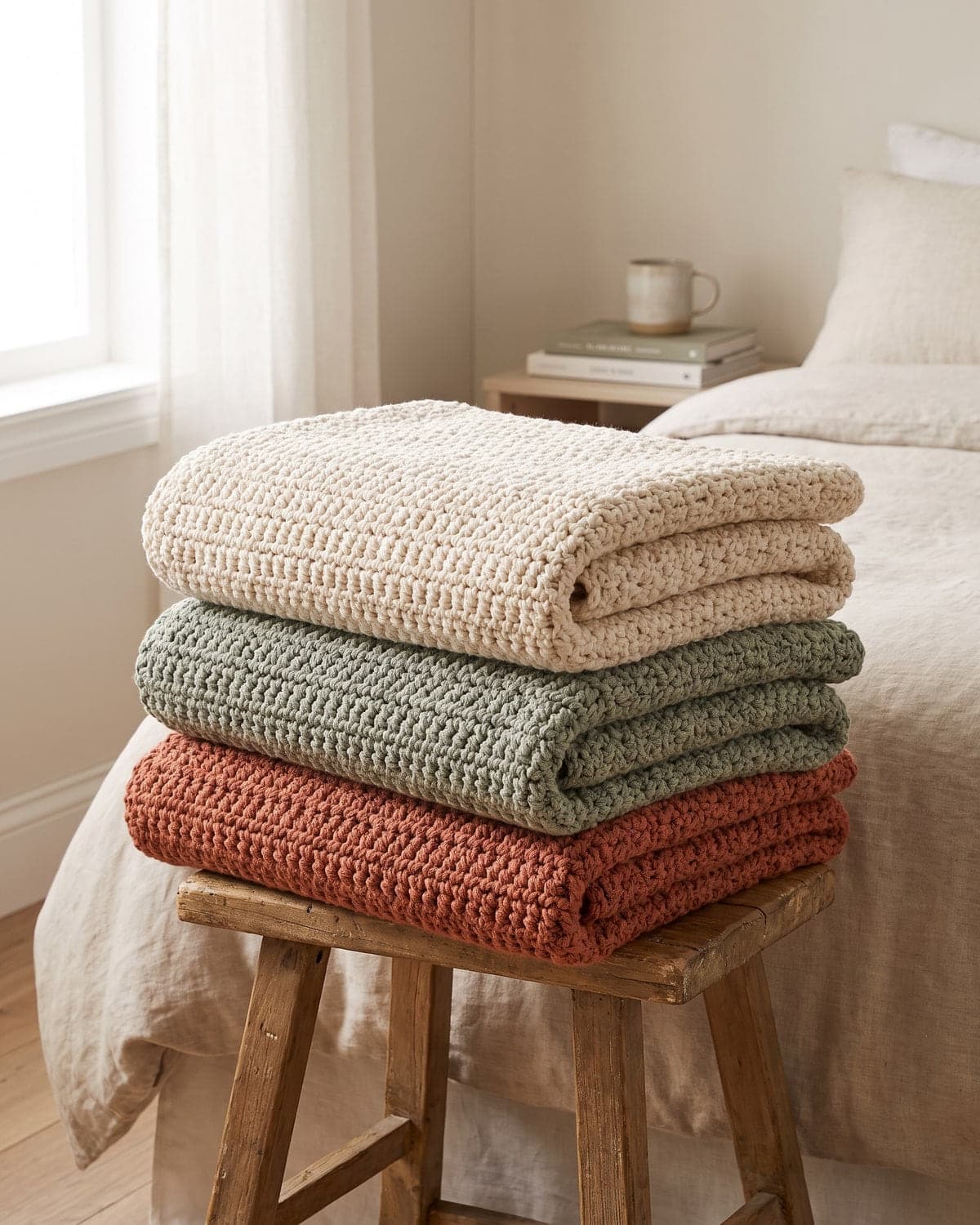
Washing and care
Follow the yarn label first. In general:
- Acrylic blankets can usually be machine washed on a gentle cycle and dried on low heat or flat.
- Wool blankets should be washed cool, by hand or on a wool cycle, and dried flat. Hot water and agitation felt wool.
- Never hang a wet chunky blanket. The weight of the water stretches it. Dry it flat on towels and turn it over halfway.
Frequently asked questions
How long does it take to crochet a chunky blanket? It depends on your speed and the size. Because each row adds more than a centimetre, a lap throw is a realistic project for a few evenings or a couple of weekends.
What's the best stitch for a chunky blanket? Half double crochet is a good balance of speed, warmth and drape. Double crochet is faster but leaves bigger gaps in thick yarn. Single crochet is dense and can feel stiff.
Can I use two strands of thinner yarn instead? Yes. Two strands of weight 4 or 5 yarn held together behave roughly like a super bulky yarn. Make a gauge swatch first, because the result varies.
Why is my blanket getting wider or narrower? The stitch count is changing. Wider means extra stitches, often from working into the turning chain. Narrower means you're missing the last stitch of the row.
Why does the bottom edge curve? The foundation chain is tighter than the rows above it. A border helps a little. Next time, chain with a larger hook.
More blankets and next steps
When you've finished this one, the same rectangle makes a scarf, a baby blanket or a bed runner; only the numbers change. You'll find more ideas in the blankets section, and small projects to use up leftover yarn in home decor.
New to crochet altogether? Start with how to crochet for beginners, then come back and cast on.
Save it for later
Pin this to your Pinterest board so it's there when you're ready to stitch.
Keep stitching
Related crochet projects
Blankets Granny Square Blanket for Beginners: Easy Step-by-Step Pattern
12 min read
Amigurumi Easy Crochet Octopus: Free Amigurumi Pattern for Beginners
10 min read
Clothing Easy Crochet Tote Bag for Beginners: One-Piece Pattern
11 min read
Seasonal Crochet Christmas Ornaments: 4 Easy Patterns for Beginners
12 min read