Easy Crochet Stitches for Beginners: 6 Basics to Learn First
The six basic crochet stitches explained step by step, with turning chains, US and UK names, and three easy stitch patterns: moss stitch, shell stitch and back-loop ribbing.
By AlixaPublished 10 min read
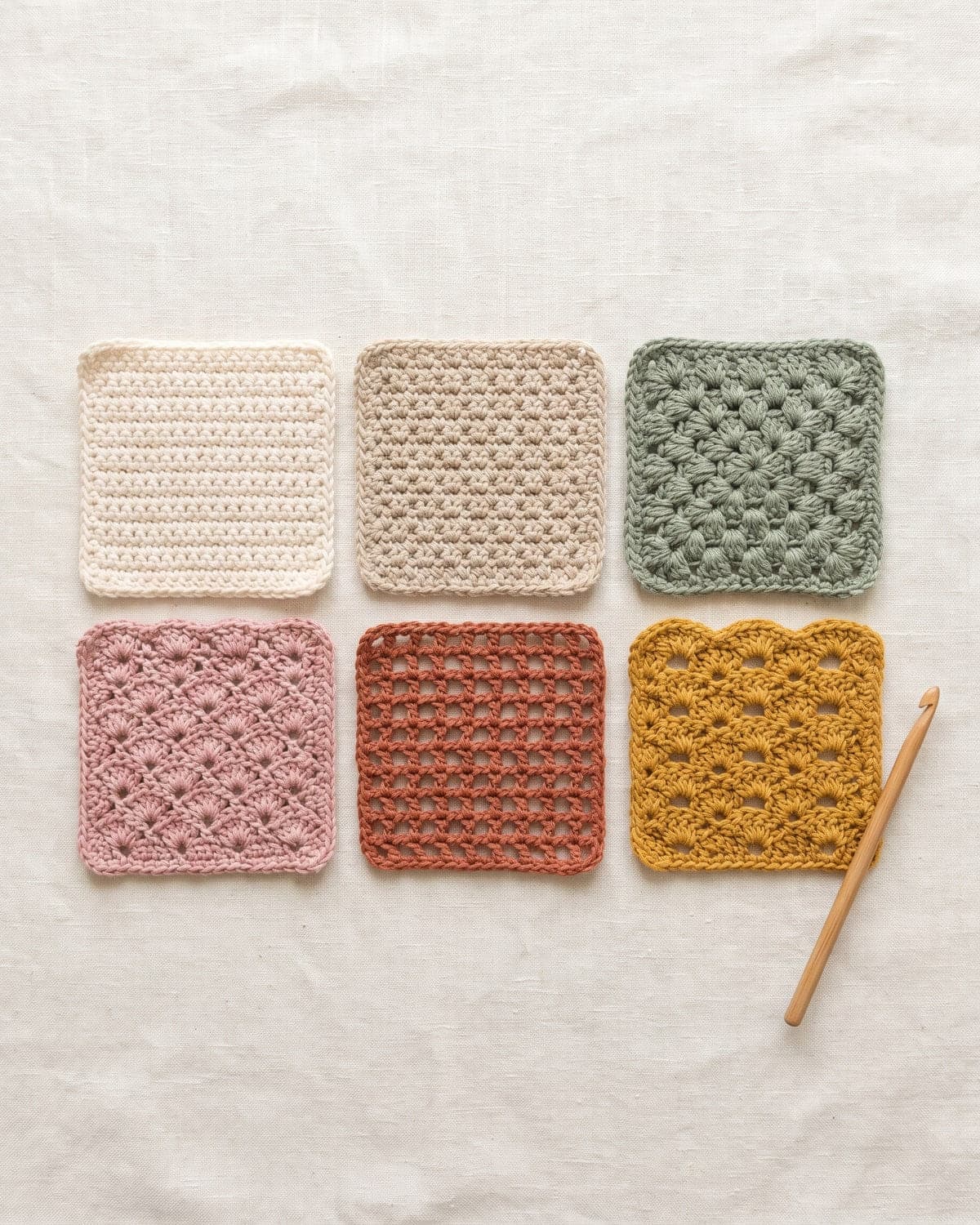
Almost every crochet pattern is built from the same handful of stitches. Learn these and you can read most beginner patterns, make blankets, scarves and dishcloths, and understand how fancier textures are put together.
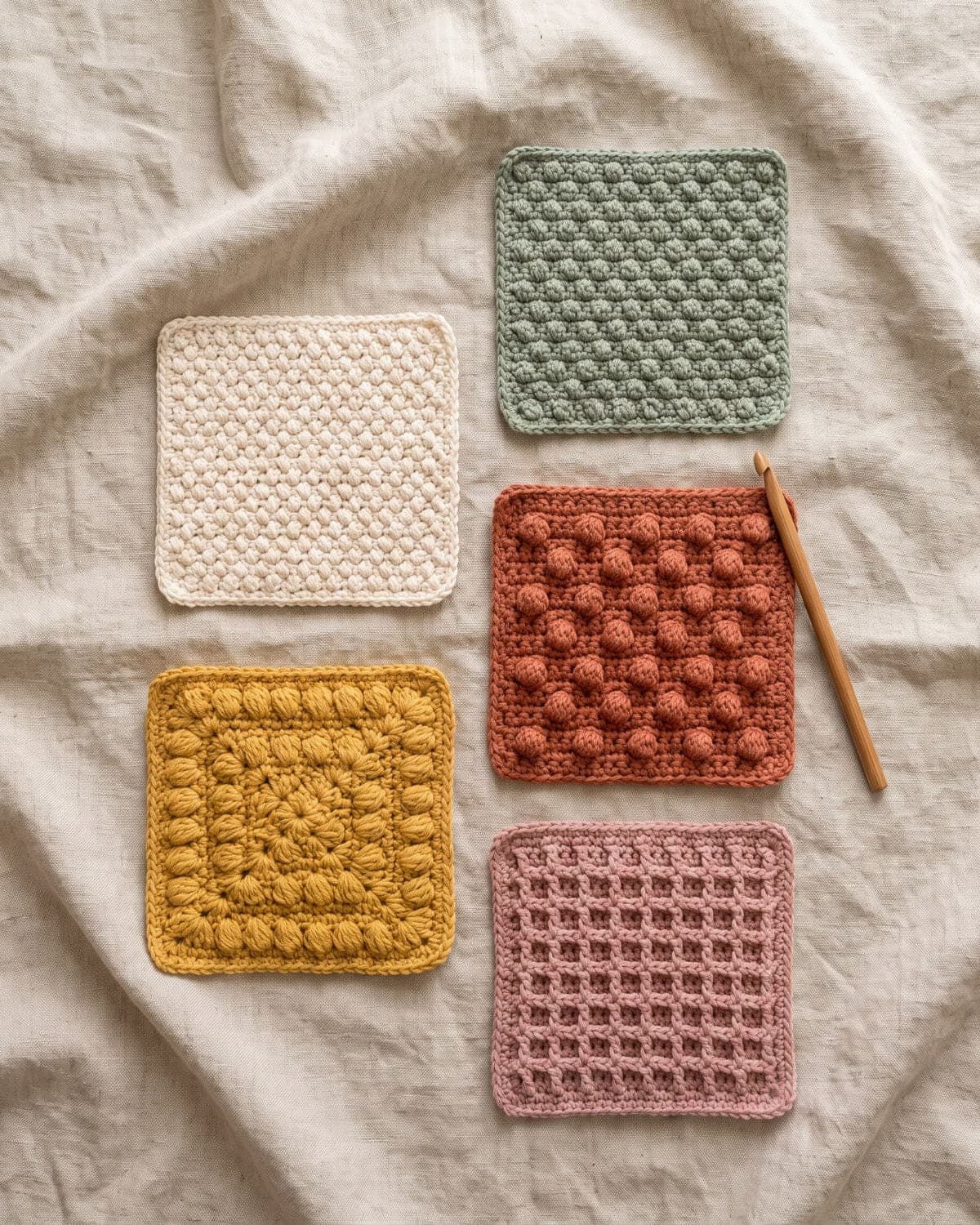
This guide covers the six basic stitches in order of height, then three easy stitch patterns made by combining them: moss stitch, shell stitch and the simple ribbed look you get from working in the back loop.
Terms used here: US crochet terms. UK names are given in brackets, and there's a conversion table further down.
Before you start
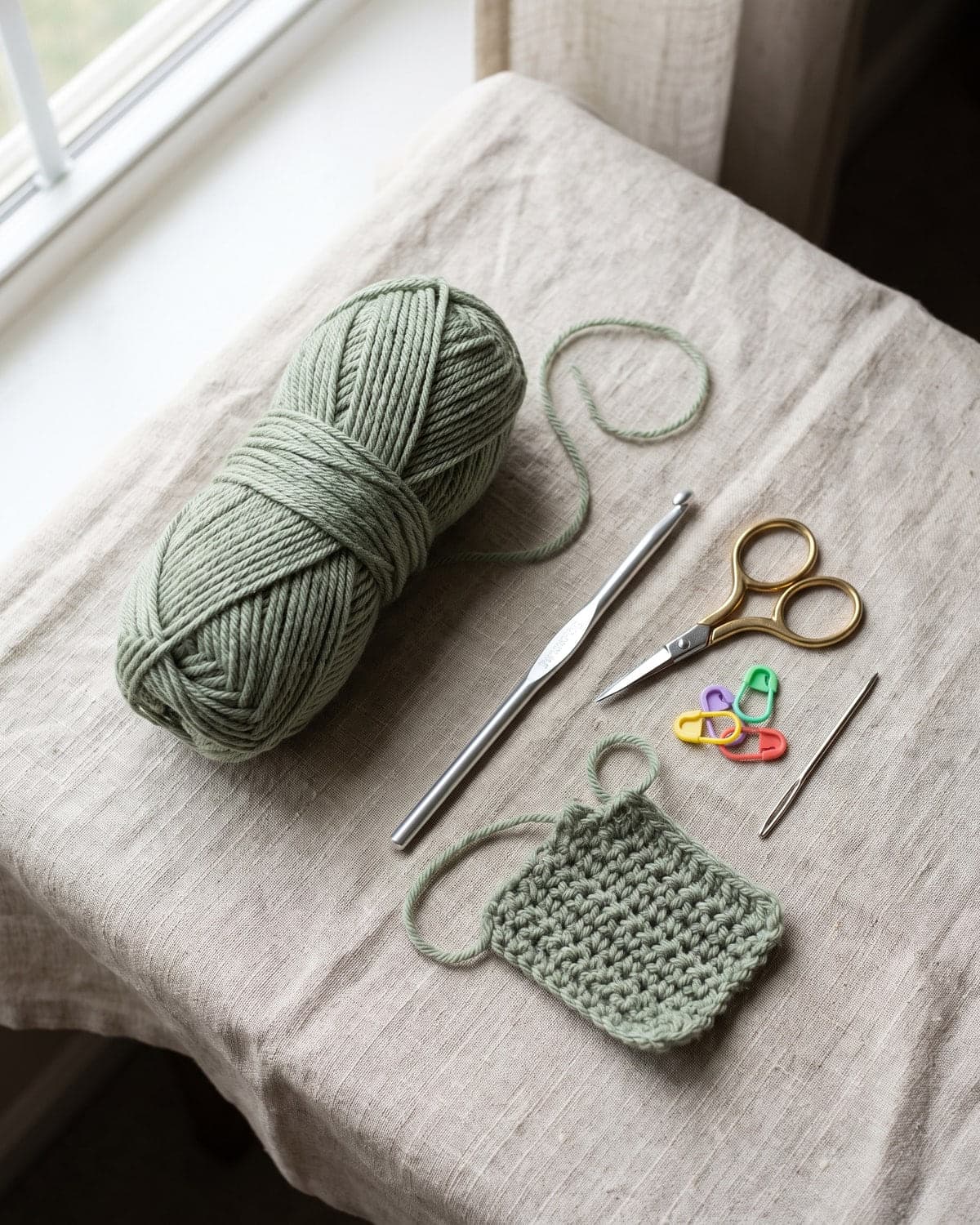
You'll need a ball of smooth, light-coloured medium-weight yarn (weight 4) and a 5 mm (US H-8) hook. If you've never held a hook, begin with how to crochet for beginners, which covers the slip knot, holding the yarn and your first rows.
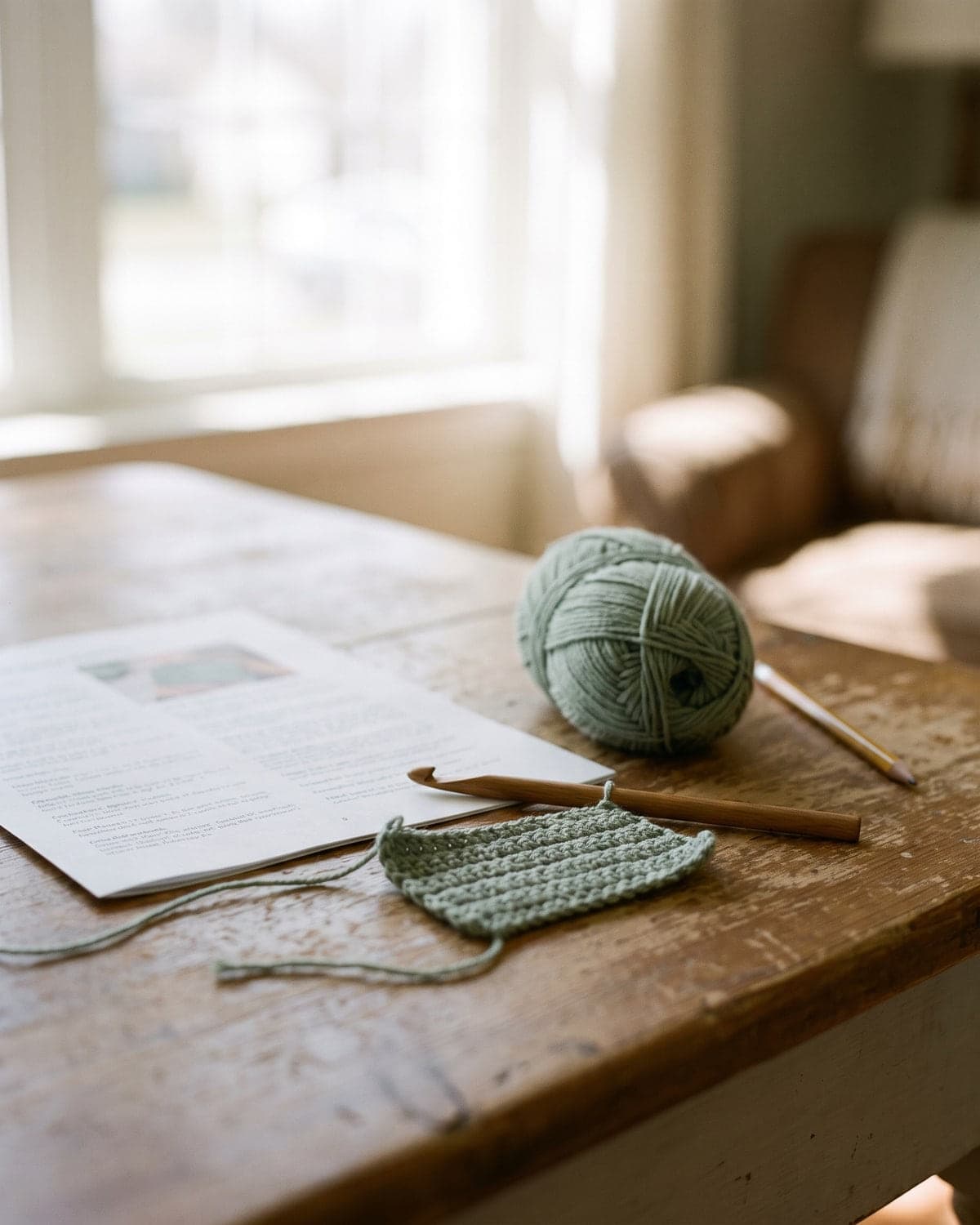
For each stitch below, make a small swatch: chain about 16, work the stitch for ten rows, and count your stitches at the end of every row. A swatch is the fastest way to teach your hands a new movement.
The six basic crochet stitches
1. Chain (ch)
The chain is the starting row of most projects and the "lift" at the start of each new row.
- Yarn over (bring the yarn over the hook from back to front).
- Pull the yarn through the loop on your hook.
Each chain looks like a V from the front. The loop on your hook never counts.
2. Slip stitch (sl st)
The slip stitch is the shortest stitch. It joins rounds, moves the yarn along without adding height, and neatens edges.
- Insert the hook into the stitch.
- Yarn over and pull through the stitch and the loop on your hook in one movement.
3. Single crochet (sc; UK double crochet)
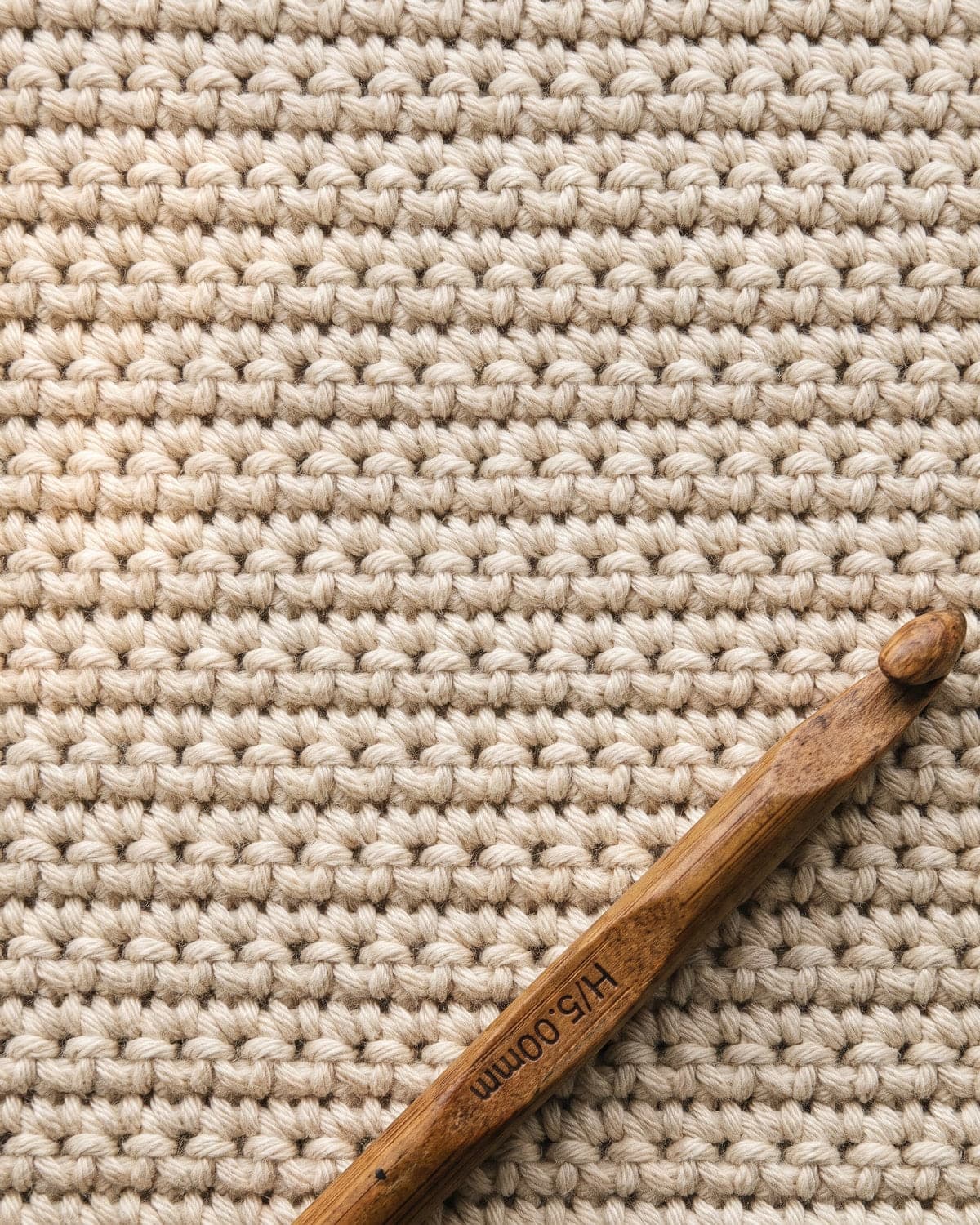
Short, dense and firm. It's the stitch for dishcloths, amigurumi, bags and anything that needs to hold its shape.
- Insert the hook into the stitch.
- Yarn over and pull up a loop. Two loops on the hook.
- Yarn over and pull through both loops.
Turning chain: chain 1. It doesn't count as a stitch, so work your first single crochet into the very first stitch of the row.
4. Half double crochet (hdc; UK half treble)
A little taller than single crochet, with a soft, slightly squishy fabric. It's a favourite for hats and blankets because it's quick but not holey.
- Yarn over.
- Insert the hook into the stitch.
- Yarn over and pull up a loop. Three loops on the hook.
- Yarn over and pull through all three loops.
Turning chain: chain 2. Patterns differ on whether it counts as a stitch. Check the pattern notes. In this guide it doesn't count.
Half double crochet has a "third loop": a horizontal bar just below the top V, on the side facing away from you as you work the stitch. Some stitch patterns use it to create a knit-like ridge.
5. Double crochet (dc; UK treble)
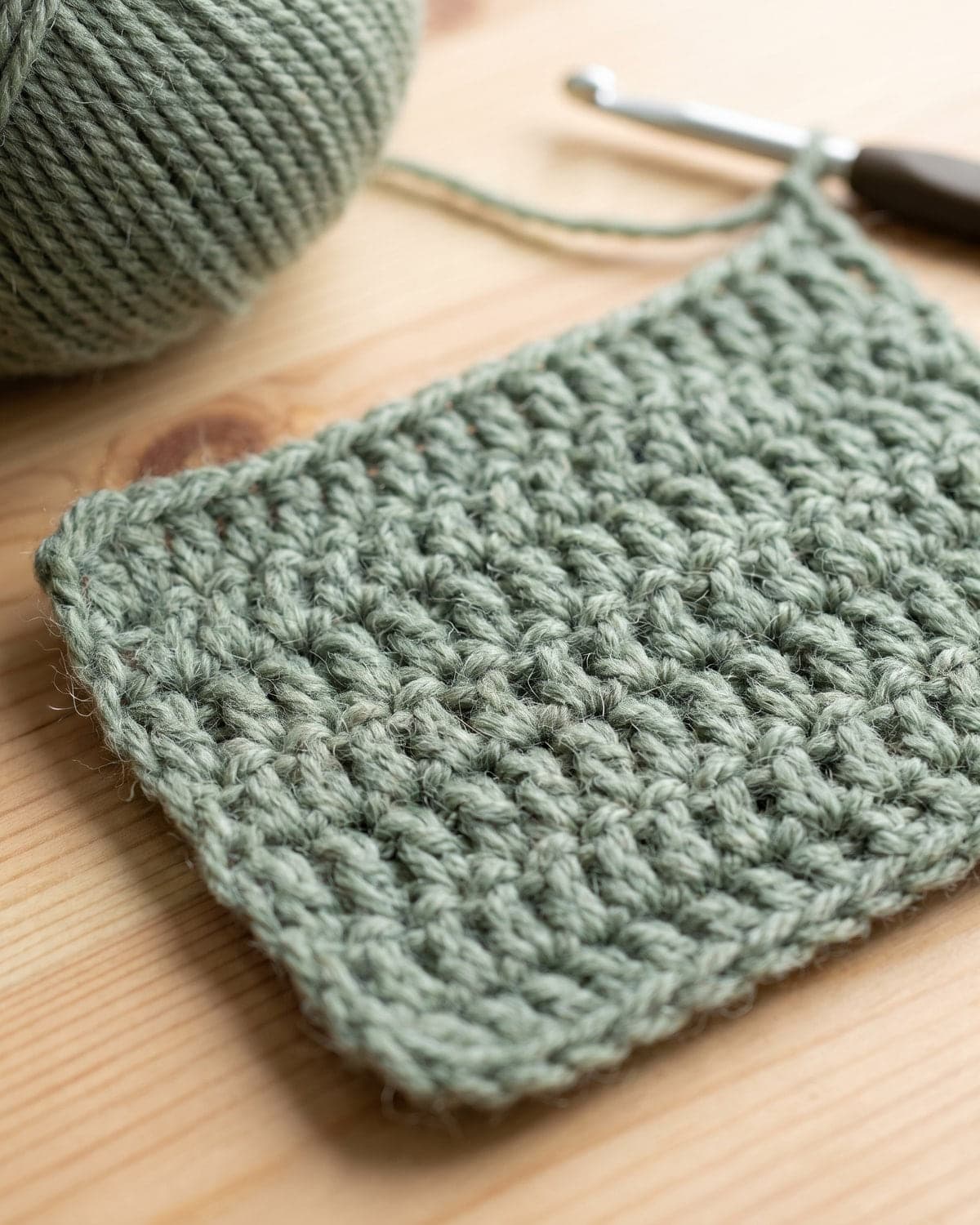
About twice the height of single crochet. It makes a looser, drapier fabric and grows fast, so it's the backbone of blankets, shawls and granny squares.
- Yarn over.
- Insert the hook into the stitch.
- Yarn over and pull up a loop. Three loops on the hook.
- Yarn over and pull through two loops. Two loops remain.
- Yarn over and pull through the last two loops.
Turning chain: chain 3. It usually counts as the first double crochet. That means you skip the first stitch at the base of the chain, and at the end of the row you work your last stitch into the top of the previous row's turning chain. Forgetting that last stitch is the usual reason double crochet rows get shorter.
6. Treble crochet (tr; UK double treble)
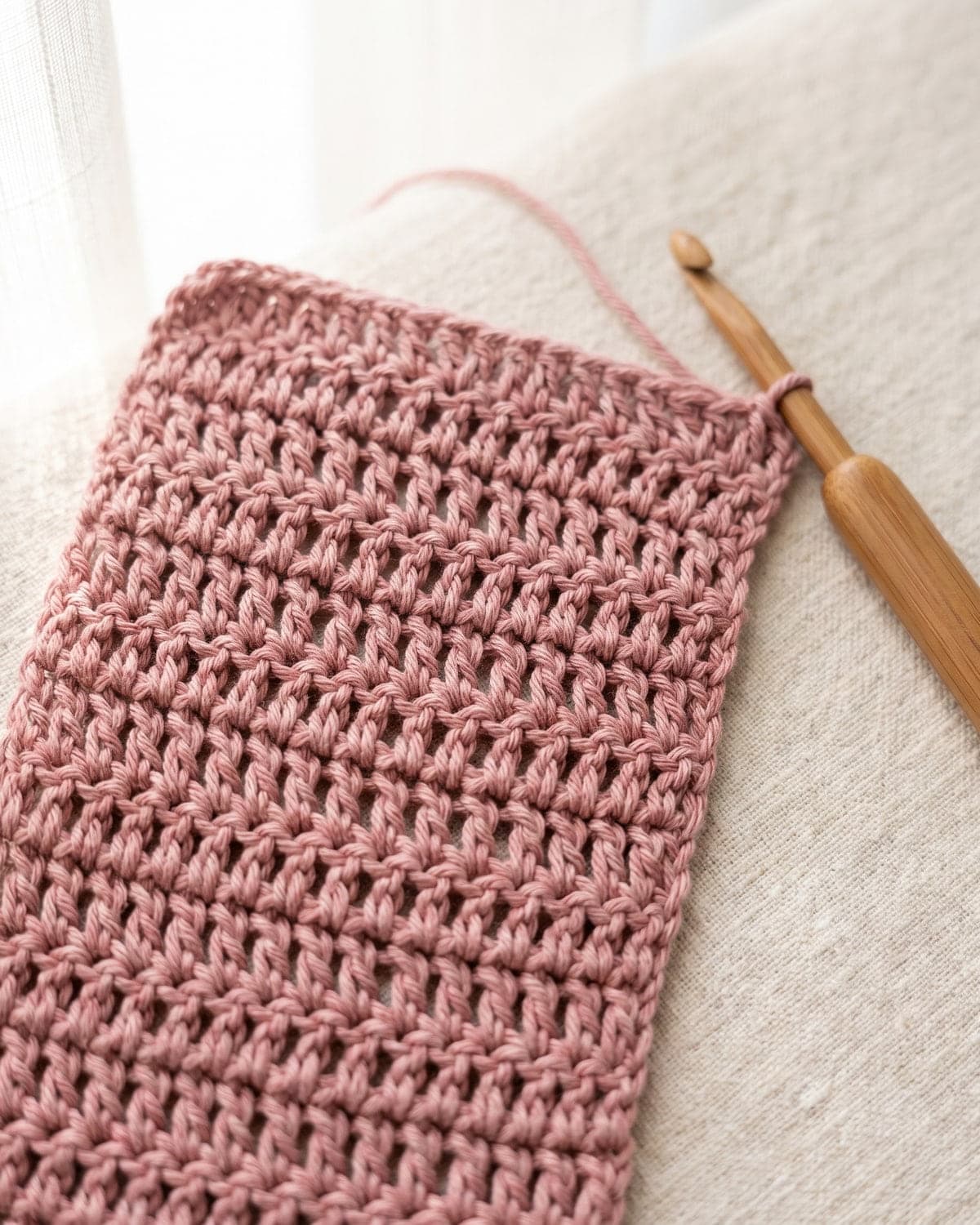
The tallest of the basics. It's open and lacy, and it's used in lace, tall shells and some flower petals.
- Yarn over twice.
- Insert the hook into the stitch.
- Yarn over and pull up a loop. Four loops on the hook.
- Yarn over and pull through two loops, three times in a row, until one loop is left.
Turning chain: chain 4, counted as the first stitch.
Stitch heights and turning chains at a glance
| Stitch (US) | Yarn overs before inserting | Turning chain | Does the chain count as a stitch? |
|---|---|---|---|
| Single crochet | 0 | 1 | No |
| Half double crochet | 1 | 2 | Varies by pattern |
| Double crochet | 1 | 3 | Usually yes |
| Treble crochet | 2 | 4 | Usually yes |
The pattern's notes always overrule this table. Some designers prefer a chain 2 for double crochet, or a chain that never counts, to get straighter edges.
US and UK stitch names
| US term | UK term |
|---|---|
| Slip stitch (sl st) | Slip stitch (ss) |
| Single crochet (sc) | Double crochet (dc) |
| Half double crochet (hdc) | Half treble (htr) |
| Double crochet (dc) | Treble (tr) |
| Treble crochet (tr) | Double treble (dtr) |
UK names are always "one step up" from US names. If a pattern uses the term single crochet, it's in US terms. The Craft Yarn Council's abbreviation list is the standard reference for US patterns.
Where to put your hook
A crochet stitch has a V on top, made of a front loop (nearest you) and a back loop (furthest from you).
- Under both loops is the default. If a pattern doesn't say, do this.
- Back loop only (BLO) leaves the front loop as a visible line across the fabric. Rows of back-loop stitches make a stretchy, ridged fabric that looks like ribbing. It's how cuffs and hat brims are usually made, and it's what gives these easy crochet pumpkins their ridges.
- Front loop only (FLO) leaves the back loop free and makes a softer, drapier fabric.
- Into a space means under a chain or between stitches, not into a loop. Shells and granny clusters are often worked into spaces.
Three easy stitch patterns to try
Each of these uses only stitches from the list above.
Moss stitch (also called linen or granite stitch)
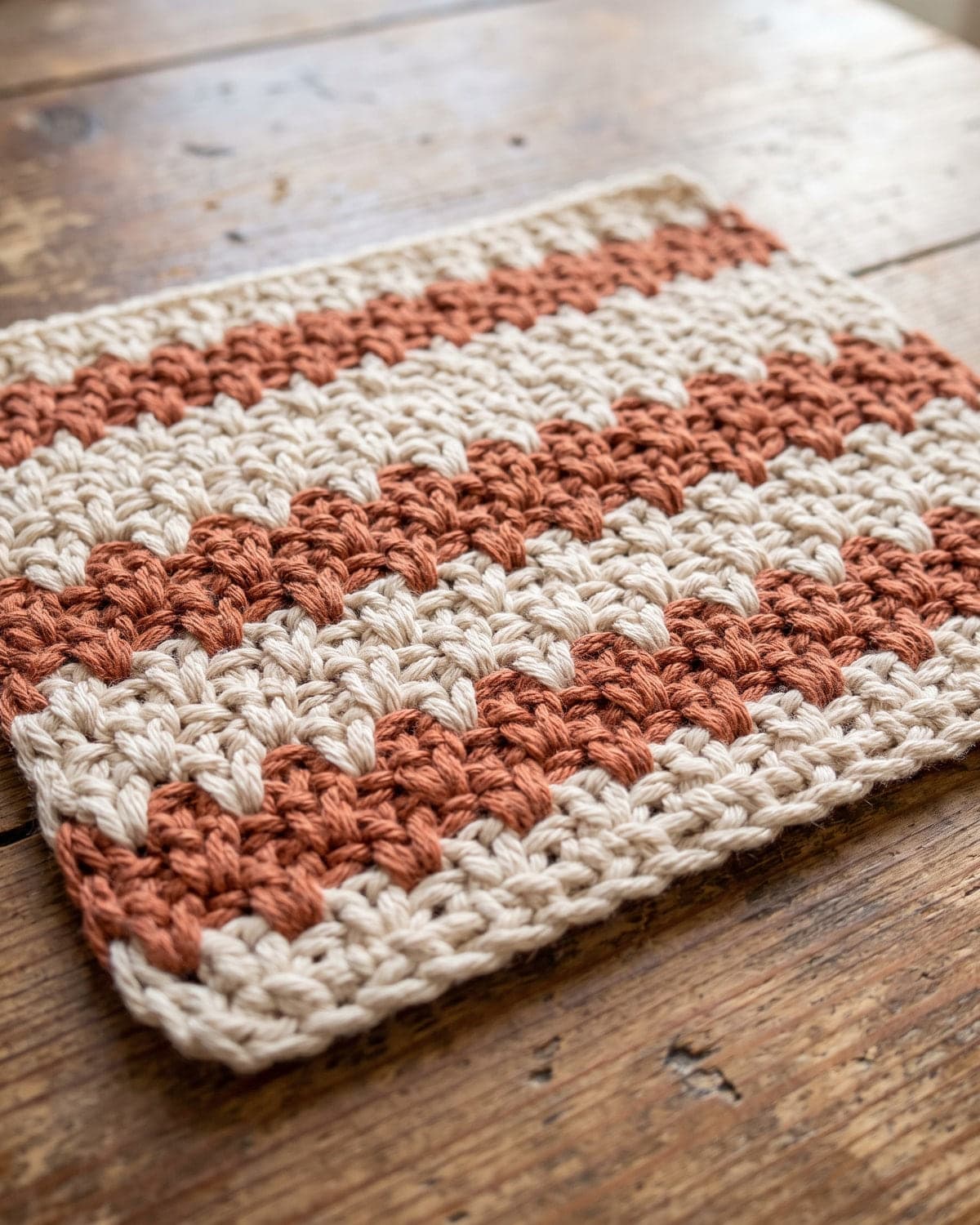
Moss stitch alternates single crochet and chain 1, and each row's stitches sit in the gaps of the row below. The result is a flat, woven-looking fabric with good drape that doesn't curl. It looks lovely in stripes.
Chain an even number.
- Row 1: Sc in the 4th chain from the hook. *Ch 1, skip 1 chain, sc in the next chain; repeat from * to the end.
- Row 2: Ch 2, turn. Sc in the first chain-1 space. *Ch 1, sc in the next chain-1 space; repeat from * across. Work the last sc into the space made by the turning chain.
- Repeat Row 2.
To change colour for stripes, finish the last stitch of a row with the new colour: when two loops remain on the hook, yarn over with the new colour and pull through.
Shell stitch
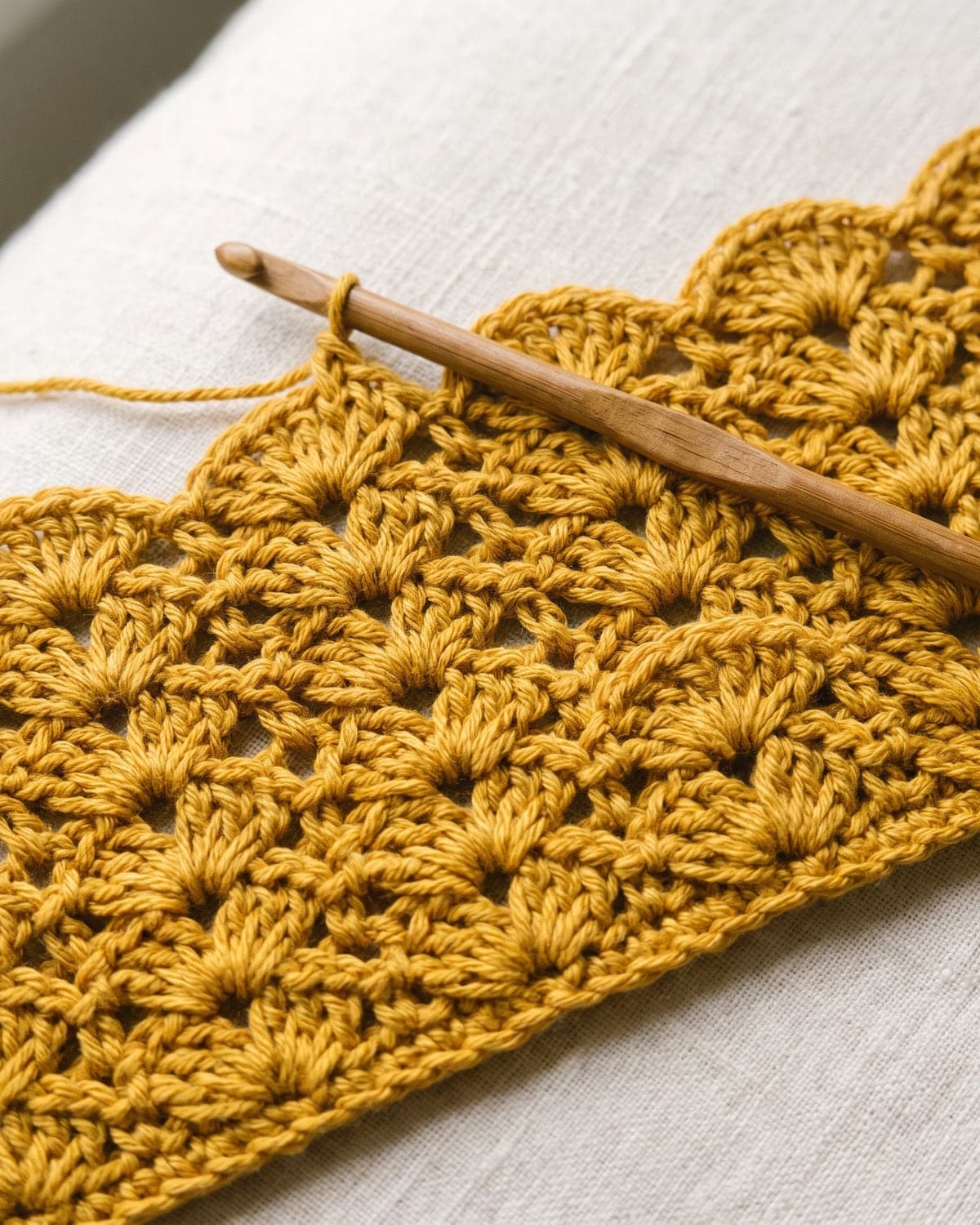
Shells are groups of double crochet worked into one stitch so they fan out. They make a pretty scalloped fabric for baby blankets, shawls and edgings.
Chain a multiple of 6, plus 2 (for example 26 or 32).
- Row 1: Sc in the 2nd chain from the hook. *Skip 2 chains, 5 dc in the next chain, skip 2 chains, sc in the next chain; repeat from * to the end.
- Row 2: Ch 3 (counts as a dc), turn. 2 dc in the first sc. *Skip 2 dc, sc in the next dc (the centre of the shell), skip 2 dc, 5 dc in the next sc; repeat from * across, but finish with only 3 dc in the last sc.
- Row 3: Ch 1, turn. Sc in the first dc. *Skip 2 dc, 5 dc in the next sc, skip 2 dc, sc in the centre dc of the next shell; repeat from * across. Work the final sc into the top of the turning chain.
- Repeat Rows 2 and 3.
The half shells at the start and end of Row 2 keep the edges straight.
Back-loop ribbing
For a stretchy ribbed band, work short rows of single or half double crochet in the back loop only. The band grows sideways, so the number of chains sets the height of the ribbing and the number of rows sets how far it goes around.
- Chain 11.
- Row 1: Sc in the 2nd chain from the hook and in each chain across (10).
- Row 2: Ch 1, turn. Sc in the back loop only of each stitch across (10).
- Repeat Row 2 until the band is the length you need.
Which stitch should you use?
| You want | Good choice | Why |
|---|---|---|
| A firm fabric with no gaps | Single crochet | Dense, holds its shape |
| Warmth without stiffness | Half double crochet | Soft, quick, few gaps |
| Fast progress and drape | Double crochet | Tall stitches, flexible fabric |
| A flat fabric that doesn't curl | Moss stitch | The chains relax the fabric |
| A decorative edge or baby blanket | Shell stitch | Scallops with simple stitches |
| Stretchy cuffs and brims | Back-loop ribbing | Ridges that spring back |
Taller stitches use less time per centimetre but leave bigger gaps. Shorter stitches use more yarn and time for the same area. For a first blanket, half double crochet is a good balance, and it's the stitch used in the chunky crochet blanket for beginners.
Common problems with basic stitches
My rows are getting shorter. You're missing a stitch at one end. In double crochet, it's usually the stitch into the top of the turning chain.
My rows are getting longer. You're adding a stitch, often by working into the base of a turning chain that already counts as a stitch.
My fabric is stiff. Your tension is tight or your hook is too small for the yarn. Go up half a millimetre or a full size.
My fabric is full of holes. Your hook is too large, or you're using a tall stitch where a shorter one would suit. Try half double crochet.
My edges are wavy. Count the stitches in each row for a few rows. Wavy edges are nearly always a changing stitch count.
The sides of my double crochet have gaps. The chain-3 turning chain is thinner than a real stitch. Try chaining 2 instead, or look up "stacked single crochet" once you're comfortable.
How gauge fits in
Gauge is the number of stitches and rows in a measured square, usually 10 cm (4 in). It depends on the stitch, the yarn, the hook and your hands. Two people with the same yarn and hook can easily get different sizes.
For dishcloths and scarves you can ignore it. For anything that needs to fit, make a swatch at least 12 cm (5 in) square, lay it flat without stretching, and count the stitches across 10 cm in the middle. Too many stitches means your work is tight, so use a larger hook. Too few means it's loose, so use a smaller one. The easy crochet cardigan for beginners shows how to turn a gauge swatch into stitch counts for your own measurements.
Frequently asked questions
What is the easiest crochet stitch? Single crochet. It has the fewest steps, and most people learn it straight after the chain.
Which stitch is fastest? Of the basics, treble crochet covers the most height per row, and double crochet is the usual choice for fast blankets.
Which stitch uses the least yarn? Tall, open stitches such as double and treble crochet use less yarn for the same area than dense single crochet.
What's the best stitch for a blanket? Half double crochet, double crochet and moss stitch are all popular: quick, soft and not too holey. See the blankets section for ideas.
How many stitches are there in crochet? Hundreds of named stitch patterns, but nearly all are combinations of the six on this page.
Keep practising
Pick one stitch, make a ten-row swatch, and move on when your stitch count stays the same from row to row. Then try a small project that uses it: easy crochet coasters for double crochet in the round, or easy crochet flowers for mixing stitch heights in a single petal.
More step-by-step guides are in the crochet stitches section.
Save it for later
Pin this to your Pinterest board so it's there when you're ready to stitch.
Keep stitching
Related crochet projects
Crochet stitches Textured Crochet Stitches: 5 Easy Patterns for Beginners
11 min read
Beginner tutorials How to Crochet for Beginners: A Step-by-Step Guide
11 min read
Beginner tutorials How to Read Crochet Patterns: A Beginner's Guide
12 min read
Amigurumi Easy Crochet Octopus: Free Amigurumi Pattern for Beginners
10 min read