Textured Crochet Stitches: 5 Easy Patterns for Beginners
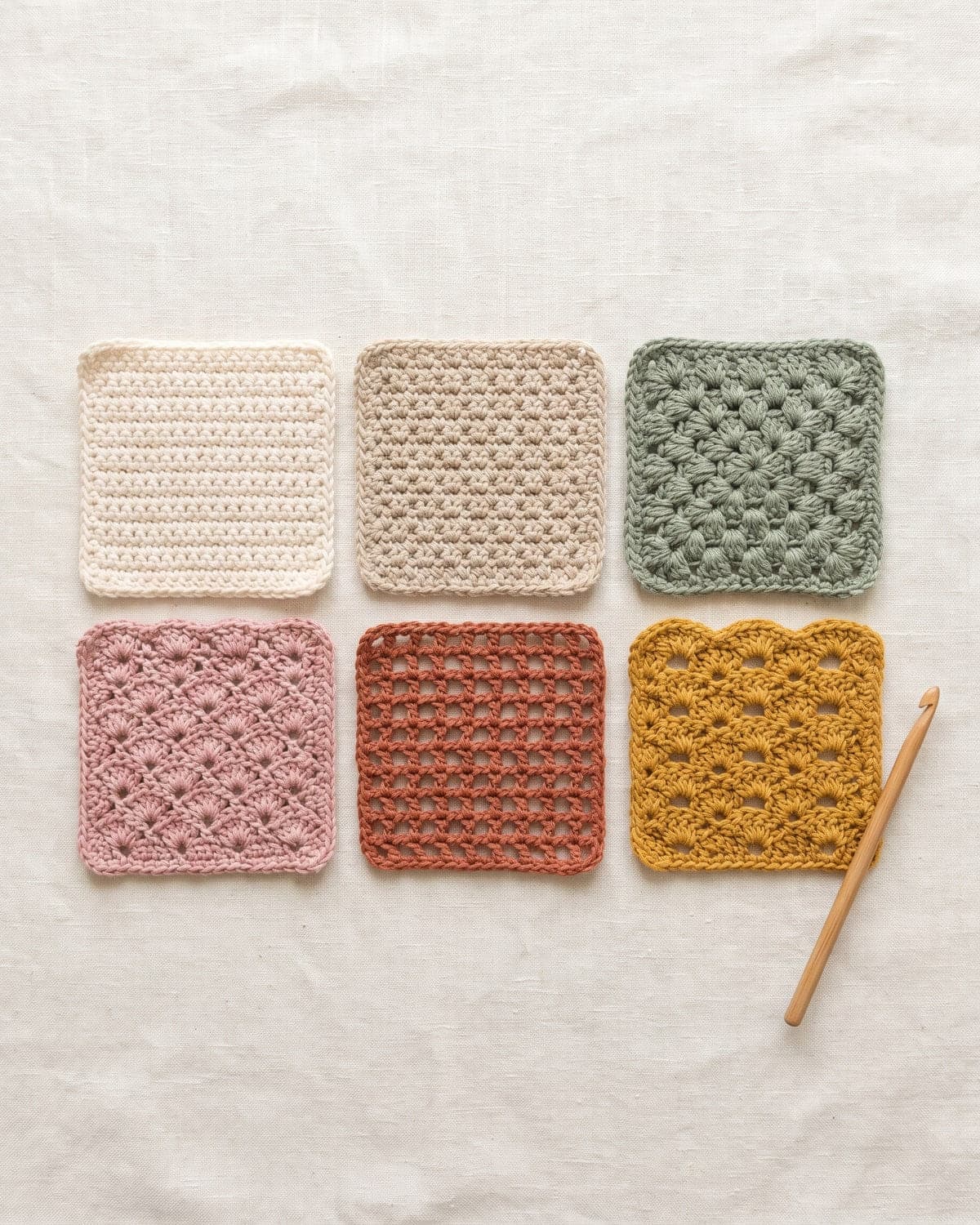
Five easy textured crochet stitches with written patterns and chain multiples: lemon peel, crunch stitch, bobble stitch, puff stitch and waffle stitch, plus what to make with each one.
By AlixaPublished 11 min read
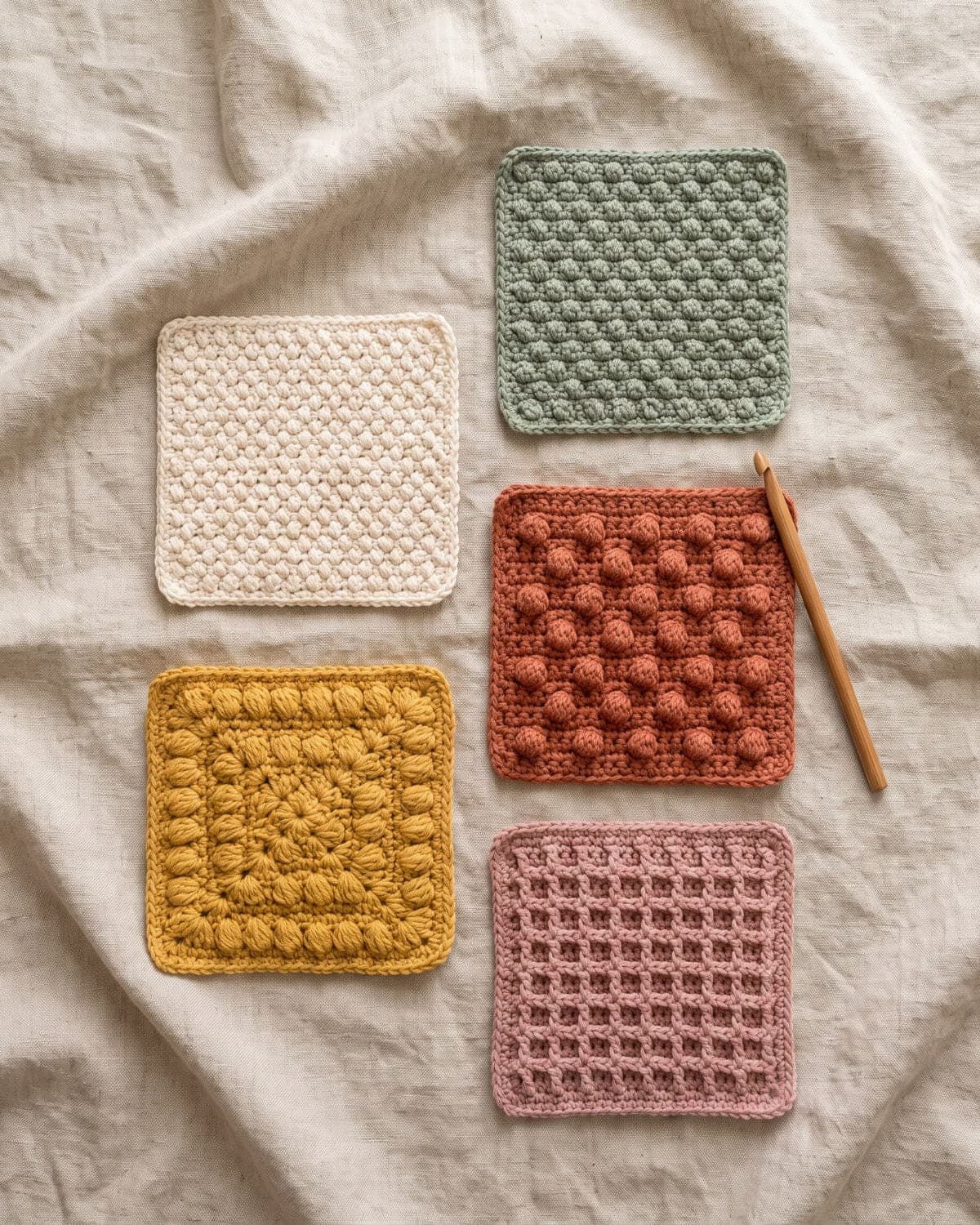
Textured crochet stitches turn a plain rectangle into something you want to touch. Bumps, ridges, bobbles and woven effects look complicated, but each of the stitches in this guide is built from basics you already know: single crochet, double crochet and a yarn over or two.
Here are five textured stitch patterns that suit beginners who are comfortable with the basic stitches, ordered from easiest to most involved: lemon peel, crunch stitch, bobble stitch, puff stitch and waffle stitch. Each has a written repeat, the chain multiple you need, and suggestions for what to make with it.
Terms used here: US crochet terms. In UK terms, single crochet (sc) is double crochet, half double (hdc) is half treble, and double crochet (dc) is treble.
About these stitch patterns: all five are traditional stitches, written out here in our own words. The chain multiples and repeats have been checked so that every row adds up.
Before you start
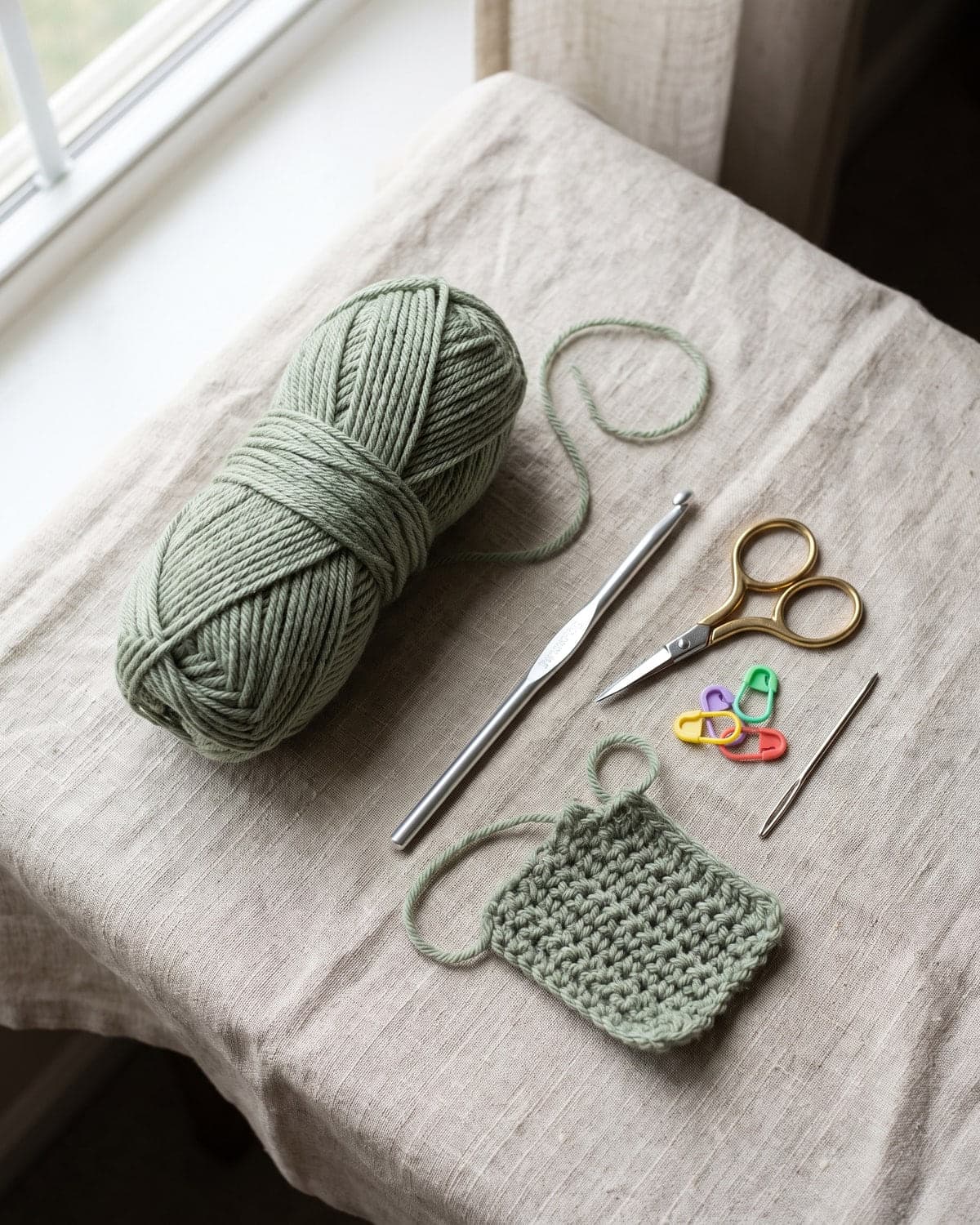
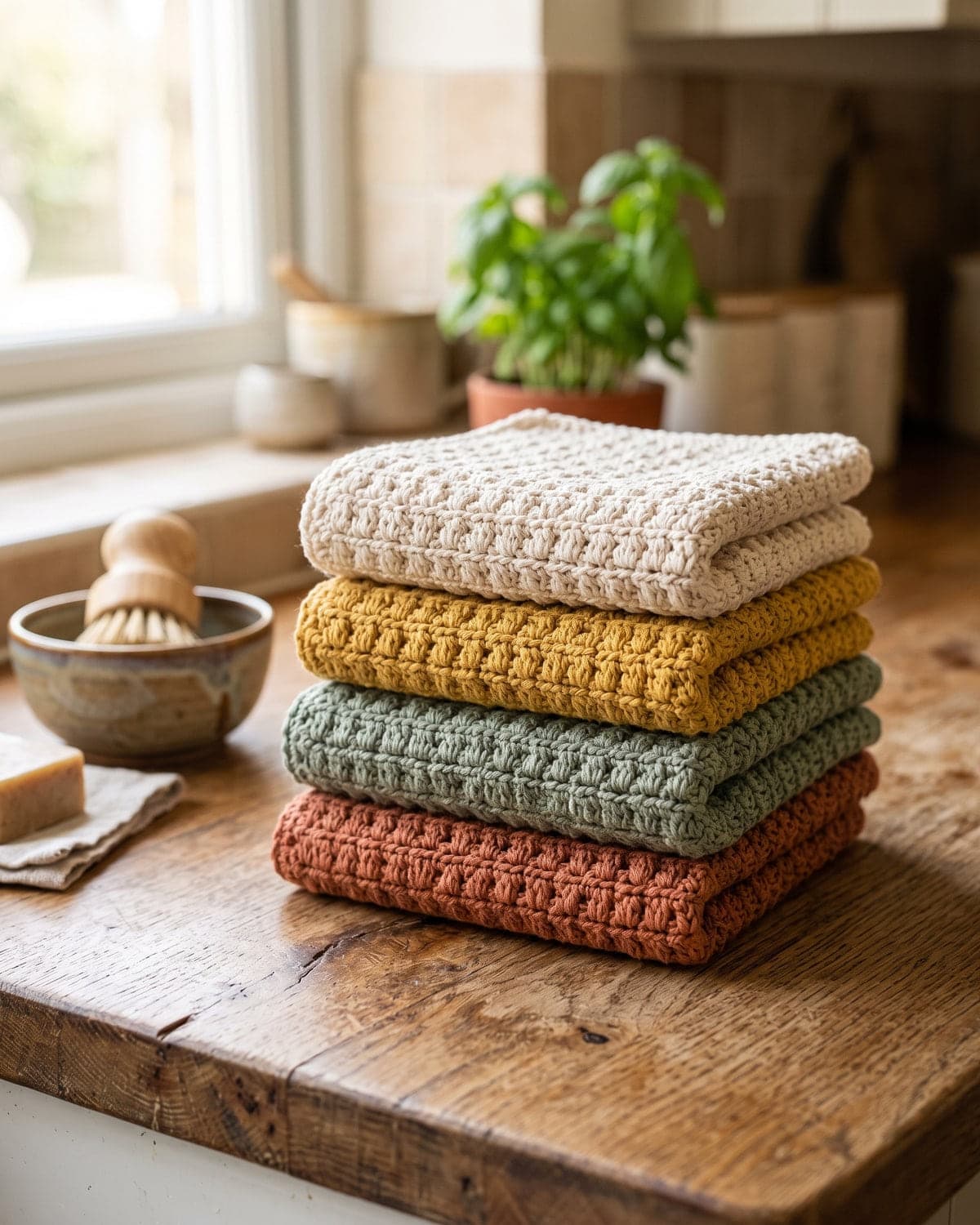
Use a smooth, light-coloured yarn in medium weight (weight 4) and a 5 mm (US H-8) hook for your swatches. Texture shows best in yarn with good stitch definition: plied cotton, wool and smooth acrylic. Fluffy or very dark yarn hides it.
If any of the basic stitches are new to you, start with easy crochet stitches for beginners. You should be able to keep a steady stitch count in rows before trying these.
What "multiple" means
Each stitch pattern needs a particular number of foundation chains so the repeat fits. "A multiple of 2, plus 1" means any number that divides by two, with one added: 21, 31, 41 and so on. For a practice swatch, a chain of 20 to 30 is plenty.
Textured stitches use more yarn
Bumps and layers take extra yarn. A bobble or waffle blanket can use noticeably more than the same size in plain double crochet, and it will be thicker and heavier too. If you're planning a large project, make a swatch, weigh it, and scale up from there. The method is explained in the chunky crochet blanket for beginners.
1. Lemon peel stitch
Lemon peel alternates single and double crochet. On the next row, the tall stitches go into the short ones and the short into the tall, which makes a gently pebbled fabric that looks the same on both sides. It's the easiest texture there is.
Chain a multiple of 2, plus 1.
- Row 1: Sc in the 2nd chain from the hook. *Dc in the next chain, sc in the next chain; repeat from * across, ending with a dc in the last chain.
- Row 2: Ch 1 (doesn't count as a stitch), turn. *Sc in the next dc, dc in the next sc; repeat from * across.
- Repeat Row 2.
Every row starts with a single crochet and ends with a double crochet. If yours doesn't, a stitch has gone missing.
Good for: dishcloths, baby blankets, scarves, cushion covers. It's dense enough to have no real holes, and it doesn't curl.
2. Crunch stitch
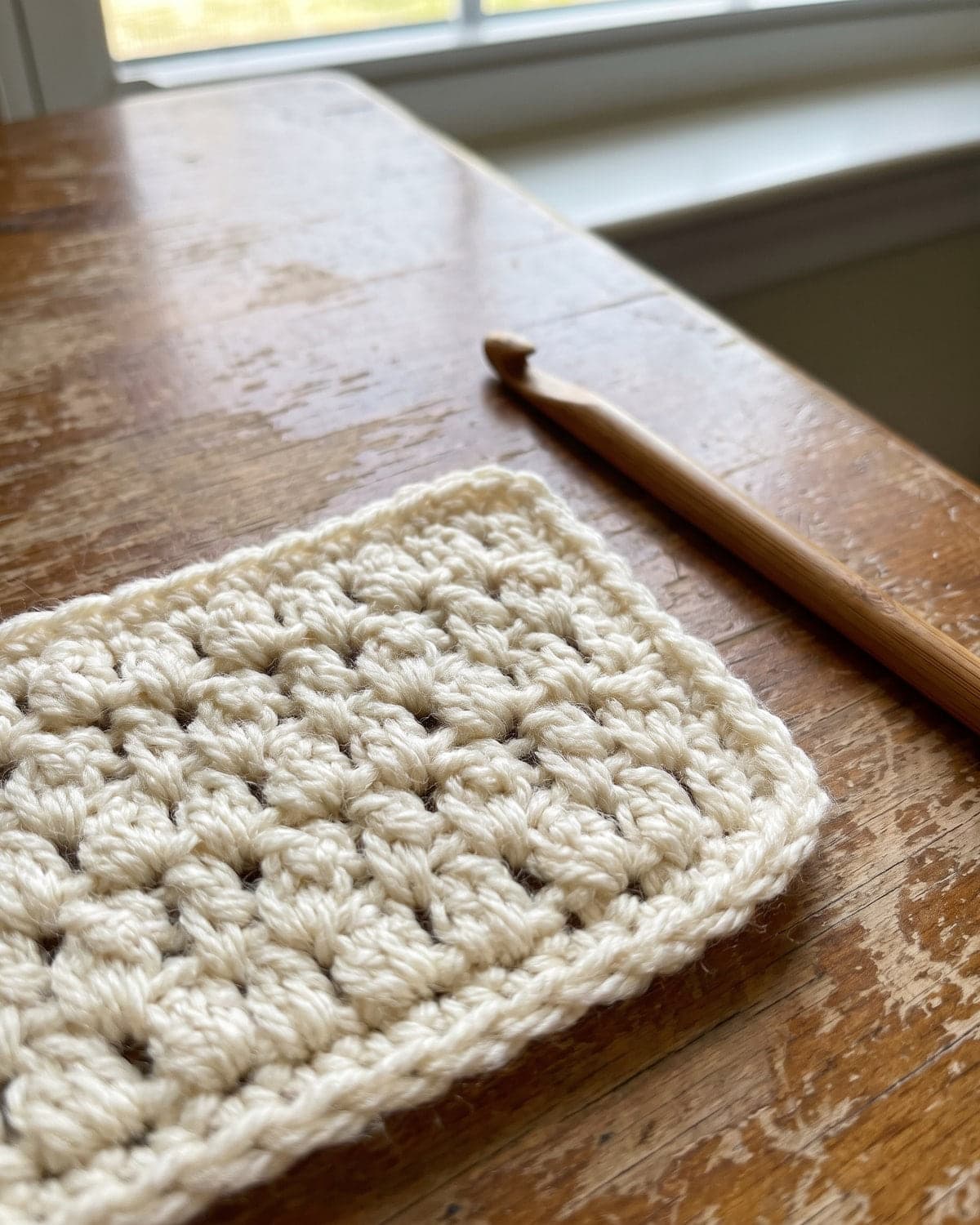
Crunch stitch alternates a half double crochet with a slip stitch. The slip stitches pull the taller stitches into tidy, nubbly rows. It makes a firm, close fabric.
Chain a multiple of 2, plus 1.
- Row 1: Sl st in the 2nd chain from the hook. *Hdc in the next chain, sl st in the next chain; repeat from * across, ending with an hdc in the last chain.
- Row 2: Ch 1 (doesn't count as a stitch), turn. *Sl st in the next hdc, hdc in the next sl st; repeat from * across.
- Repeat Row 2.
Keep your slip stitches loose. If they're tight, the next row is hard to work into and the fabric stiffens. Going up half a hook size helps.
Good for: washcloths, pot holders, bags and anything that needs to be sturdy.
3. Bobble stitch
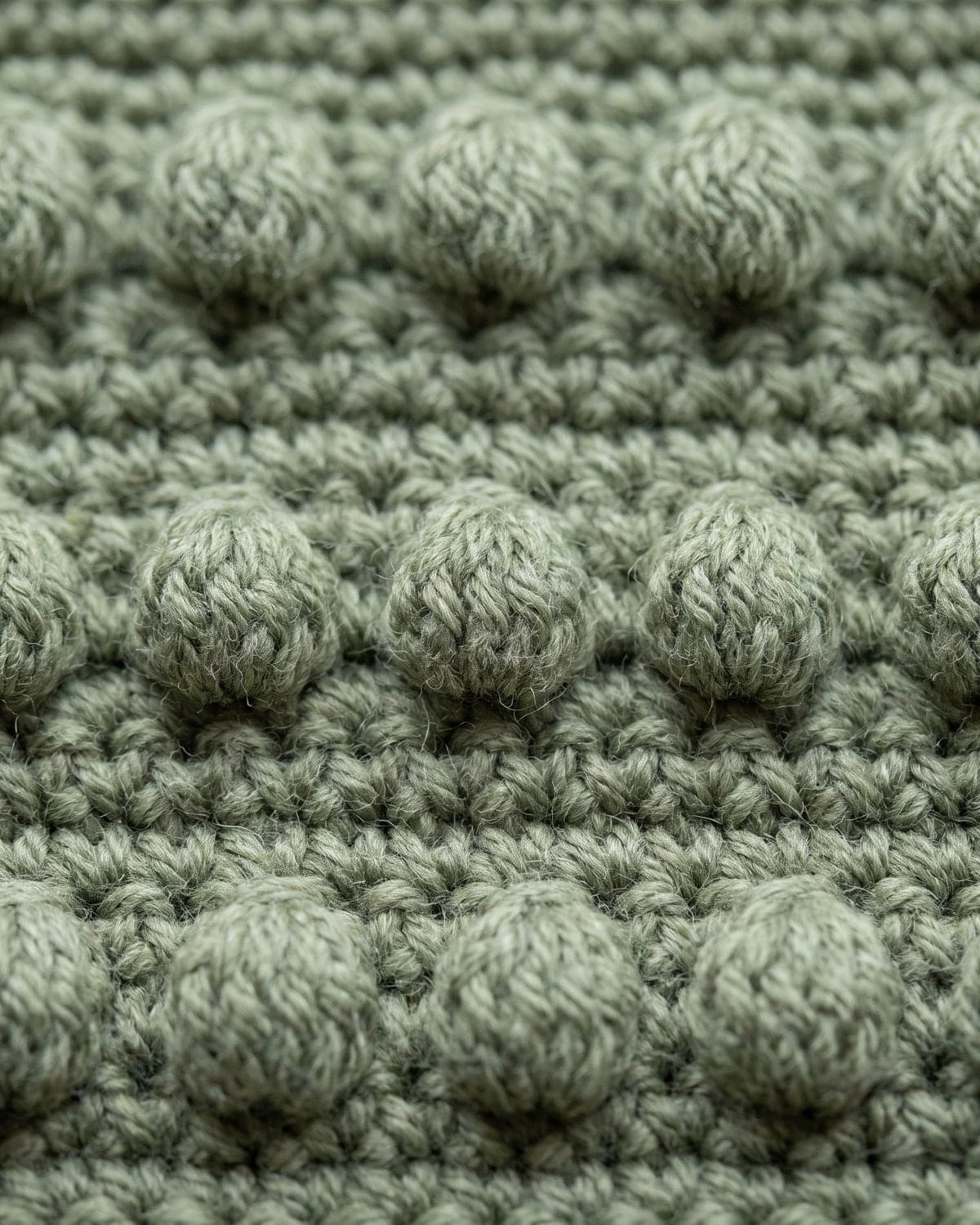
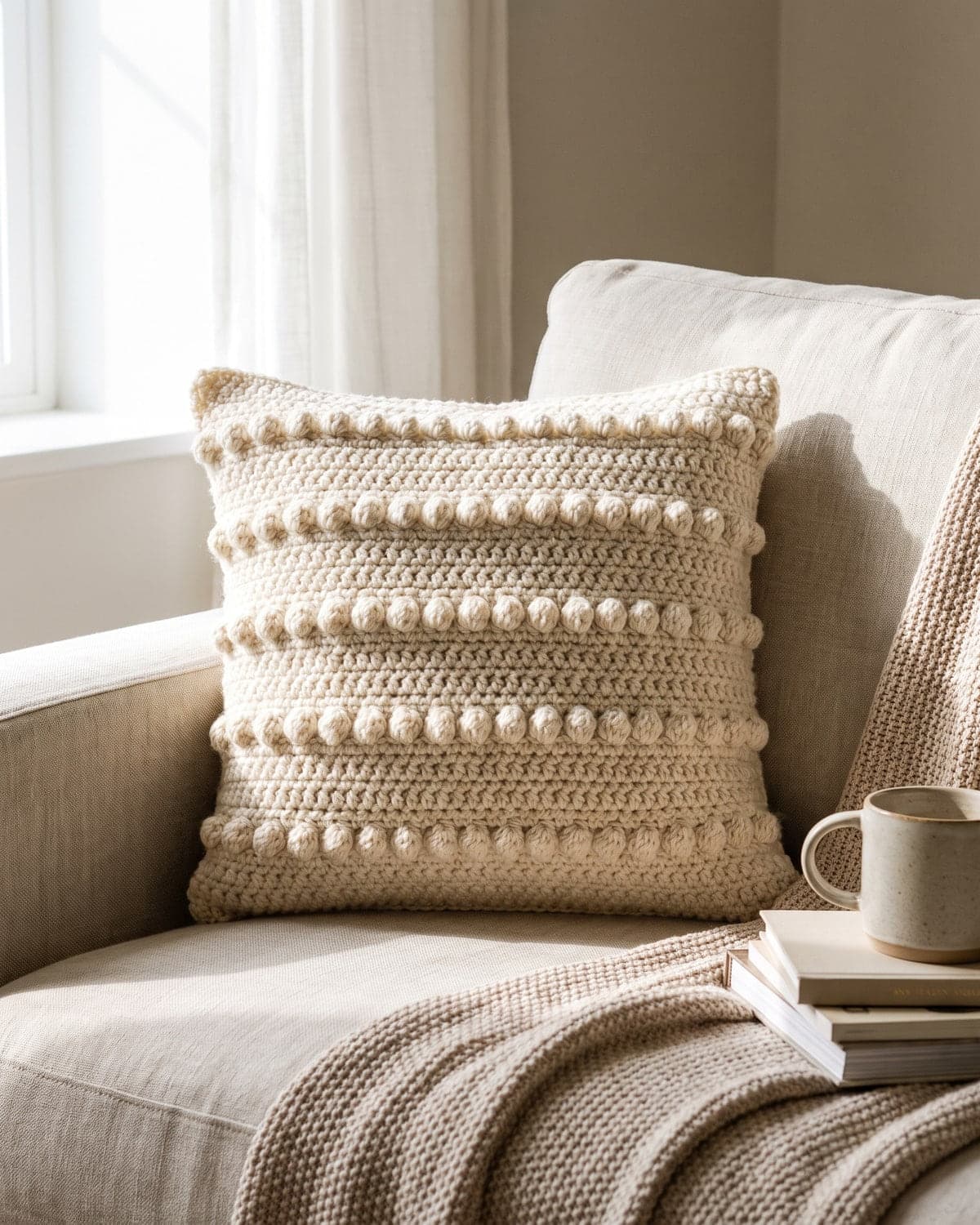
A bobble is a cluster of double crochets worked into one stitch and closed together at the top, so it pops out as a round bump. Bobbles are worked on wrong-side rows, because they push away from you as you make them, and they sit between plain single crochet stitches that hold them in place.
How to make a bobble (5 dc)
- Yarn over, insert the hook into the stitch, yarn over and pull up a loop. Yarn over and pull through two loops. Two loops remain on the hook.
- Repeat step 1 four more times in the same stitch. Each time, one more loop stays on the hook. You'll finish with six loops.
- Yarn over and pull through all six loops.
Work the single crochet after a bobble a little tightly. That's what makes the bobble stand out on the other side.
Bobble stitch pattern
Chain a multiple of 4, plus 2.
- Row 1 (right side): Sc in the 2nd chain from the hook and in each chain across. You'll have a multiple of 4 stitches, plus 1.
- Row 2 (wrong side): Ch 1, turn. Sc in the first 2 stitches. *Bobble in the next stitch, sc in the next 3 stitches; repeat from * across, ending the last repeat with sc in the last 2 stitches.
- Row 3: Ch 1, turn. Sc in each stitch across, working one sc into the top of each bobble.
- Row 4: Ch 1, turn. Sc in the first 4 stitches. *Bobble in the next stitch, sc in the next 3 stitches; repeat from * across, ending with a sc in the last stitch.
- Row 5: Repeat Row 3.
- Repeat Rows 2 to 5.
Rows 2 and 4 offset the bobbles so they sit in a diamond arrangement. The stitch count stays the same on every row. Count after each bobble row: each bobble counts as one stitch.
For a smaller, softer bump, work only four double crochets in each bobble, or three.
Good for: blankets, cushion covers, hat brims and decorative panels. Bobbles are also how crocheters "draw" shapes such as hearts in a plain fabric.
4. Puff stitch
A puff stitch is a soft, pillowy cousin of the bobble. Instead of part-finished double crochets, you pull up several long loops in one stitch and close them all at once.
How to make a puff stitch
- Yarn over, insert the hook into the stitch, yarn over and pull up a loop to about the height of a double crochet. Three loops on the hook.
- Repeat step 1 two more times in the same stitch. Seven loops on the hook.
- Yarn over and pull through all seven loops.
The chain 1 that follows each puff in the pattern locks it shut, so don't skip it.
Pull every loop up to the same height. Uneven loops make lopsided puffs. If pulling through seven loops is a struggle, hold the base of the loops with your other hand and rotate the hook slightly downwards as you draw through.
Puff stitch pattern
Chain a multiple of 2, plus 1.
- Row 1: Sc in the 2nd chain from the hook and in each chain across. You'll have an even number of stitches.
- Row 2: Ch 3 (counts as a dc), turn. *Puff stitch in the next stitch, ch 1, skip the next stitch; repeat from * across until one stitch remains. Dc in the last stitch.
- Row 3: Ch 1 (doesn't count as a stitch), turn. Sc in the first dc. *Sc in the next chain-1 space, sc in the top of the next puff; repeat from * across. Finish with a sc in the top of the turning chain. You should have the same number of stitches as in Row 1.
- Repeat Rows 2 and 3.
The top of a puff can be hard to see. It's the tight little stitch just before the chain 1. Counting the single crochet row is what keeps the edges straight.
Good for: scarves, hats, shawls and baby blankets. Puffs are squashy and warm, and they use a lot of yarn.
5. Waffle stitch
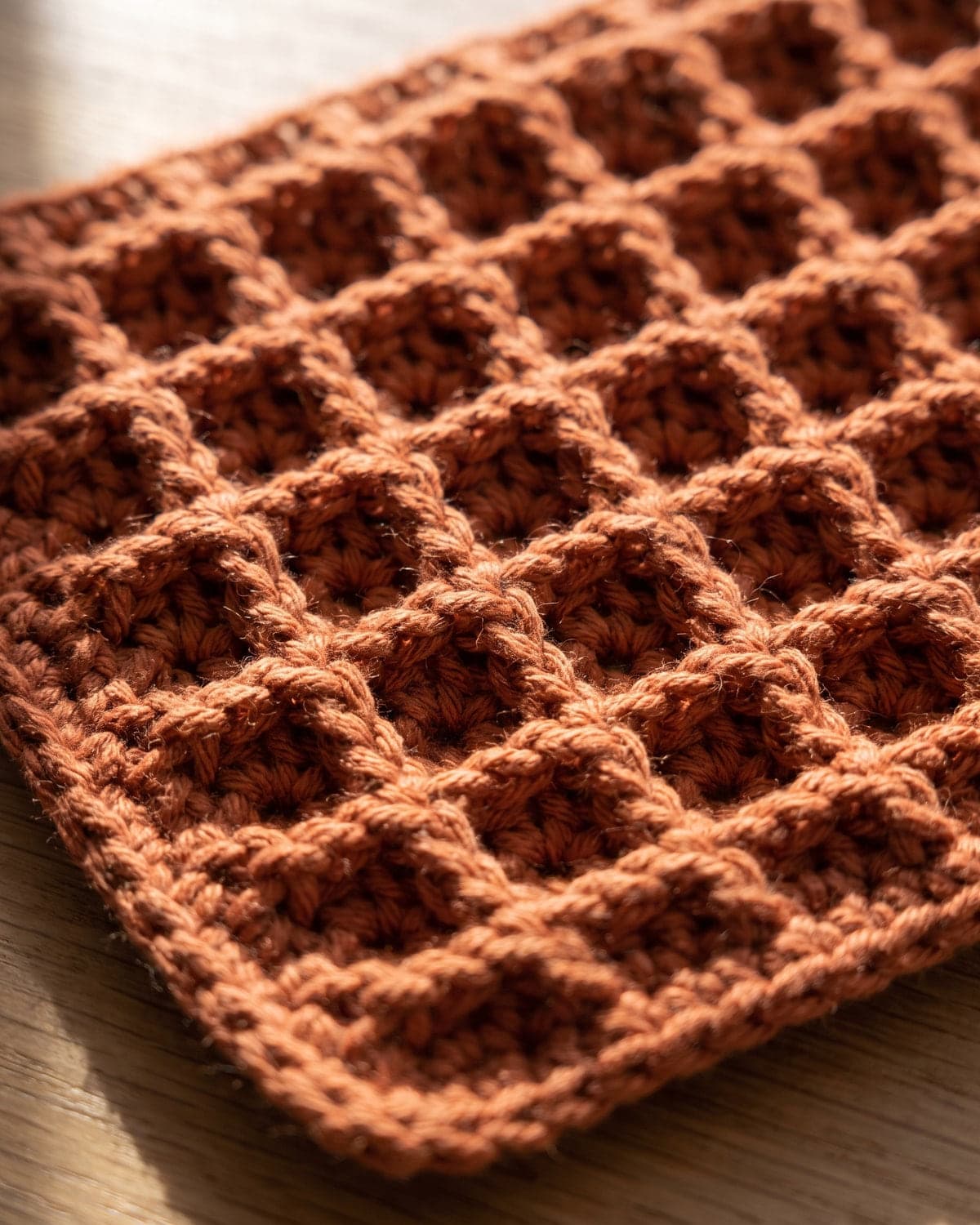
Waffle stitch makes deep, squishy squares like a breakfast waffle. It uses the front post double crochet, which is worked around the stem of a stitch rather than into its top.
How to make a front post double crochet (fpdc)
- Yarn over.
- Insert the hook from the front of the work to the back, around the post of the stitch below, and out to the front again. The post sits on top of your hook.
- Yarn over and pull up a loop around the post. Three loops on the hook.
- Yarn over and pull through two loops, then yarn over and pull through the last two.
The stitch is pushed forward and stands out as a ridge.
Waffle stitch pattern
Chain a multiple of 3, plus 1 (for example 22, 25 or 31).
- Row 1: Dc in the 4th chain from the hook (the skipped chains count as a dc) and in each chain across. You'll have a multiple of 3 stitches, plus 2.
- Row 2: Ch 3 (counts as a dc), turn. *Fpdc around the next stitch, dc in each of the next 2 stitches; repeat from * across until one stitch remains. Dc in the top of the turning chain.
- Row 3: Ch 3 (counts as a dc), turn. *Fpdc around each of the next 2 stitches, dc in the next stitch; repeat from * across until one stitch remains. Dc in the top of the turning chain.
- Repeat Rows 2 and 3.
The rule behind the two rows is easy to remember once you see it: on each row, stitches that were ordinary double crochets on the row below get a front post stitch, and stitches that were post stitches get an ordinary double crochet. On Row 3, the single stitch you work normally sits on top of the raised post from Row 2.
The waffle texture appears after three or four rows, so don't judge it too early.
Good for: blankets, dishcloths, pot holders and cushion covers. Waffle fabric is thick and absorbent in cotton, and it's one of the heaviest yarn users here.
Which textured stitch should you choose?
| Stitch | Difficulty | Fabric | Yarn use | Reversible? |
|---|---|---|---|---|
| Lemon peel | Easiest | Pebbled, soft drape | Moderate | Yes |
| Crunch | Easy | Firm and nubbly | Moderate | Yes |
| Bobble | Easy to moderate | Raised bumps on a flat ground | High | No |
| Puff | Moderate | Soft, pillowy rows | High | Nearly |
| Waffle | Moderate | Deep squares, thick | Very high | No |
A few rules of thumb:
- For a first textured project, lemon peel in cotton makes a lovely dishcloth.
- For a baby blanket, lemon peel or widely spaced bobbles are soft without being too heavy.
- For kitchen items, crunch and waffle stitch in cotton are thick and hard-wearing.
- For winter accessories, puff stitch traps a lot of warmth.
Tips for better texture
- Choose the right yarn. Smooth, round, plied yarn shows texture. Single-ply, fuzzy and variegated yarns blur it.
- Don't go too tight. Texture needs room. If your fabric feels like cardboard, go up a hook size.
- Count every plain row. In bobble and puff patterns, the single crochet rows are where you catch mistakes.
- Mark the right side. Clip a stitch marker to the front of your work. With bobbles and waffle stitch, the two sides look different.
- Block gently. Pin to shape and mist with water. Don't press or steam heavily, or the texture flattens.
- Add a border. A round of single crochet tidies the uneven edges that some textured stitches leave. Put three stitches in each corner.
Common problems and fixes
My bobbles are on the wrong side. Bobbles pop out on the side facing away from you. Work them on wrong-side rows, or push them through with your finger.
My bobbles look flat. Work the next single crochet more tightly, and make sure all five double crochets went into the same stitch.
My stitch count keeps changing. Each bobble or puff counts as one stitch, however fat it looks. Count the plain row after it.
My waffle stitch has no depth. Check you're going around the post, not into the top of the stitch, and give it a few more rows.
My edges are uneven. Check whether the turning chain counts as a stitch. In the lemon peel, crunch and bobble patterns here it doesn't. In the puff and waffle patterns the chain 3 does, so the last stitch of the next row goes into the top of it.
The fabric is stiff and heavy. Use a larger hook or a lighter yarn, or space the textured stitches further apart.
Frequently asked questions
What is the easiest textured crochet stitch? Lemon peel. It's only single and double crochet, alternated.
What's the difference between a bobble, a puff and a popcorn stitch? A bobble is several part-finished double crochets closed together. A puff is several long loops closed together. A popcorn is several complete double crochets gathered at the top by pulling the last loop through the first stitch. Bobbles are firmest and puffs are softest.
Which textured stitch is best for a blanket? Lemon peel for a light, quick blanket. Waffle or bobble for a thick, cosy one, if you don't mind the extra yarn.
Do textured stitches use more yarn? Yes, sometimes a lot more. Swatch and weigh before buying yarn for a big project.
Can beginners do textured stitches? Yes, once you can keep a straight edge in basic stitches. Start with lemon peel.
Try them in a project
A set of swatches in these five stitches, each about 20 cm (8 in) square, makes five useful dishcloths, and it's the best practice you can get. From there:
- Use lemon peel or waffle stitch for the square pattern in easy crochet coasters.
- Swap the plain stitch in the chunky crochet blanket for beginners for lemon peel, keeping an odd number of foundation chains.
- If pattern shorthand such as "multiple of 4, plus 2" is still new, read how to read crochet patterns.
You'll find more stitch guides in the crochet stitches section.
Save it for later
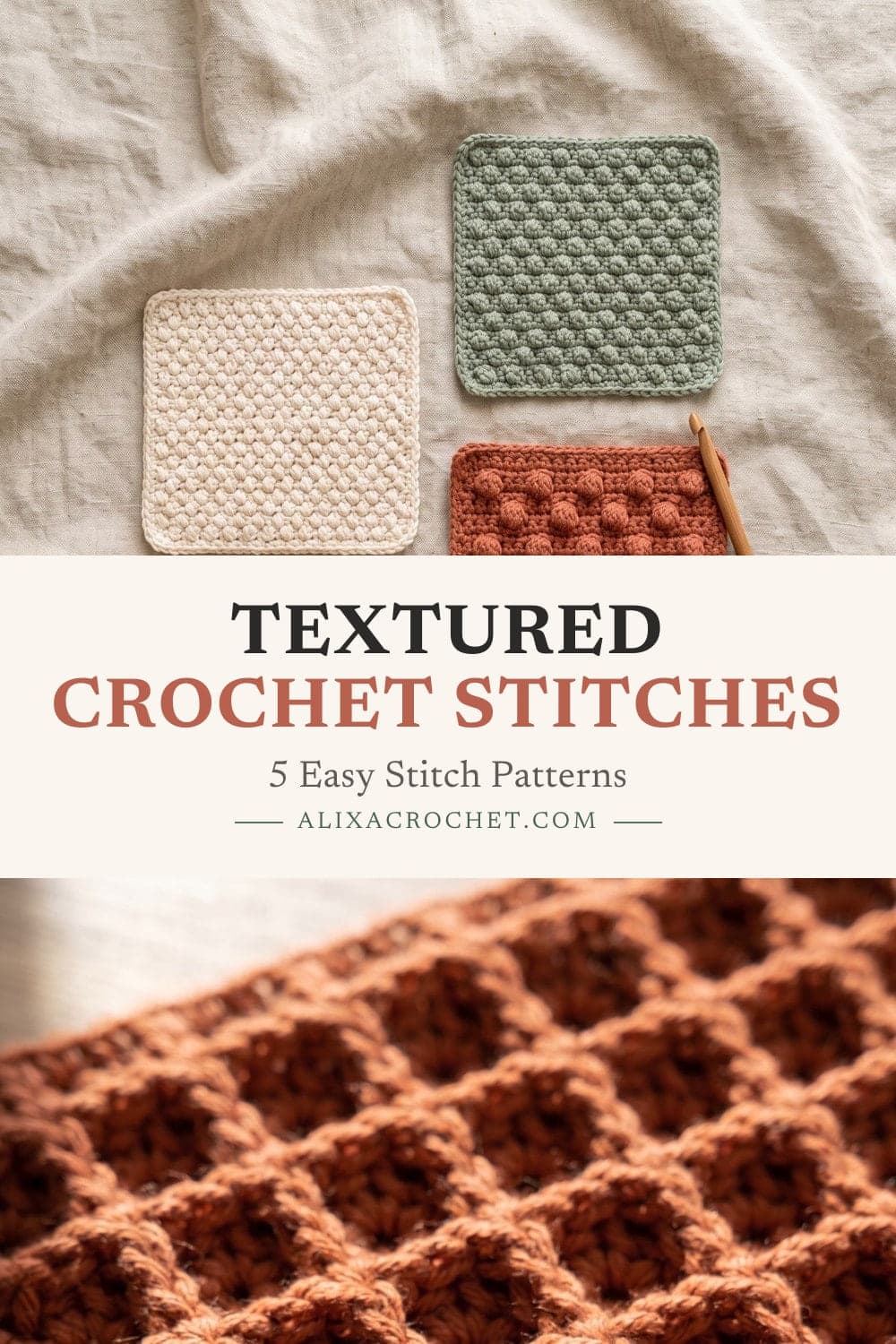
Pin this to your Pinterest board so it's there when you're ready to stitch.
Keep stitching
Related crochet projects
Crochet stitches Easy Crochet Stitches for Beginners: 6 Basics to Learn First
10 min read
Beginner tutorials How to Crochet for Beginners: A Step-by-Step Guide
11 min read
Beginner tutorials How to Read Crochet Patterns: A Beginner's Guide
12 min read
Amigurumi Easy Crochet Octopus: Free Amigurumi Pattern for Beginners
10 min read