Easy Crochet Coasters: Round and Square Patterns for Beginners
Two easy crochet coaster patterns for beginners, round and square, in cotton yarn. Includes edging ideas, how to keep circles flat, and how to turn a set into a gift.
By AlixaPublished 10 min read
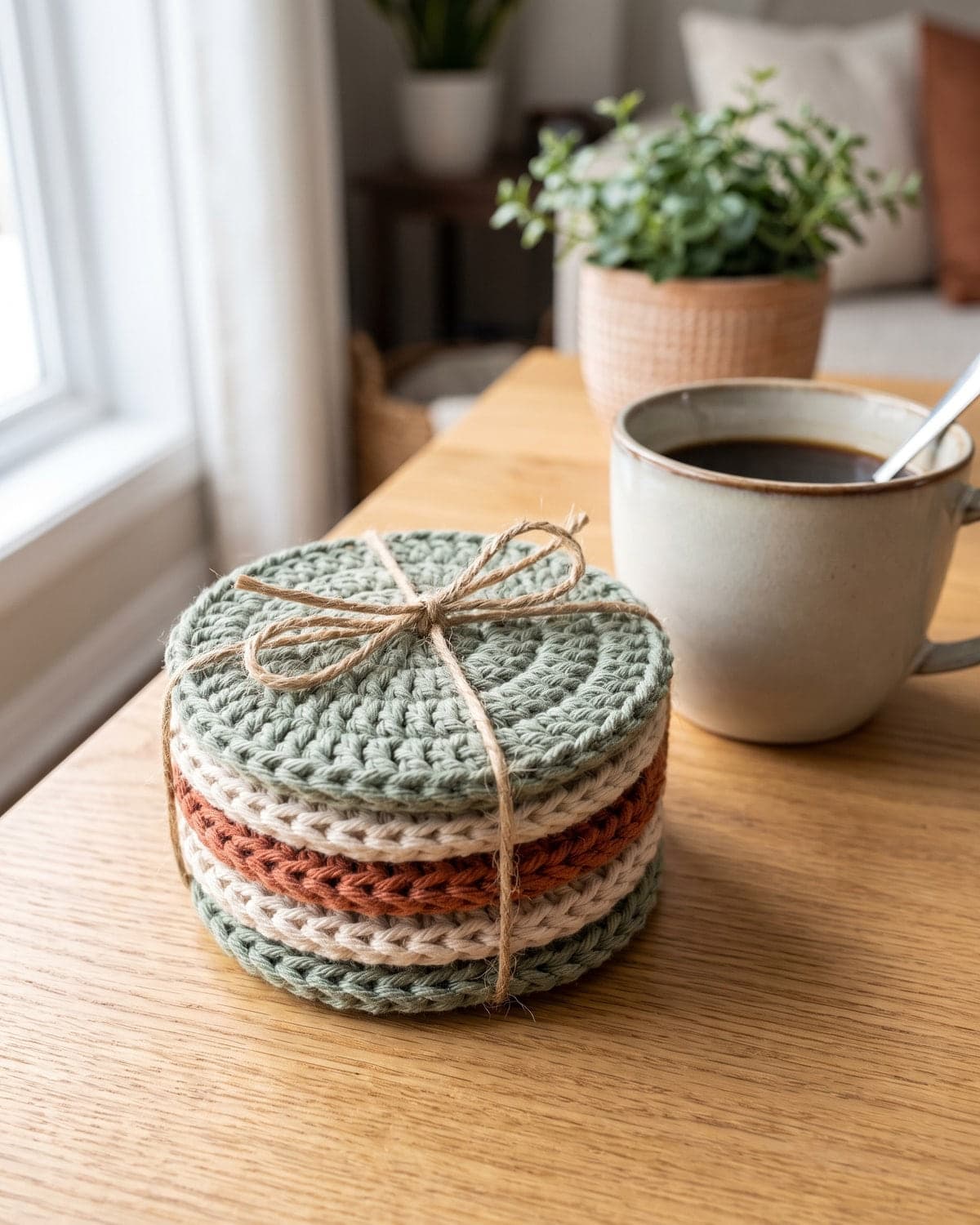
Crochet coasters are the perfect small project. Each one is a single sitting's work, uses a few metres of cotton, and gives you something useful at the end. They're also the gentlest way to learn working in the round, which opens the door to hats, baskets and amigurumi.
This tutorial has two patterns: a classic round coaster in double crochet and a square coaster in single crochet for complete beginners. You'll also find edging ideas, tips for keeping circles flat, and advice on turning a stack of coasters into a gift.
Terms used here: US crochet terms. In UK terms, single crochet (sc) is double crochet, and double crochet (dc) is treble.
About these patterns: they're basic, traditional shapes written out for this guide, with stitch counts checked so every round adds up. Finished sizes are approximate, because they depend on your yarn and tension.
At a glance
| Skill level | Beginner |
| Yarn | Worsted-weight cotton (weight 4) |
| Hook | 4 mm (US G-6) |
| Finished size | About 10 to 11 cm (4 to 4.5 in) across |
| Time | About an hour or less each |
What you need
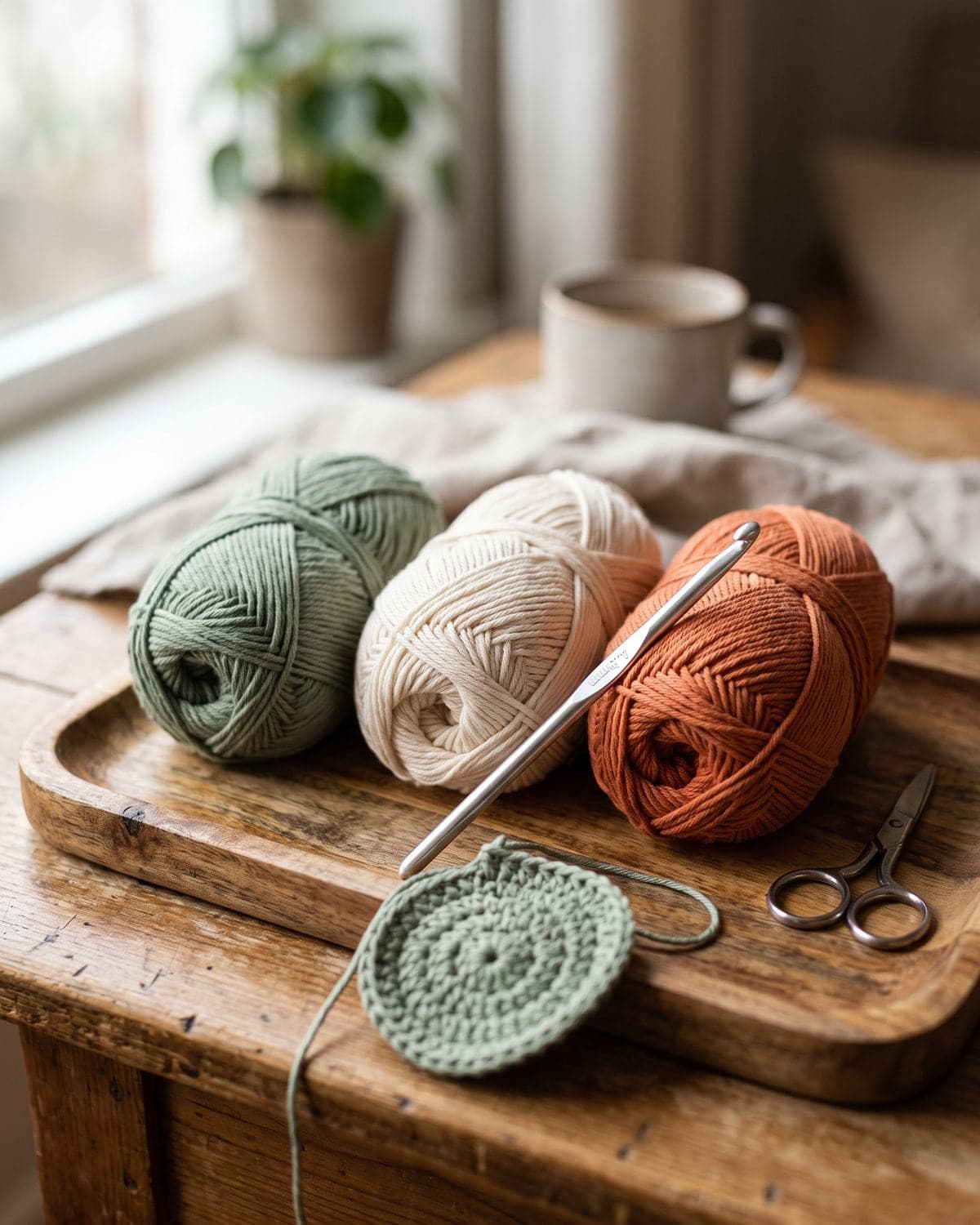
- Cotton yarn in worsted weight. One 50 g ball makes several coasters.
- A 4 mm (US G-6) hook. That's a little smaller than usual for this yarn, which makes a firm, flat coaster.
- A tapestry needle and scissors.
- A stitch marker (optional).
Why cotton?
Coasters meet hot mugs and wet glasses, so fibre matters more here than in most projects.
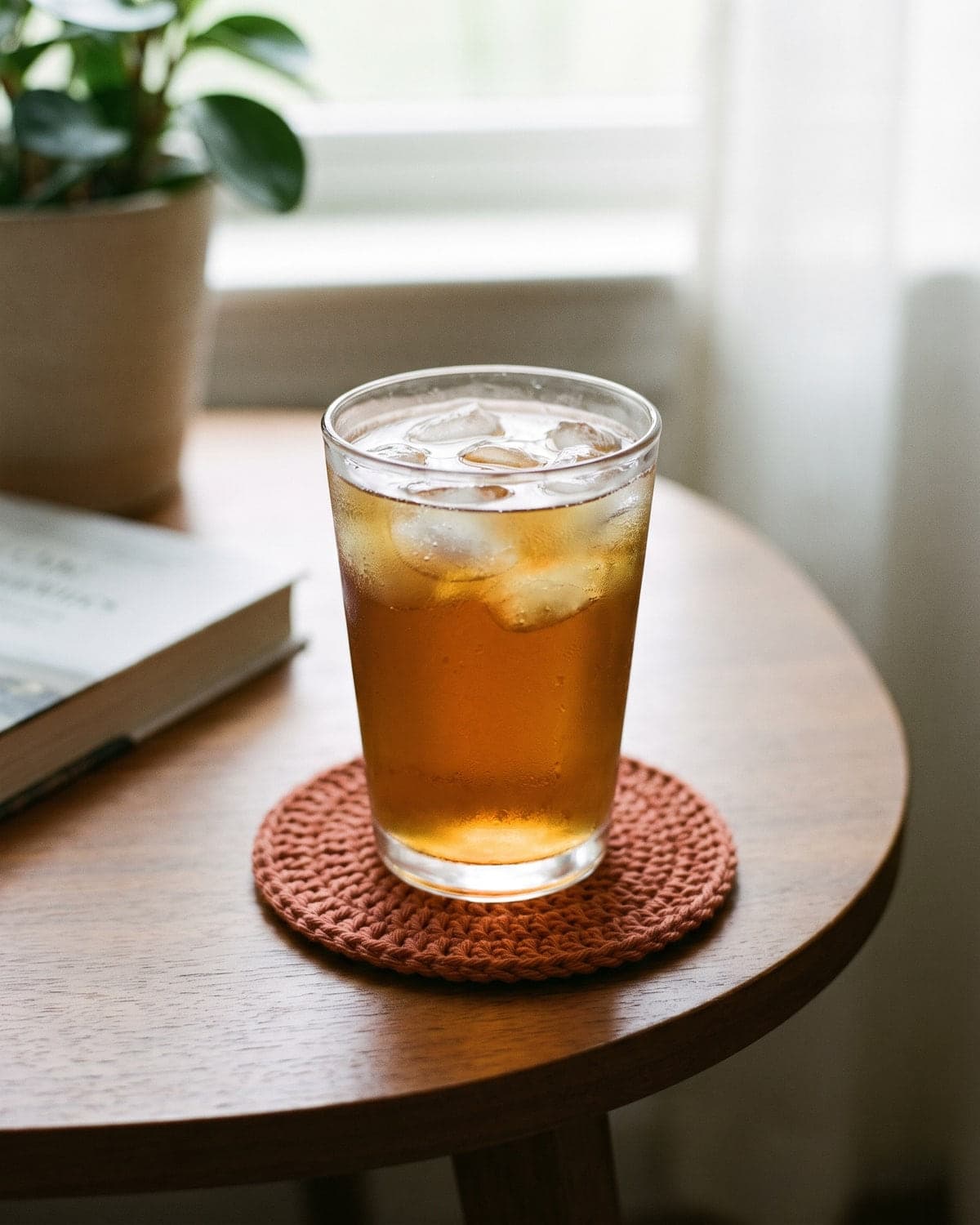
- Cotton absorbs water, lies flat and copes well with heat. It's the standard choice.
- Acrylic doesn't absorb, so condensation pools on top and runs off. It can also soften or melt under something very hot.
- Wool absorbs and insulates well, but it can felt when it's repeatedly damp and rubbed.
Choose a smooth, matte, 100% cotton or a cotton blend with a high cotton content. Mercerised cotton is shinier and slightly less absorbent, but it gives beautifully crisp stitches.
Two techniques to know first
If you can make a chain, a single crochet and a double crochet, you're ready. Those stitches are explained in easy crochet stitches for beginners. The round coaster adds two things.
Starting with a magic ring
- Wrap the yarn around two fingers to make a loop, with the working yarn crossing over the tail.
- Insert your hook into the loop, catch the working yarn and pull it through.
- Chain to the height the pattern asks for.
- Work the first round into the loop, over both strands.
- Pull the tail to close the centre.
Prefer to skip it? Chain 4 and join with a slip stitch to form a ring, then work Round 1 into the ring. The centre hole will be slightly larger.
Joining a round
At the end of each round, slip stitch into the top of the starting chain to close the circle. Then chain up for the next round.
Pattern 1: Round crochet coaster
Pattern notes
- The chain 3 at the start of Rounds 1 to 3 counts as a double crochet.
- Join each round with a slip stitch in the top of the starting chain 3.
- Don't turn. You always work with the same side facing you.
Round 1: Make a magic ring. Chain 3 (counts as the first dc). Work 11 dc into the ring. Pull the ring closed and join. (12 stitches)
Round 2: Chain 3. Dc in the same stitch as the chain. Work 2 dc in each stitch around. Join. (24 stitches)
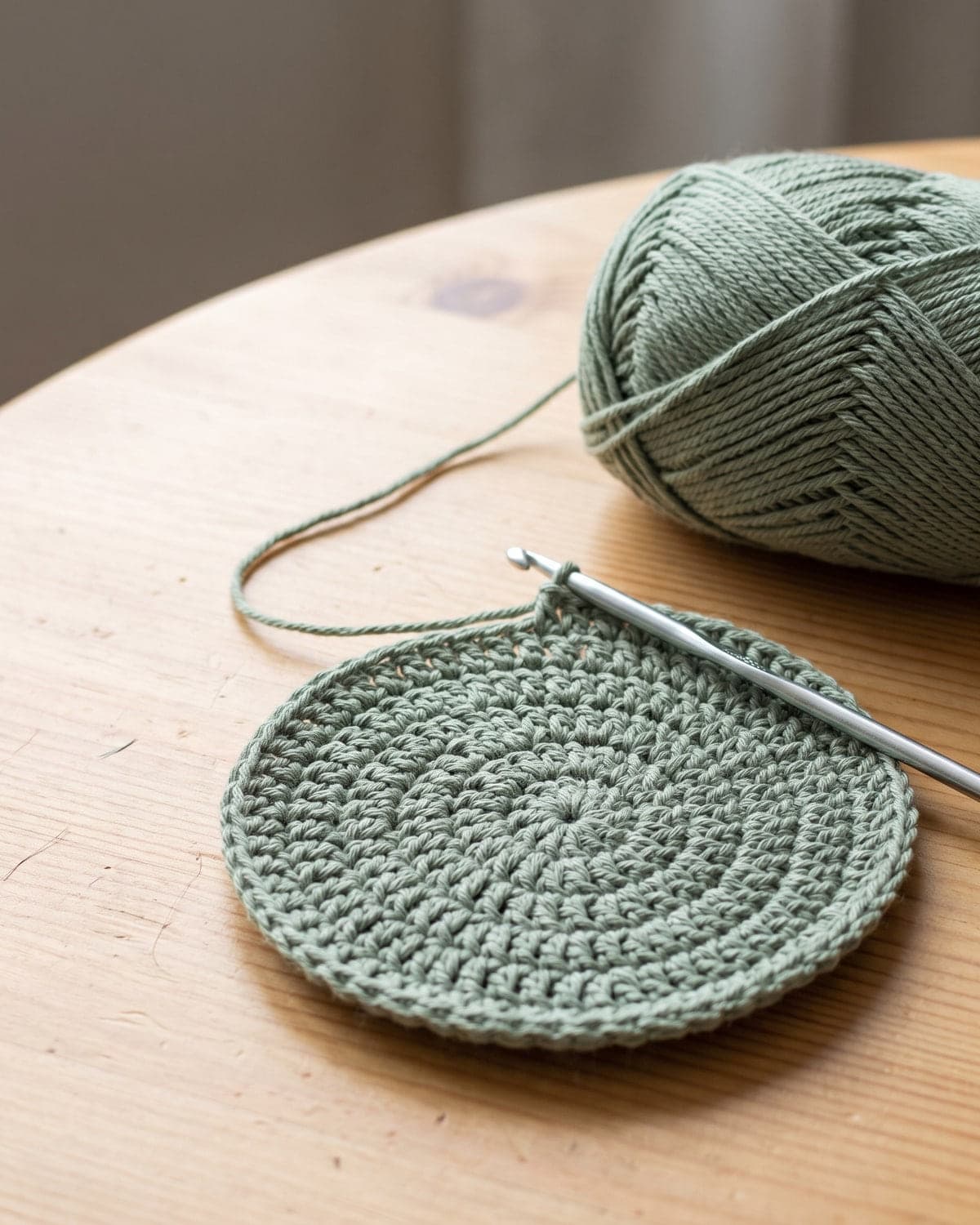 Round 3: Chain 3. Work 2 dc in the next stitch. *Dc in the next stitch, 2 dc in the next stitch; repeat from * around. Join. (36 stitches)
Round 4 (edging): Chain 1. Sc in the same stitch. Sc in each stitch around, working 2 sc into every 6th stitch. Join with a slip stitch to the first sc. (42 stitches)
Fasten off and weave in both ends.
If your edge ruffles in Round 4, leave out the increases and work one sc in each stitch. If it cups, add a few more increases. A flat circle is partly a matter of tension, so small adjustments are normal.
Why the numbers work
A flat circle in double crochet usually starts with 12 stitches and gains 12 in each round: 12, 24, 36, 48. The increases are spread evenly: every stitch in Round 2, every second stitch in Round 3, every third in Round 4, and so on. Once you see that rhythm you can make the coaster any size. Two more rounds turn it into a trivet. Keep going and it's a placemat.
Pattern 2: Easy square coaster
This one is worked in rows, so it suits someone who has only just learned single crochet. If you've made the practice swatch in how to crochet for beginners, you've already made this coaster.
Foundation: Chain 16.
Row 1: Sc in the 2nd chain from the hook and in each chain across. (15 stitches)
Row 2: Chain 1 and turn. Sc in each stitch across. (15 stitches)
Rows 3 to 16: Repeat Row 2. Check after Row 15: fold the piece diagonally, corner to corner. If the edges line up, it's square. Add or remove a row if needed.
Border: Don't fasten off. Chain 1 and work a round of sc around all four sides: one sc in each stitch along the top and bottom, one sc in the end of each row down the sides, and 3 sc in each corner so the corners stay sharp. Join with a slip stitch to the first sc.
Fasten off and weave in the ends.
Easy edgings and variations
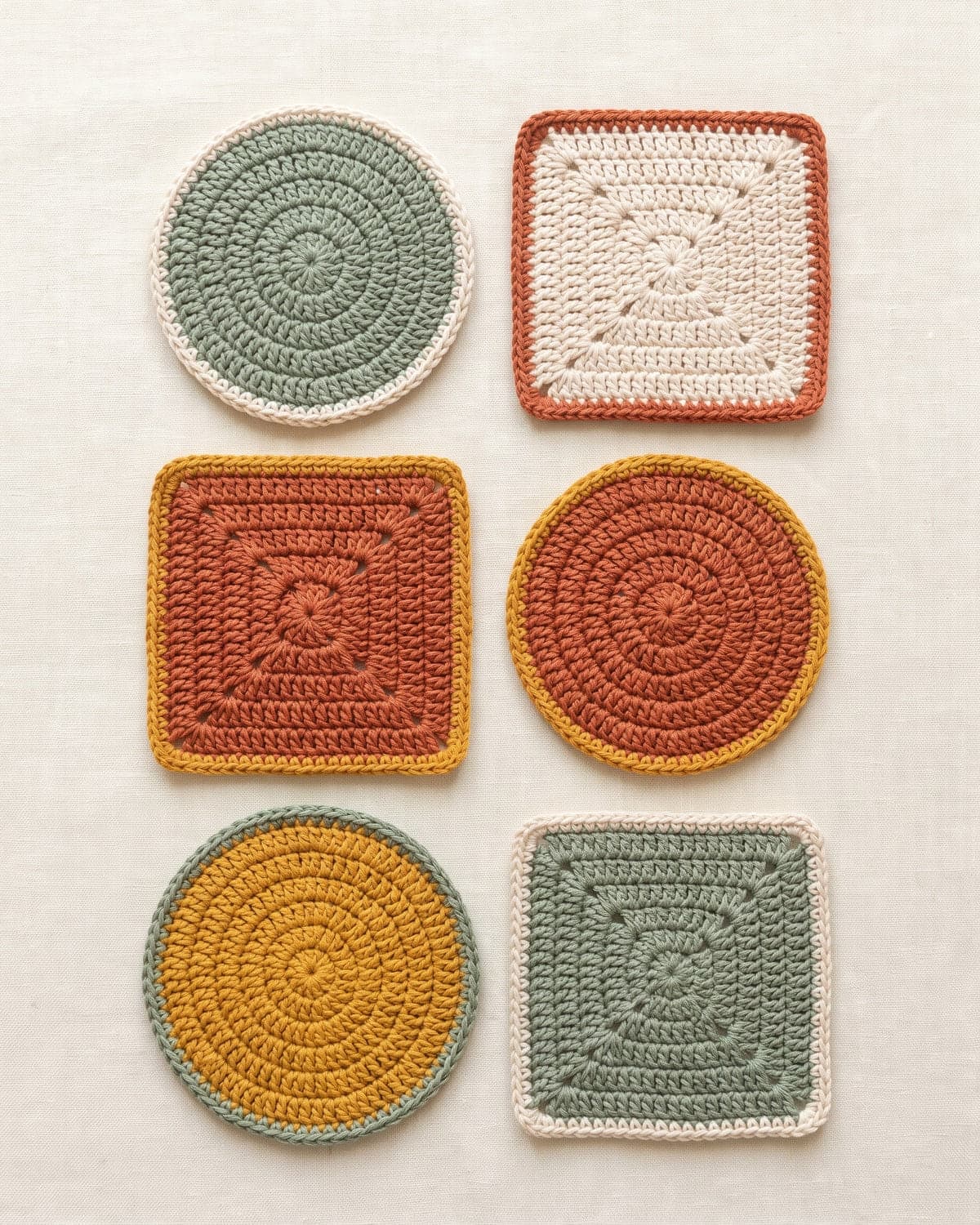
A plain coaster is a good canvas. Each of these adds one extra round.
- Contrast border. Work the last round in a second colour. To join it, fasten off the main colour, then pull up a loop of the new colour in any stitch and continue.
- Scalloped edge. On the 36-stitch round coaster, replace Round 4 with: *skip 1 stitch, 5 dc in the next stitch, skip 1 stitch, slip stitch in the next stitch; repeat from * around. That makes nine scallops.
- Crab stitch. Work a round of single crochet backwards, from left to right if you're right-handed. It makes a neat corded rim.
- Stripes. Change colour every round on the round coaster, or every two rows on the square one.
- Two-layer coaster. Make two identical circles and single crochet them together around the edge. It's thicker, and the wrong sides are hidden inside.
- Hanging loop. Chain 10 at the end of the last round and slip stitch into the same stitch, so the coaster can hang on a hook. A single-layer coaster isn't thick enough to protect your hands or a table from a hot pan; for that you'd need a larger, double-layered piece.
How to keep a round coaster flat
Circles misbehave in two ways, and both have simple causes.
| Problem | What it looks like | Cause | Fix |
|---|---|---|---|
| Ruffling | Wavy edge, like a frill | Too many stitches for the round | Recount the round, or use a smaller hook |
| Cupping | Edges curl up into a bowl | Too few stitches, or tight tension | Recount the round, or use a larger hook |
Count every round. One missed increase in Round 2 is enough to make a coaster cup.
A coaster that's only slightly wavy will usually flatten with blocking.
Common mistakes and how to fix them
The centre has a hole. The magic ring wasn't pulled tight, or the tail wasn't secured. Pull the tail firmly, then weave it around the ring in the opposite direction before trimming.
There's a visible seam where the rounds join. A slight line is normal in joined rounds. To make it less obvious, pull the joining slip stitch snug and make sure you aren't working an extra stitch into it. A round should end with the stitch count the pattern gives.
My round has too many stitches. The most common cause is working a double crochet into the slip stitch join as well as into the first real stitch. Count as you go: Round 2 should feel like "two in every stitch", twelve times.
The square coaster isn't square. Rows of single crochet are slightly shorter than the stitches are wide, so 15 stitches rarely need exactly 15 rows. Use the diagonal fold test and stop when the edges meet.
The square coaster's sides lean. A stitch is being lost or gained at the edge. Count 15 in every row, and mark the first stitch of each row so you can find it again on the way back.
The border puckers on the sides. There are too few border stitches along the row ends. Aim for one stitch per row. If it ruffles instead, skip a row end now and then.
Using a different yarn or hook
The patterns work in any yarn. Only the size changes.
- DK cotton (weight 3) with a 3.5 mm hook makes a finer, thinner coaster. Add a fifth round of double crochet (48 stitches) before the edging so it's still big enough for a mug.
- Two strands of worsted cotton held together with a 6 mm hook makes a thick, cushioned coaster that's good under hot drinks.
- T-shirt yarn or cotton cord with a large hook turns the same three rounds into a small trivet or the base of a basket.
Whatever you use, pick a hook slightly smaller than the label suggests. Coasters should be firm.
Blocking and finishing
- Soak the coaster in cool water for a few minutes, or spray it until it's damp.
- Press out the water in a towel. Don't wring it.
- Lay it on a towel or foam mat and pat it into shape. Pin the edge if it needs persuading.
- Leave it to dry completely.
Weave the ends in well: run each tail through the back of the stitches in one direction, then back in the other. Coasters get washed often, and short ends work loose.
Washing and care
Most cotton coasters can go in the washing machine with similar colours, then be reshaped and dried flat. Always check your yarn label. Strongly dyed cottons, especially reds and dark blues, can bleed in the first wash, so wash them separately the first time. If a coaster loses its shape, block it again.
Turning coasters into a gift
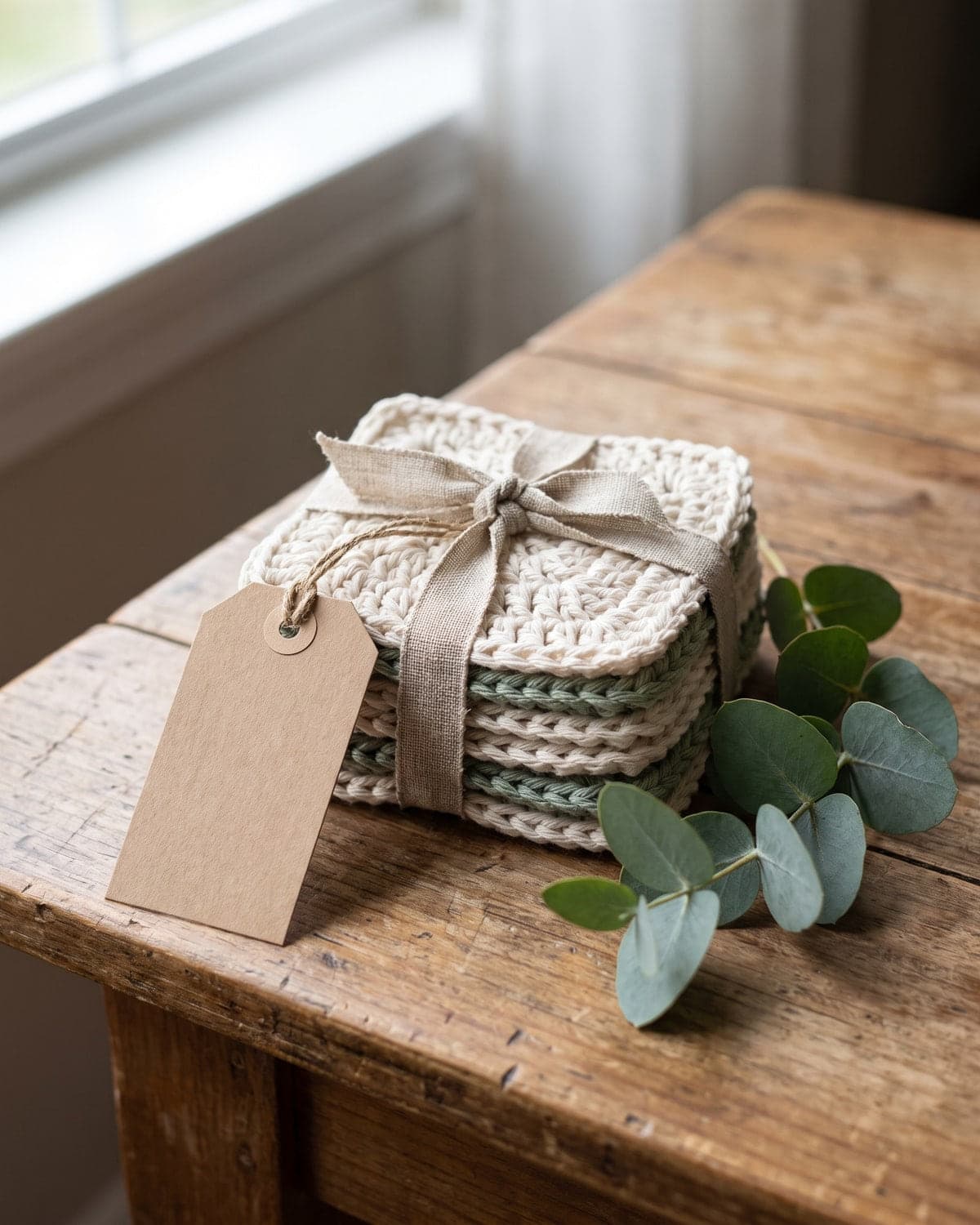 A set of coasters is one of the nicest quick handmade gifts.
- Make four or six in two or three colours that go together.
- Stack them and tie with twine, ribbon or a strip of linen.
- Add a tag with the fibre and washing instructions.
- Pair them with a mug, a bag of coffee or a candle.
They work for housewarmings, teachers, Christmas stockings and craft fairs. For seasonal versions, change the colours: orange and cream for autumn, red and green for winter, pastels for spring. There are more holiday makes in the seasonal section, including these easy crochet pumpkins.
Choosing colours for your home
- Neutral set: cream, oat and soft grey suit almost any room.
- Earthy set: sage green, terracotta and mustard look warm on wood.
- One colour, several edgings: the same main colour with a different contrast border on each coaster, so guests can tell their drinks apart.
- Scrap set: every coaster different, tied together by one shared border colour.
Frequently asked questions
What yarn is best for crochet coasters? Worsted-weight cotton. It absorbs condensation, tolerates heat and washes well.
How big should a coaster be? About 10 cm (4 in) across fits most mugs and glasses. Add a round for large mugs.
How much yarn does one coaster use? Only a small amount. A 50 g ball of worsted cotton makes several.
Why is my coaster curling? It's cupping. There are too few stitches in a round, or your tension is tight. Recount, or go up a hook size.
Can I use acrylic yarn? You can, but it doesn't absorb water and isn't suited to very hot mugs. Cotton is the better choice.
Do I have to use a magic ring? No. Chain 4, join into a ring with a slip stitch, and work Round 1 into the ring.
Can I sell coasters made from these patterns? Yes. These are basic shapes, and you're welcome to sell what you make.
What to make next
The flat circle is the foundation of a lot of crochet. Keep increasing and you have a placemat or a rug. Stop increasing and the sides rise into a basket. Work it tightly in single crochet and it becomes the start of a toy, which is how amigurumi for beginners begins.
For more things to make for your home, browse home decor. The Craft Yarn Council's guide to hook sizes is handy when a pattern gives a size in a system you don't use.
Save it for later
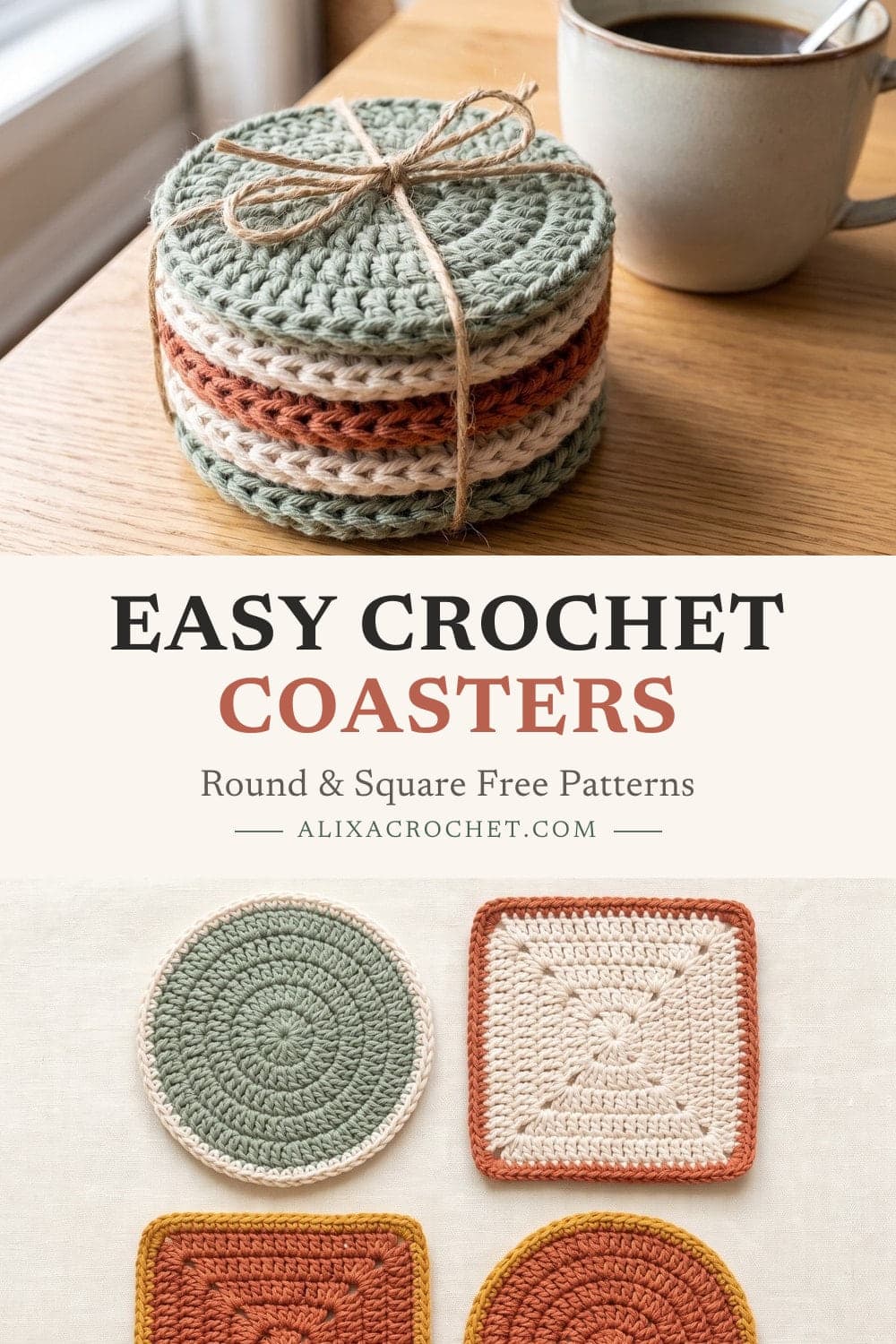
Pin this to your Pinterest board so it's there when you're ready to stitch.
Keep stitching
Related crochet projects
Seasonal Crochet Christmas Ornaments: 4 Easy Patterns for Beginners
12 min read
Flowers Easy Crochet Flowers: 4 Simple Patterns for Beginners
11 min read
Amigurumi Easy Crochet Octopus: Free Amigurumi Pattern for Beginners
10 min read
Amigurumi Amigurumi for Beginners: How to Crochet Your First Animal
10 min read