Moss Stitch Crochet: Easy Tutorial for a Beautiful Woven Texture
Learn the crochet moss stitch (linen stitch) row by row: the starting chain, straight edges, no-cut stripes in three colours, working in the round and a practice dishcloth pattern.
By AlixaPublished 10 min read
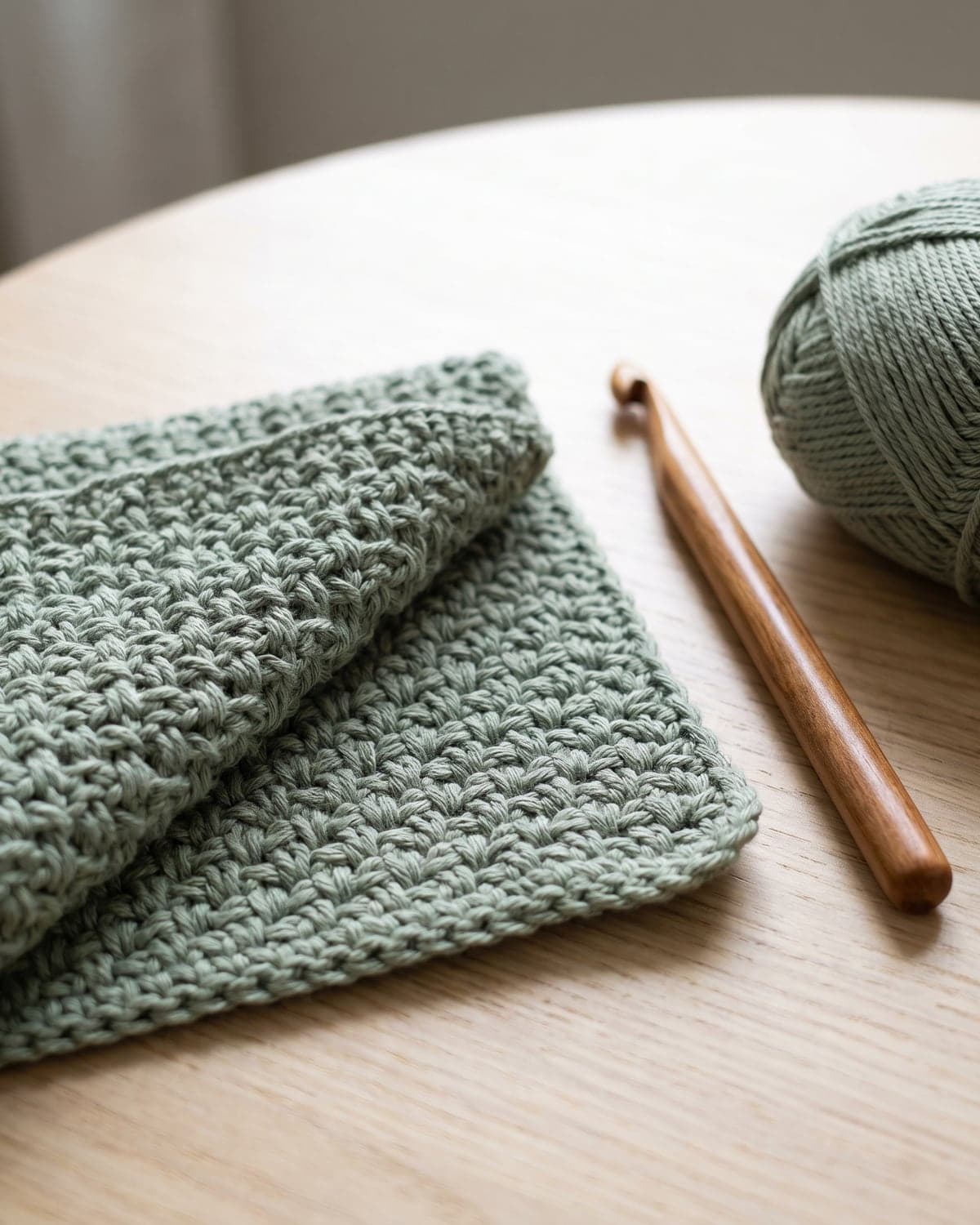
The moss stitch is one of the prettiest things you can do with the two simplest stitches in crochet. It's made of single crochets and chains, nothing else, and it produces a flat, dense fabric that looks woven. It doesn't curl, it has no holes to speak of, it looks the same on both sides, and it's wonderful with colour.
This tutorial covers the stitch row by row, how to keep the edges straight, how to work it in stripes without cutting the yarn, how to work it in the round, and a small dishcloth pattern to practise on.
Terms used here: US crochet terms. Single crochet (sc) is called double crochet (dc) in UK terms.
Other names: linen stitch, granite stitch, woven stitch and seed stitch are all used for this same stitch pattern.
At a glance
| Skill level | Beginner |
| Stitches | Chain, single crochet |
| Starting chain | Any even number |
| Row repeat | One row, repeated |
| Fabric | Flat, dense, reversible, with good drape |
| Best for | Scarves, blankets, dishcloths, bags, garments, colour work |
What you need
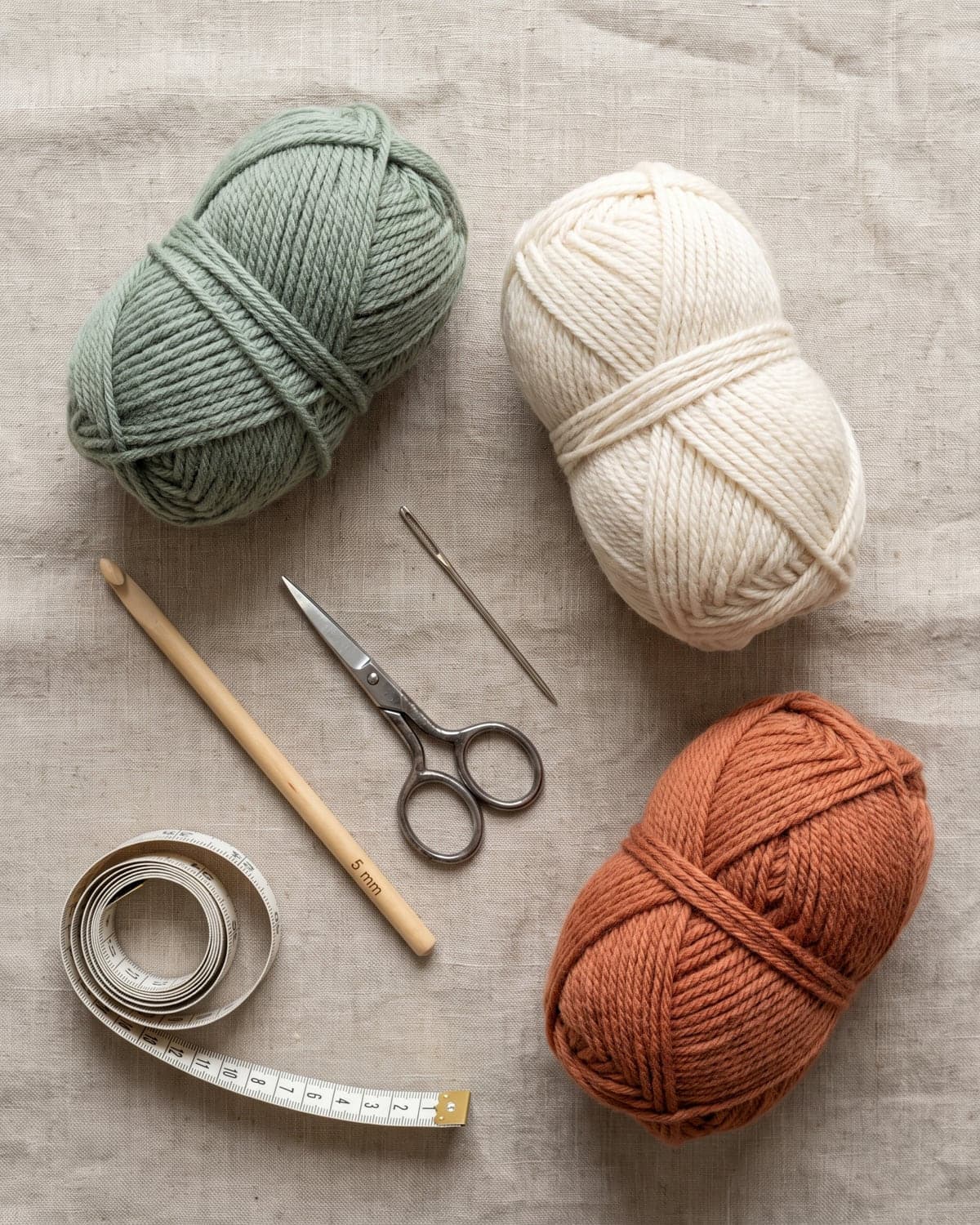
- Smooth yarn in a solid colour. Worsted weight (weight 4) cotton or acrylic is easy to learn with.
- A crochet hook one size larger than the label suggests. For worsted yarn, try a 5 mm or 5.5 mm (US H-8 or I-9) hook. Moss stitch is dense, and a slightly bigger hook keeps the fabric soft.
- Scissors and a tapestry needle.
- Two locking stitch markers for the edges, if you're new to it.
How moss stitch works
Each row is a line of single crochets with one chain between them. On the next row, you work each single crochet into the chain space of the row below, and you chain over each single crochet.
So the stitches of every row sit in the gaps of the row before, like bricks in a wall. That offset is what creates the woven look.
Two things make this stitch especially beginner-friendly:
- You always put the hook into a space, never into the top of a stitch. Spaces are big and easy to find.
- There is only one row to remember. After the set-up row, every row is the same.
If you need a reminder of the single crochet itself, see easy crochet stitches for beginners.
Moss stitch pattern, step by step
Foundation chain
Chain an even number. For a practice swatch, chain 20.
Keep the chain relaxed. If your chains are usually tight, make them with a hook one size bigger and then switch back.
Row 1 (set-up row)
- Single crochet in the 4th chain from the hook. The three chains you skipped will act as an edge stitch and a chain space.
- Chain 1, skip the next chain, single crochet in the following chain. Repeat this to the end of the chain. Your last single crochet goes into the very last chain.
With a starting chain of 20, you'll have 9 single crochets with 8 chain-1 spaces between them, plus the space made by the skipped chains at the start.
Row 2
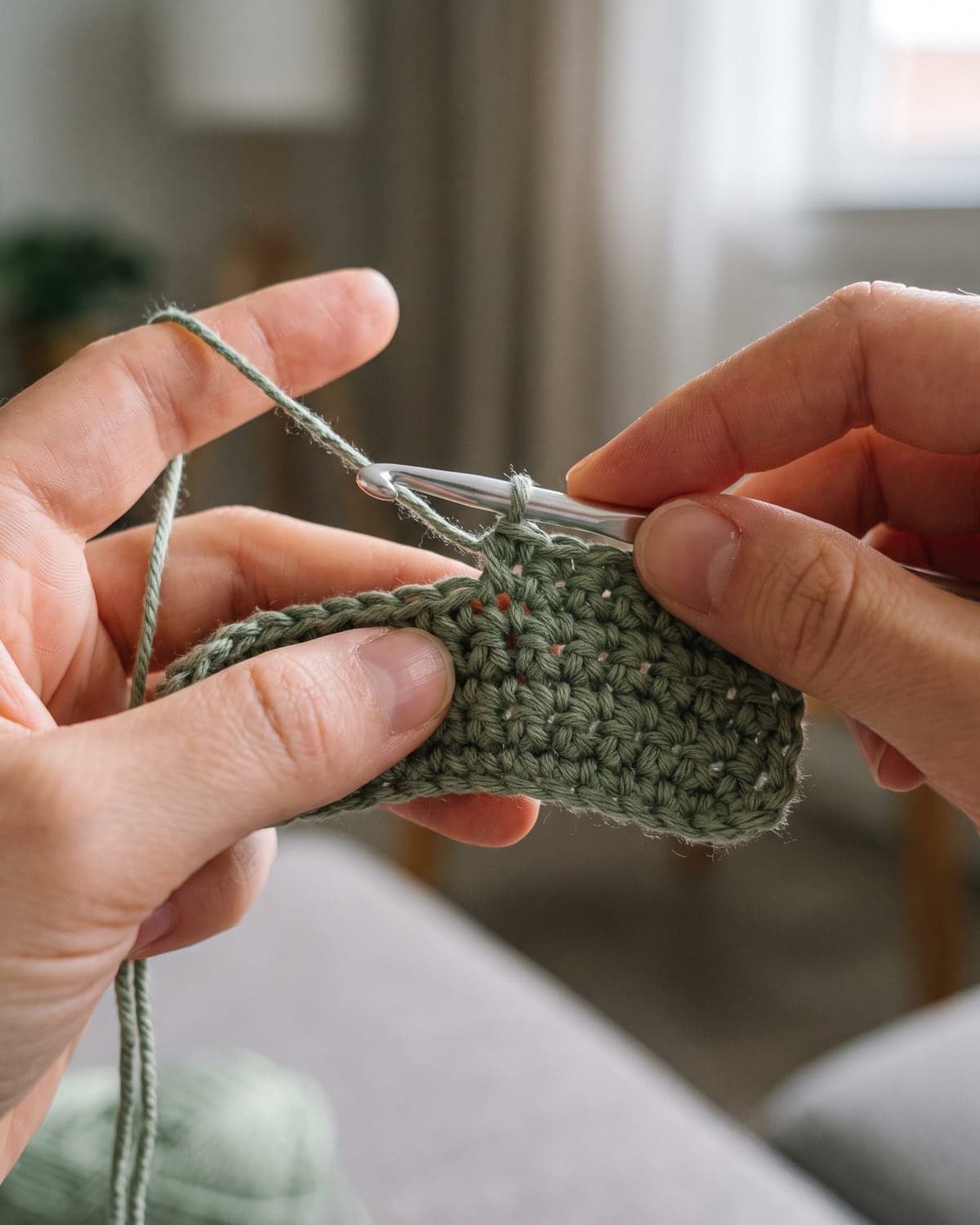
- Chain 2 and turn your work. This chain 2 counts as an edge stitch and a chain space.
- Single crochet in the first chain-1 space. It's the gap between the first two single crochets of the row below.
- Chain 1, single crochet in the next chain-1 space. Repeat across.
- The last single crochet of the row goes into the space made by the turning chain at the edge. Don't miss it.
You should have 9 single crochets again.
Every row after that
Repeat row 2. That's all there is to it.
Each row has the same number of single crochets. The formula is simple: the number of single crochets is half your starting chain, minus one. Chain 20 gives 9. Chain 32 gives 15. Chain 102 gives 50.
Fastening off
After the last single crochet of your final row, cut the yarn with a tail of 15 cm (6 in), pull it through the loop and weave it in along the edge.
Keeping the edges straight
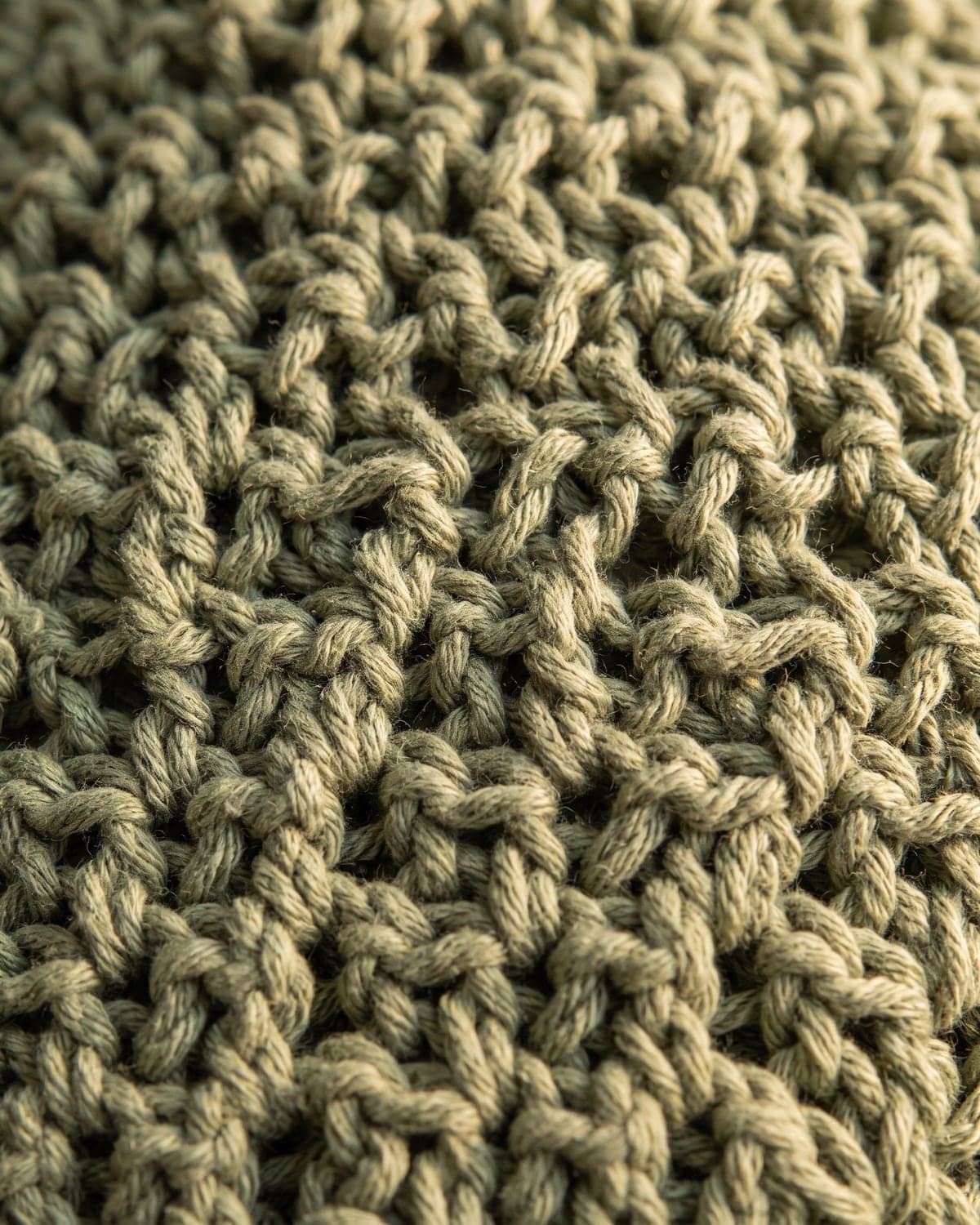
Moss stitch edges are neat by nature, because the turning chain forms a small loop at the start of each row. Problems come from one place: the last stitch.
At the end of each row, the final single crochet has to go into the loop made by the turning chain 2 of the row below. That loop sits right at the edge and tends to curl out of sight. If you skip it, the piece gets one stitch narrower. Do that every other row and you'll have a triangle.
Three habits prevent it:
- Count the single crochets in each row for the first ten rows.
- Mark the turning chain. Clip a stitch marker around the chain 2 as soon as you make it. When you come back along the next row, the marker shows where your last stitch goes.
- Look at the edge. A straight edge has a small bump at the end of every row. A missing bump means a missed stitch.
Gauge and yarn use
Moss stitch is short. Each row adds less height than a normal single crochet row, because the stitches drop into the spaces below. It takes more rows than you expect to reach a given length, so be patient with the first few centimetres.
It uses a little less yarn than solid single crochet over the same area, because half of the stitches are chains. It uses more than double crochet.
As a rough guide, in worsted yarn with a 5 mm hook, a starting chain of 32 gives a piece about 20 cm (8 in) wide. Your own tension will differ, so measure a swatch before starting anything where size matters. The Craft Yarn Council's yarn weight system lists typical gauges and hook sizes for each yarn weight.
Moss stitch in stripes
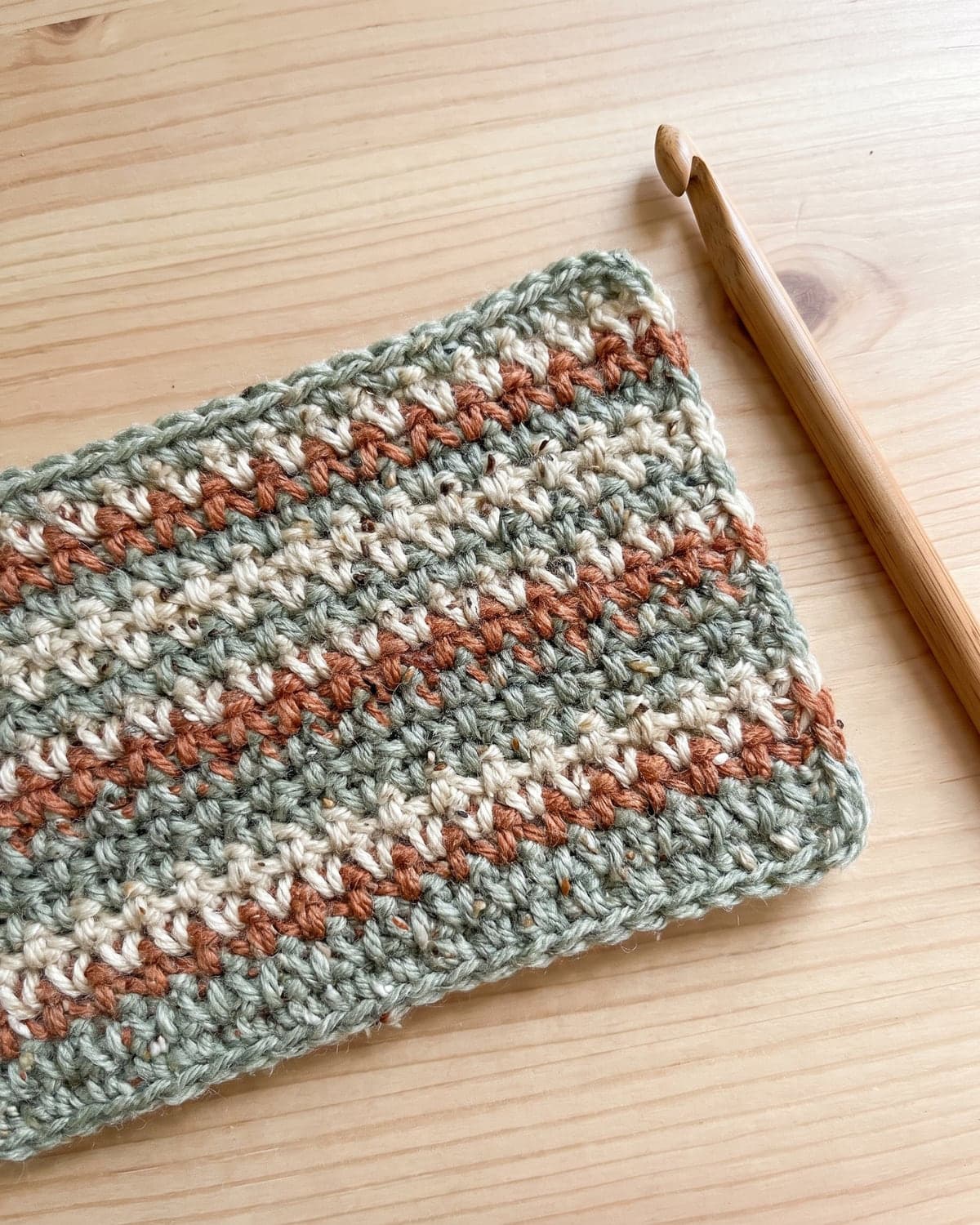
This is where the stitch shines. Because every stitch reaches down into the row below, the colours interlock. Thin stripes turn into a speckled, tweedy pattern that looks far more complicated than it is.
How to change colour
Work the last single crochet of the row until two loops are left on the hook. Drop the old colour, pick up the new one, and pull it through both loops. Chain 2 with the new colour and turn.
Three colours, one row each, no cutting
With three colours and one row of each, something useful happens: the colour you need next is always waiting at the edge where you finish.
- Work row 1 in colour A. Don't cut it.
- Join colour B and work row 2. Don't cut it.
- Join colour C and work row 3. You finish at the edge where colour A is waiting.
- Pick up A and work row 4. You finish where B is waiting.
- Carry on in the same order: A, B, C.
The unused yarns travel up the sides in short strands of two rows. Don't pull them tight. You'll have only six ends to weave in at the end, however long the piece is.
Two colours
With two colours, work two rows of each. After two rows you're back at the edge where the other colour is waiting. One row of each doesn't work with two colours, because the yarn you need ends up at the opposite side.
Other colour effects
- Variegated or self-striping yarn. Moss stitch breaks up colour pooling and gives a soft, blended look.
- Wide blocks. Ten or twelve rows of each colour for a bold striped blanket.
- One contrast row. A single row of a bright colour every 10 cm on a neutral background.
Moss stitch in the round
To work moss stitch in a tube, for a cowl or a bag, you need an odd number of stitches in total, counting each single crochet and each chain as one.
Join your chain into a ring, being careful not to twist it. Then work (sc, chain 1, skip 1) around and around in a continuous spiral without joining. Because the count is odd, each new round shifts by one stitch automatically, so every single crochet lands in a chain space. Use a stitch marker to keep track of the rounds.
Practice project: moss stitch dishcloth
A dishcloth is the ideal first project. It's small, it's useful and nobody minds if the edges wobble a little.
You need: about 50 g of worsted weight cotton and a 4.5 mm (US 7) hook. Cotton matters here, because it absorbs water and can be washed hot.
Finished size: about 20 cm (8 in) square. The size is approximate.
- Chain 32.
- Row 1: sc in the 4th chain from the hook, (chain 1, skip 1 chain, sc in the next chain) across. (15 sc)
- Row 2: chain 2, turn, sc in the first chain-1 space, (chain 1, sc in the next chain-1 space) across, working the last sc into the turning-chain space. (15 sc)
- Repeat row 2 until the piece is square. Fold one corner over to the opposite edge to check: when the fold makes a neat triangle, it's square.
- Optional border: don't fasten off. Chain 1 and work single crochet evenly around all four sides, with 3 sc in each corner. Join with a slip stitch to the first stitch.
- Fasten off and weave in the ends.
For more designs, including a hanging loop, see the easy crochet dishcloth patterns.
What to make with moss stitch
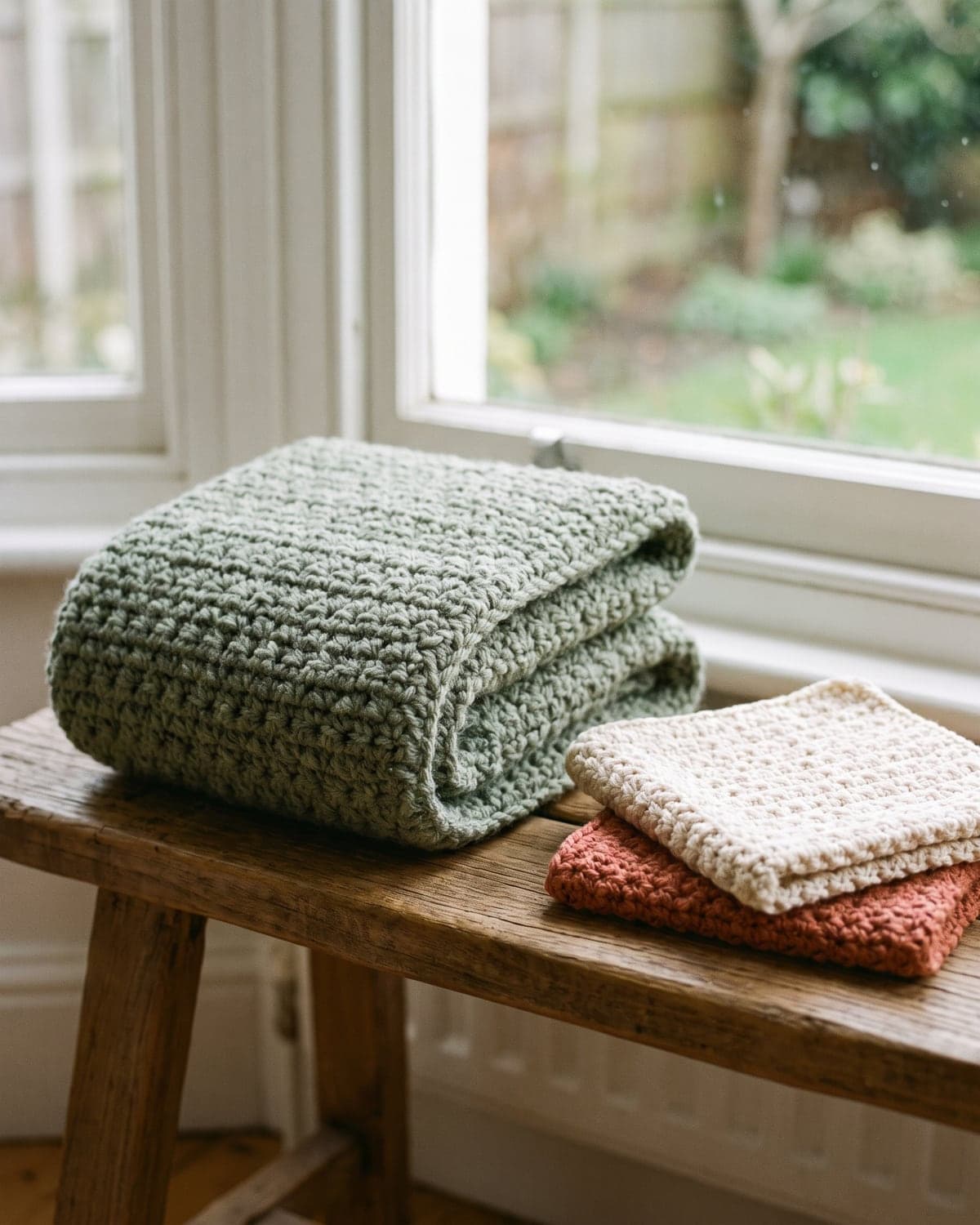
- Scarves. The fabric is flat and reversible, so both sides look good when it's worn. For a simple first scarf, see the easy crochet scarf for beginners and swap in moss stitch.
- Blankets. Dense, warm and without large holes for fingers and toes to catch in. It makes a lovely baby blanket fabric.
- Pillow covers and bags. The fabric holds its shape. Try it on the easy crochet pillow cover.
- Garments. With a larger hook, moss stitch drapes well enough for cardigans and tops.
- Borders. One or two rounds of moss stitch make a tidy frame on a blanket.
Common problems and fixes
My piece is getting narrower. You're missing the last stitch, which goes in the turning-chain space. Mark the turning chain on every row until you can spot it by eye.
My piece is getting wider. You've worked a stitch into the top of a single crochet as well as into the spaces, or two stitches into one space. Each space takes exactly one single crochet.
The fabric is stiff. The hook is too small. Go up a size or two. Moss stitch should bend easily.
The foundation edge is tighter than the rest. Make the starting chain with a larger hook, or more loosely.
I can't find the chain space. It's the gap directly under the chain, between two single crochet posts. Push the hook under the chain and out the back. Don't try to work into the chain's loops.
The sides look loopy. The turning chain is too loose. Tug the yarn after making the chain 2. Some crocheters prefer to chain 1 at the turn and work the first single crochet into the very first stitch, which gives a firmer edge.
The carried yarn puckers the side. Leave the carried strands slack, the same height as the two rows they span.
Frequently asked questions
Is moss stitch good for beginners? Yes. It uses only single crochet and chain, the row repeat is one row long, and the hook always goes into an easy-to-see space.
Is moss stitch the same as linen stitch? Yes. Linen stitch, granite stitch and woven stitch are other names for it. The name seed stitch is sometimes used too, though it more often means a different pattern.
How many chains do I start with? Any even number. You'll get half that number of single crochets, minus one.
Does moss stitch use a lot of yarn? A little less than solid single crochet, because half of each row is chains.
Does moss stitch curl? No. It lies flat without blocking, which is one reason it's so popular for scarves.
Why is it taking so long to grow? The rows are short, because each stitch sits down inside the row below. A larger hook speeds things up a bit and improves the drape.
Can I use moss stitch for a blanket? Yes. Chain an even number to the width you want and repeat row 2 until it's long enough.
More stitches to try
Moss stitch is a good first step from plain rows into stitch patterns.
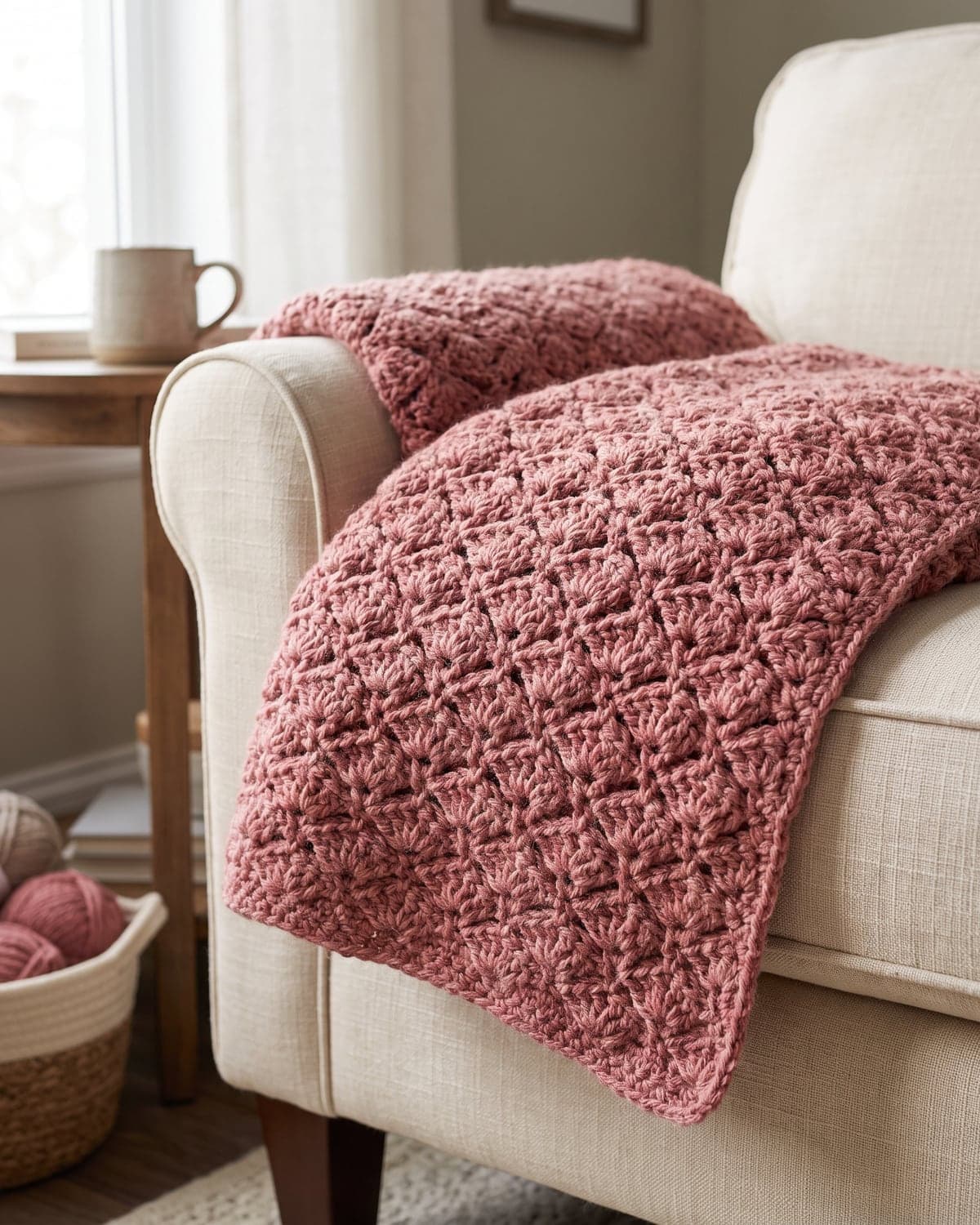
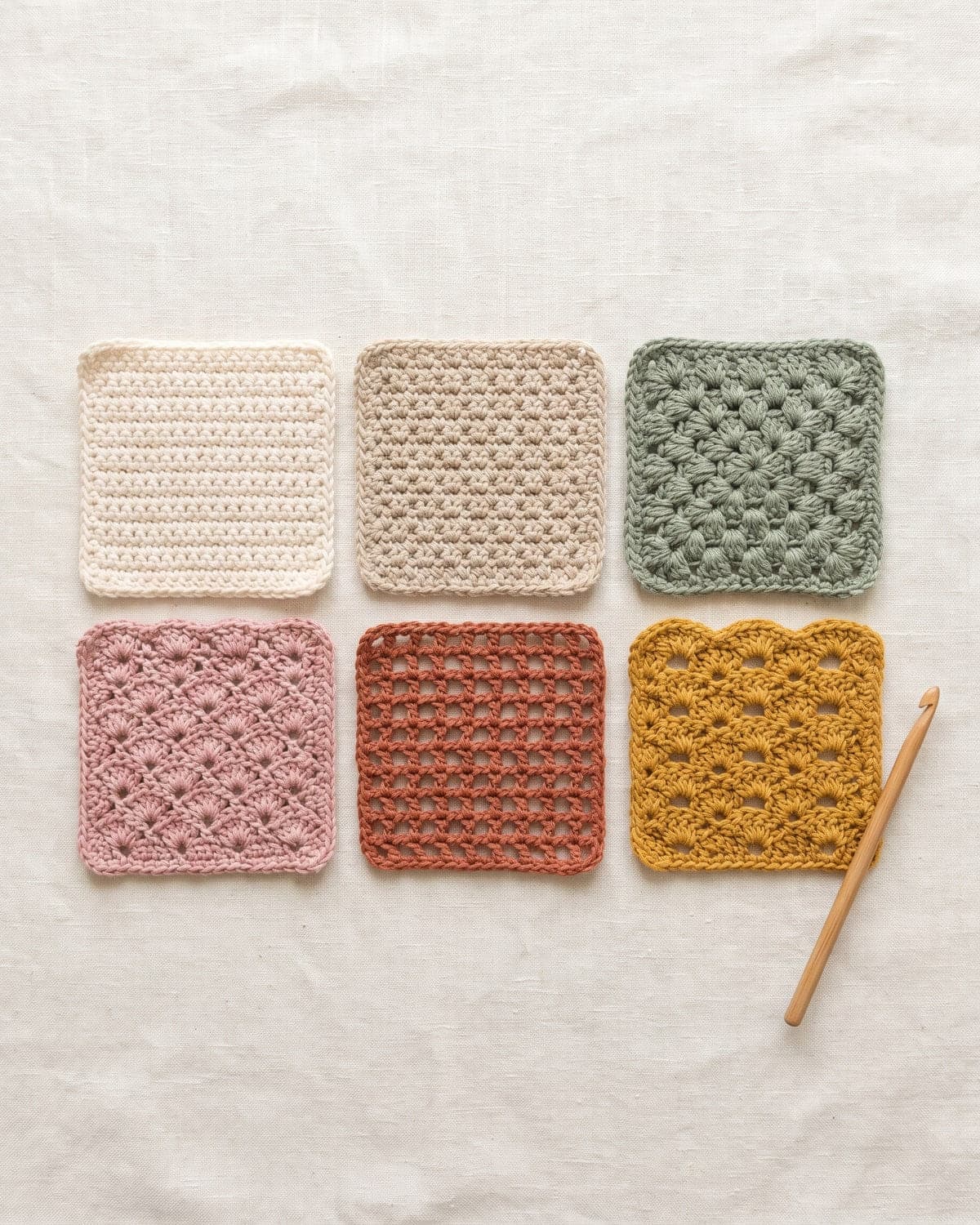
- For fans and scallops, learn the shell stitch.
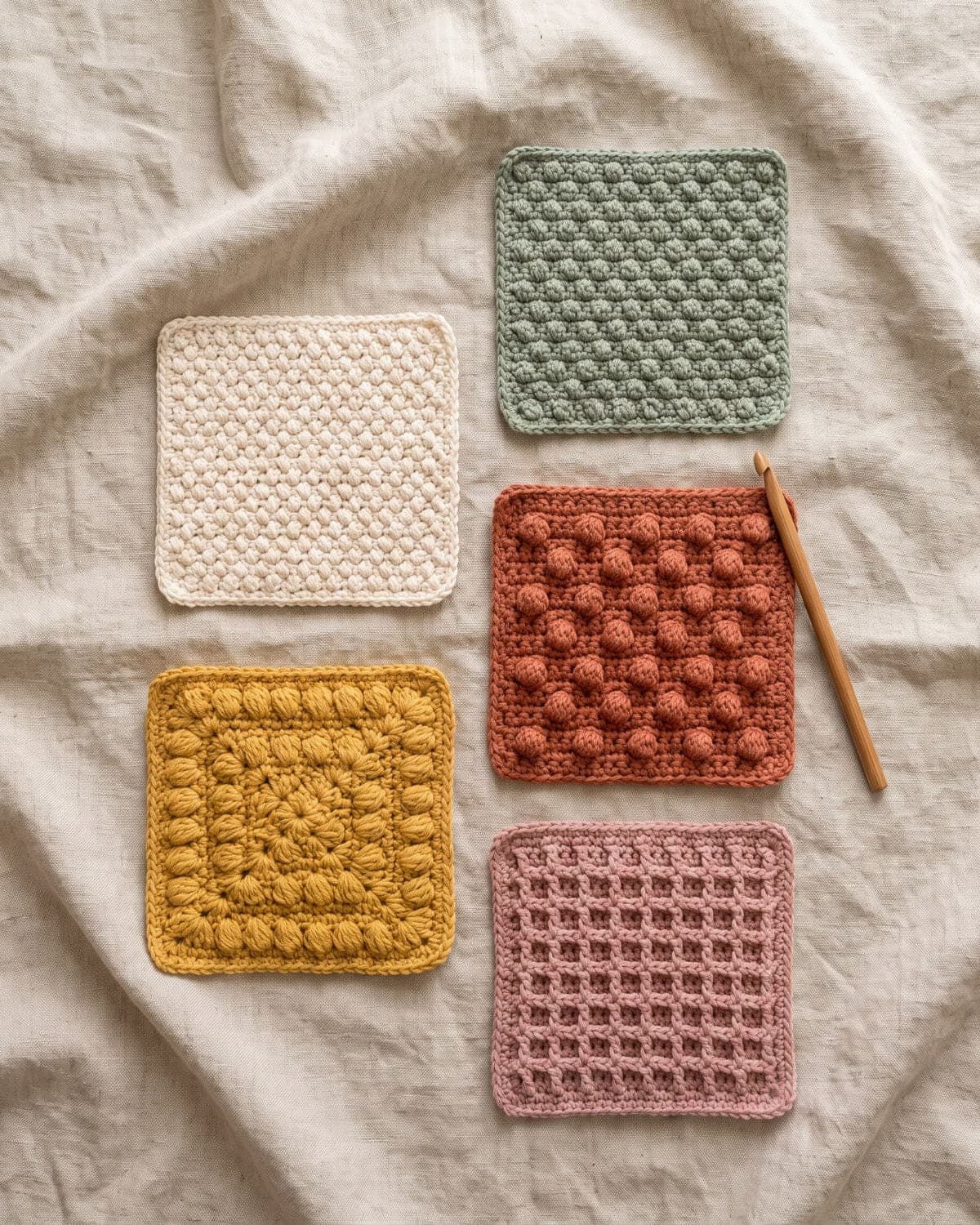
- For bumps, ridges and waffle texture, try these textured crochet stitches.
- To review the basics, go back to easy crochet stitches for beginners.
All the stitch guides are in the crochet stitches section. For standard abbreviations, see the Craft Yarn Council's list of crochet abbreviations.
Save it for later
Pin this to your Pinterest board so it's there when you're ready to stitch.
Keep stitching
Related crochet projects
Crochet stitches Shell Stitch Crochet: Easy Step-by-Step Tutorial and Border
10 min read
Crochet stitches Easy Crochet Stitches for Beginners: 6 Basics to Learn First
10 min read
Crochet stitches Textured Crochet Stitches: 5 Easy Patterns for Beginners
11 min read
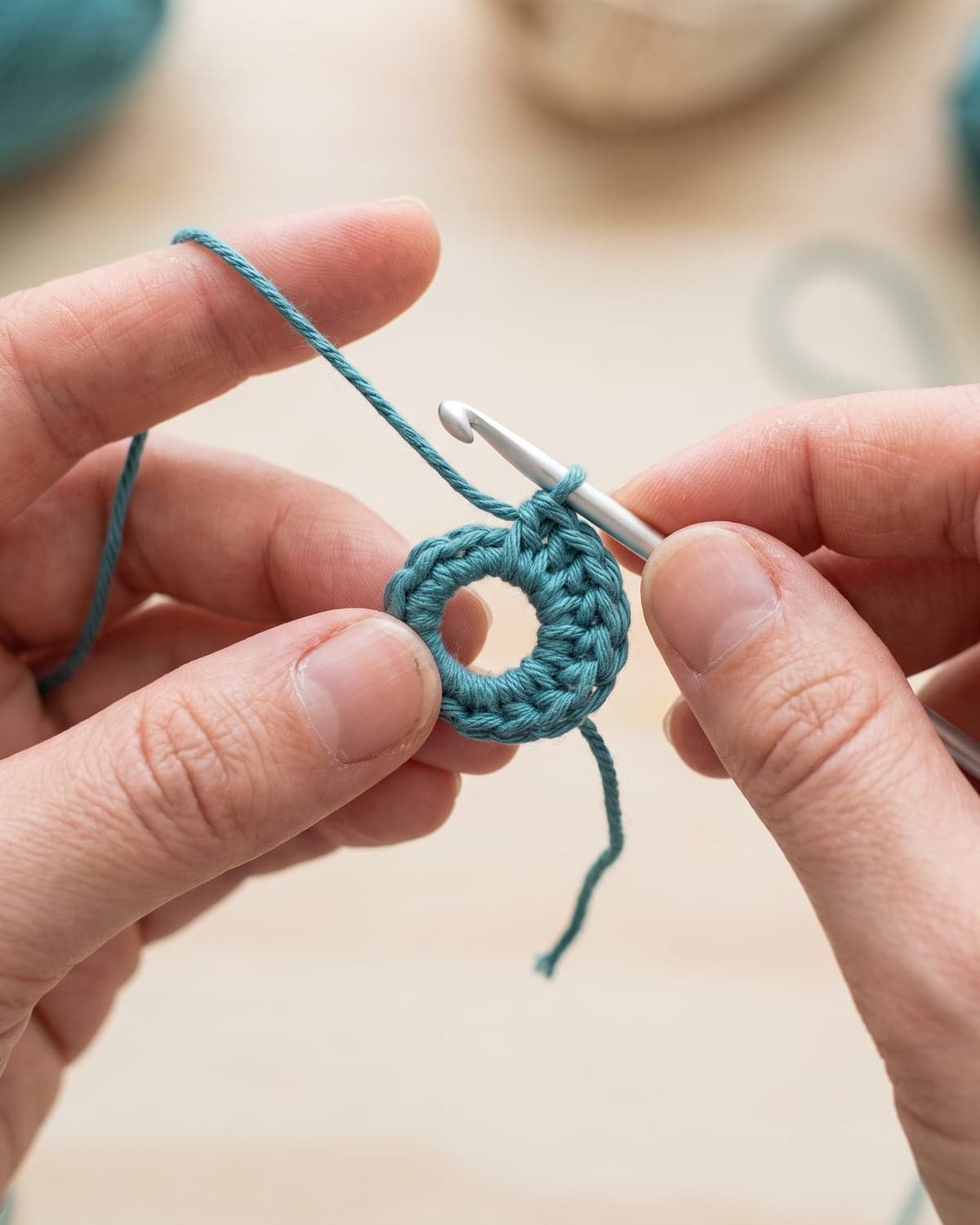
Beginner tutorials How to Crochet a Magic Ring: The Easy Way (No More Holes)
10 min read