Shell Stitch Crochet: Easy Step-by-Step Tutorial and Border
Learn the classic crochet shell stitch row by row, with checked stitch counts, straight edges, stripes, a shell border for any blanket and small and large shell variations.
By AlixaPublished 10 min read
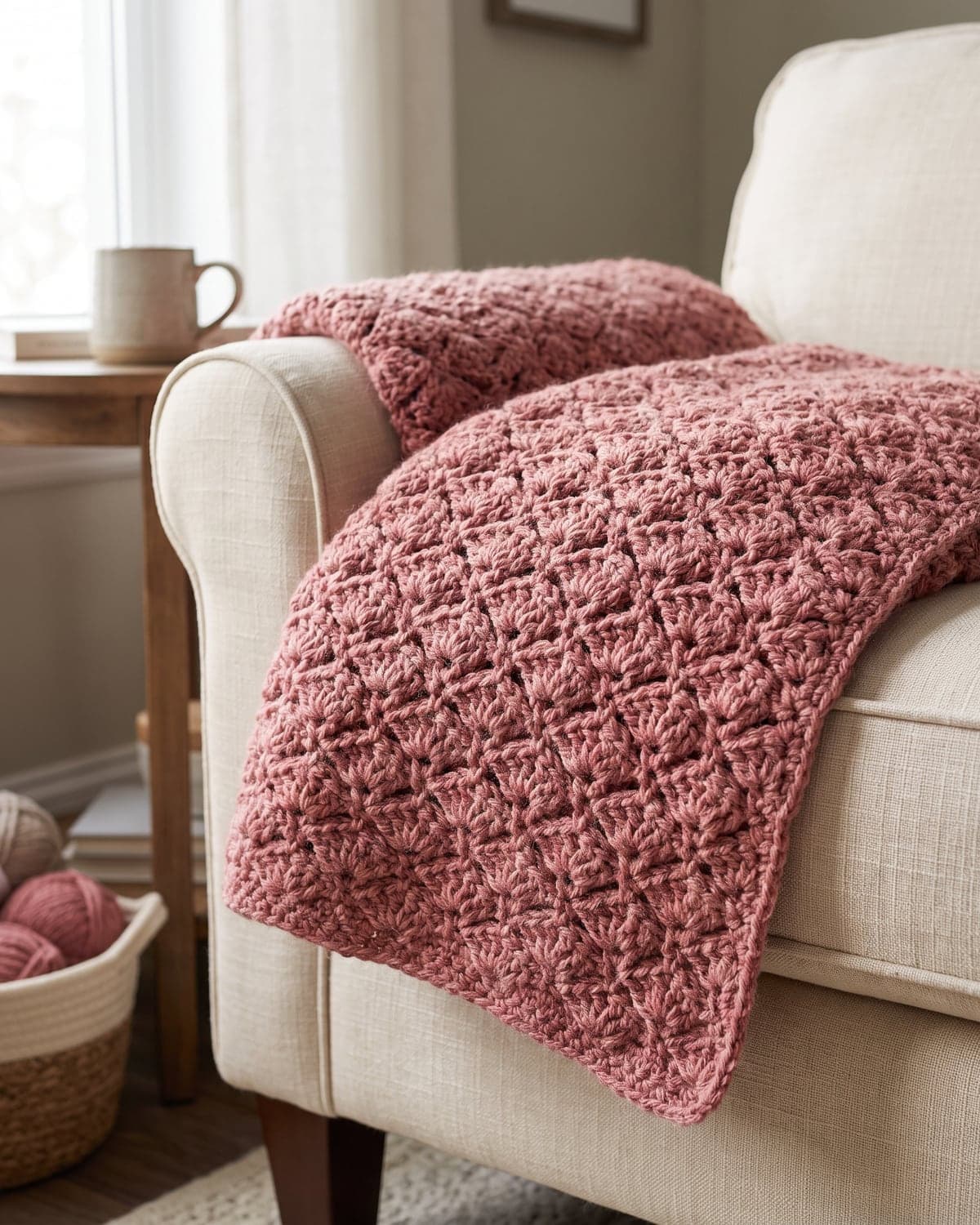
The shell stitch is the classic "pretty" crochet stitch: rows of little fans that fit together like scales, with a softly scalloped edge. It looks intricate, and it's made from just two stitches you probably already know, single crochet and double crochet. A shell is simply several double crochets worked into the same stitch, so they spread out at the top.
This tutorial covers the classic shell stitch row by row, with every stitch count checked. It also shows how to keep the sides straight, how to add stripes, how to turn the stitch into a border for any blanket, and what to make with it.
Terms used here: US crochet terms. Single crochet (sc) is called double crochet (dc) in UK terms, and double crochet (dc) is called treble crochet (tr).
At a glance
| Skill level | Confident beginner |
| Stitches | Chain, single crochet, double crochet |
| Starting chain | A multiple of 6, plus 2 |
| Row repeat | Two rows |
| Fabric | Soft, textured and almost solid, with scalloped top and bottom |
| Best for | Baby blankets, shawls, scarves, edgings, bags |
What you need
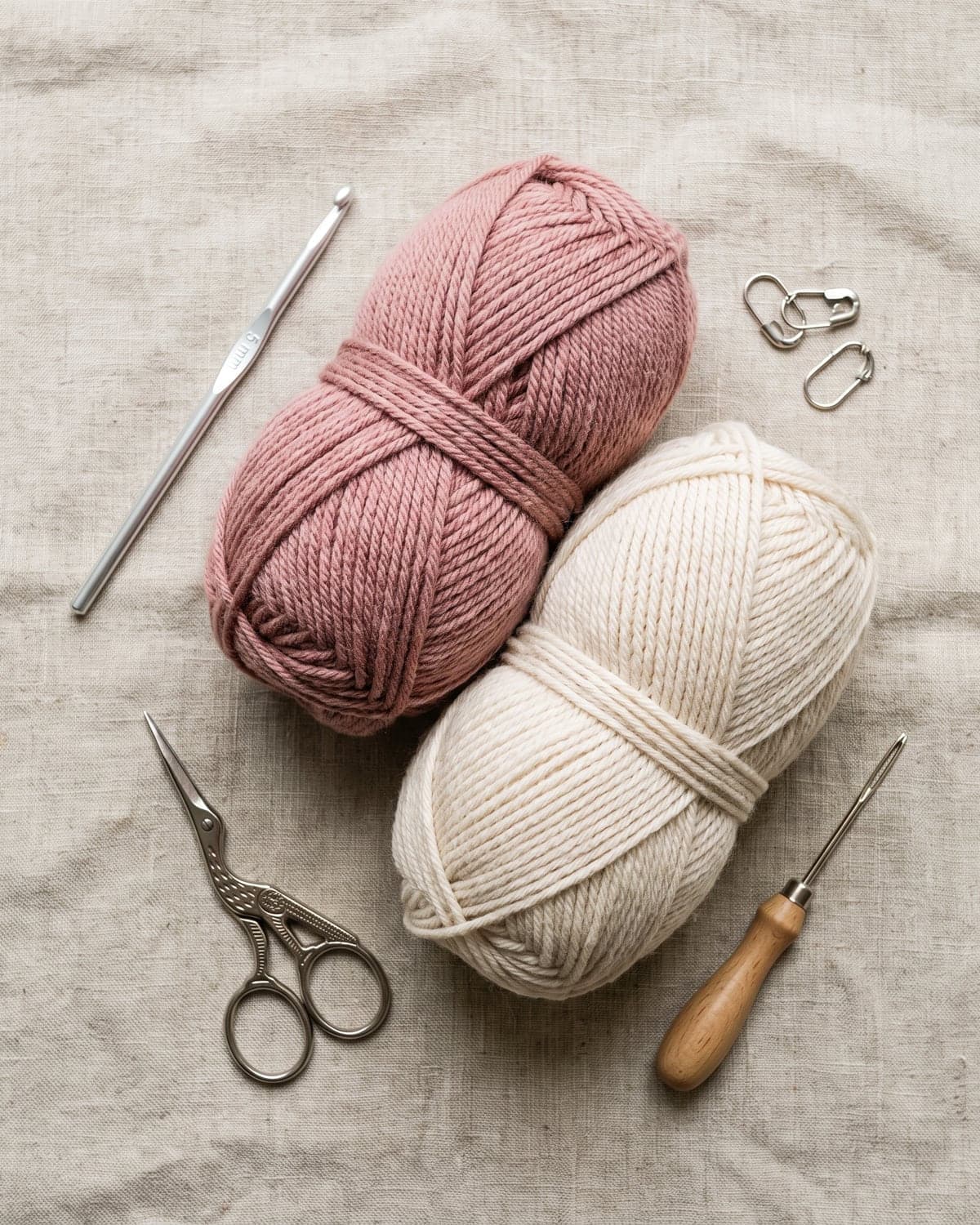
- Smooth yarn in a solid, light or medium colour. Worsted weight (weight 4) acrylic or cotton shows the fans clearly.
- A crochet hook in the size on the label. For worsted yarn that's usually 5 mm (US H-8).
- Scissors and a tapestry needle.
- Two locking stitch markers for the edges.
Shell stitch uses more yarn than plain rows, because five tall stitches are packed into the space of one. Allow about a quarter to a third more yarn than you'd use for plain double crochet over the same area. That figure is an estimate. A swatch will tell you more.
How shell stitch works
There are only two elements:
- A shell: 5 double crochets worked into one stitch.
- An anchor: 1 single crochet, which pins the fabric down between shells.
Along a row you alternate them: anchor, shell, anchor, shell. To make room for a shell's five stitches, you skip two stitches before it and two after it.
On the next row, everything shifts by half a pattern. Each new shell goes into an anchor, and each new anchor goes into the centre stitch of a shell (the third of its five double crochets). That offset makes the fans nest between each other.
Because the pattern shifts, every second row starts and ends with half a shell (3 double crochets) to keep the sides straight.
If double crochet is new to you, practise it first with easy crochet stitches for beginners.
What "a multiple of 6, plus 2" means
Each shell-and-anchor pair takes up 6 chains. You need one more chain to balance the pattern with a final anchor, and one more to turn. So you can chain 6 × any number, then add 2: 20, 26, 32, 38, 44 and so on.
For a practice swatch, chain 26. That gives four shells.
Shell stitch pattern, step by step
Row 1
- Single crochet in the 2nd chain from the hook.
- Skip 2 chains. Work 5 dc in the next chain. Skip 2 chains. Single crochet in the next chain.
- Repeat that last line to the end of the chain. Your final single crochet goes into the last chain.
With a chain of 26, you'll have 4 shells and 5 single crochets. The row will look gathered and wavy. That's correct.
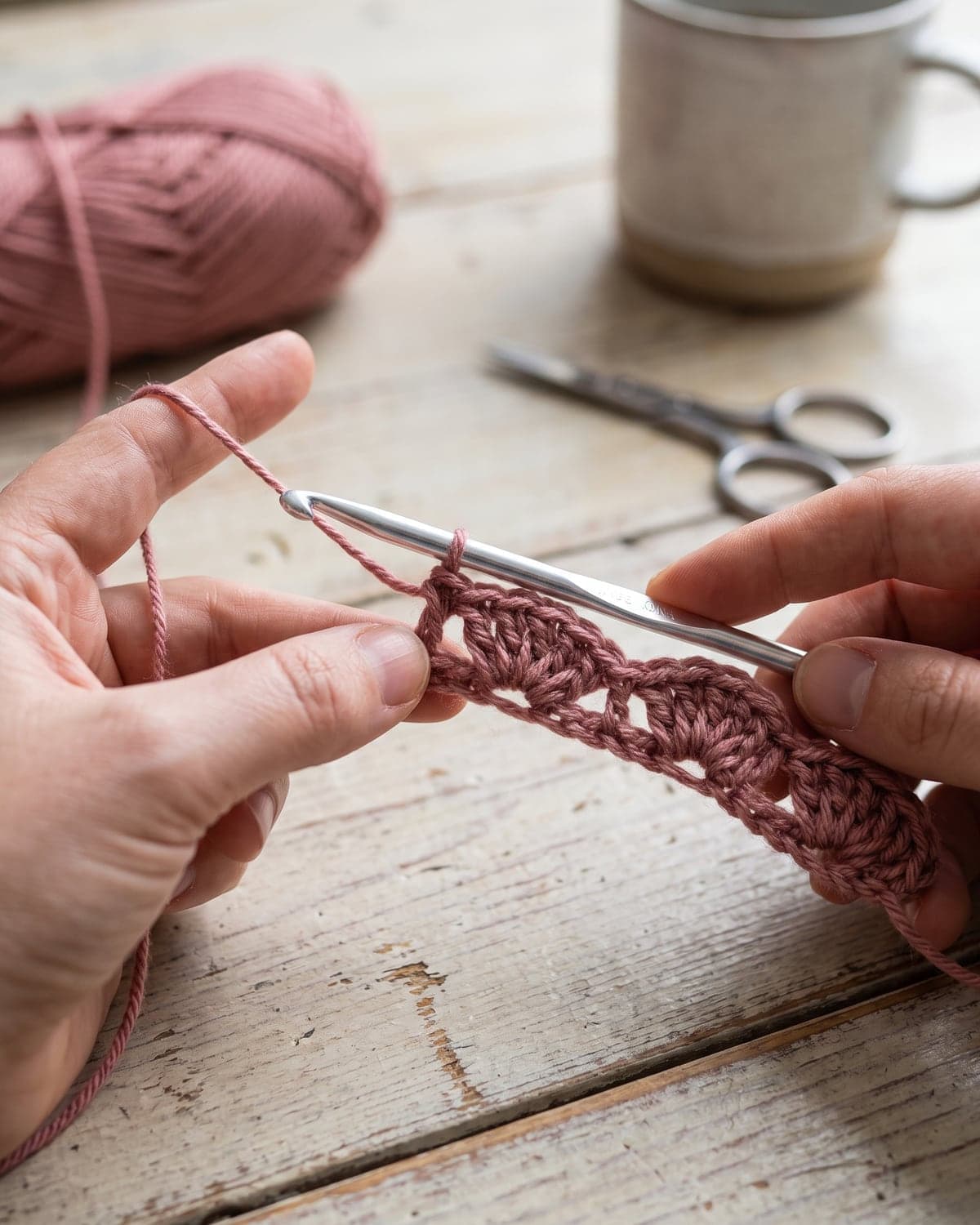
Row 2
- Chain 3 and turn. This chain counts as your first double crochet.
- Work 2 dc into the first single crochet, the one at the base of the chain. With the chain 3, that makes a half shell of 3 stitches.
- Skip 2 dc. Single crochet in the next dc, which is the centre of the shell. Skip 2 dc. Work 5 dc in the next single crochet.
- Repeat that last line across. When you reach the last single crochet of the row, work only 3 dc into it. This is the half shell at the other end.
You should have 3 full shells, a half shell at each end, and 4 single crochets.
Row 3
- Chain 1 and turn. This chain doesn't count as a stitch.
- Single crochet in the first dc.
- Skip 2 dc. Work 5 dc in the next single crochet. Skip 2 dc. Single crochet in the next dc, the centre of the shell.
- Repeat that last line across. Your final single crochet goes into the top of the chain 3 from the row below.
You should have 4 shells and 5 single crochets, the same as row 1.
Keep going
Repeat rows 2 and 3 until the piece is as long as you want. End after a row 3 for a full scalloped top edge.
Every row contains the same number of stitches: 25 for a chain of 26. Row 3 has 4 shells of 5 plus 5 single crochets. Row 2 has 3 shells of 5, two half shells of 3 and 4 single crochets. If your count is right, your sides are straight.
Finding the centre of a shell
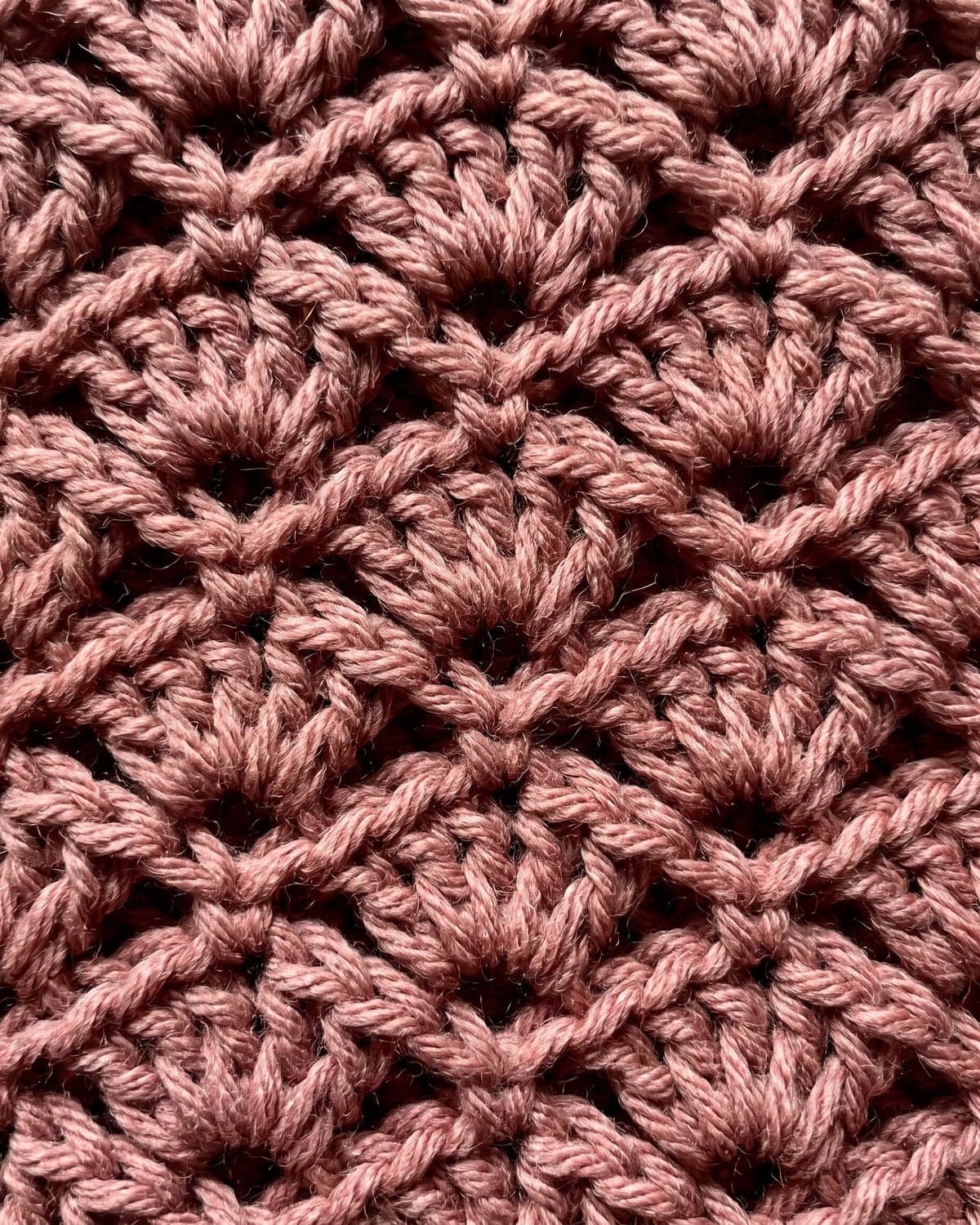
The single most common mistake is putting the anchor in the wrong stitch. Count the five double crochets of the shell: 1, 2, 3, 4, 5. The anchor goes into the top of number 3.
A quick visual check: the centre stitch is the highest point of the fan. If your single crochet sits on the peak, it's in the right place. If it sits on a slope, undo it and count again.
Keeping the sides straight
- On row 2, the first 2 dc go into the very first stitch, the single crochet right under the turning chain. It's tempting to skip it.
- On row 2, the last stitch gets 3 dc, not 5. A full shell at the end makes the piece flare.
- On row 3, the last single crochet goes into the top of the chain 3. Put a stitch marker in the third chain as soon as you've made it, so it's easy to find when you come back.
Shell stitch in stripes
Shells look lovely in colour. Change colour every two rows, at the end of a row 3, and each stripe will show as a complete line of fans.
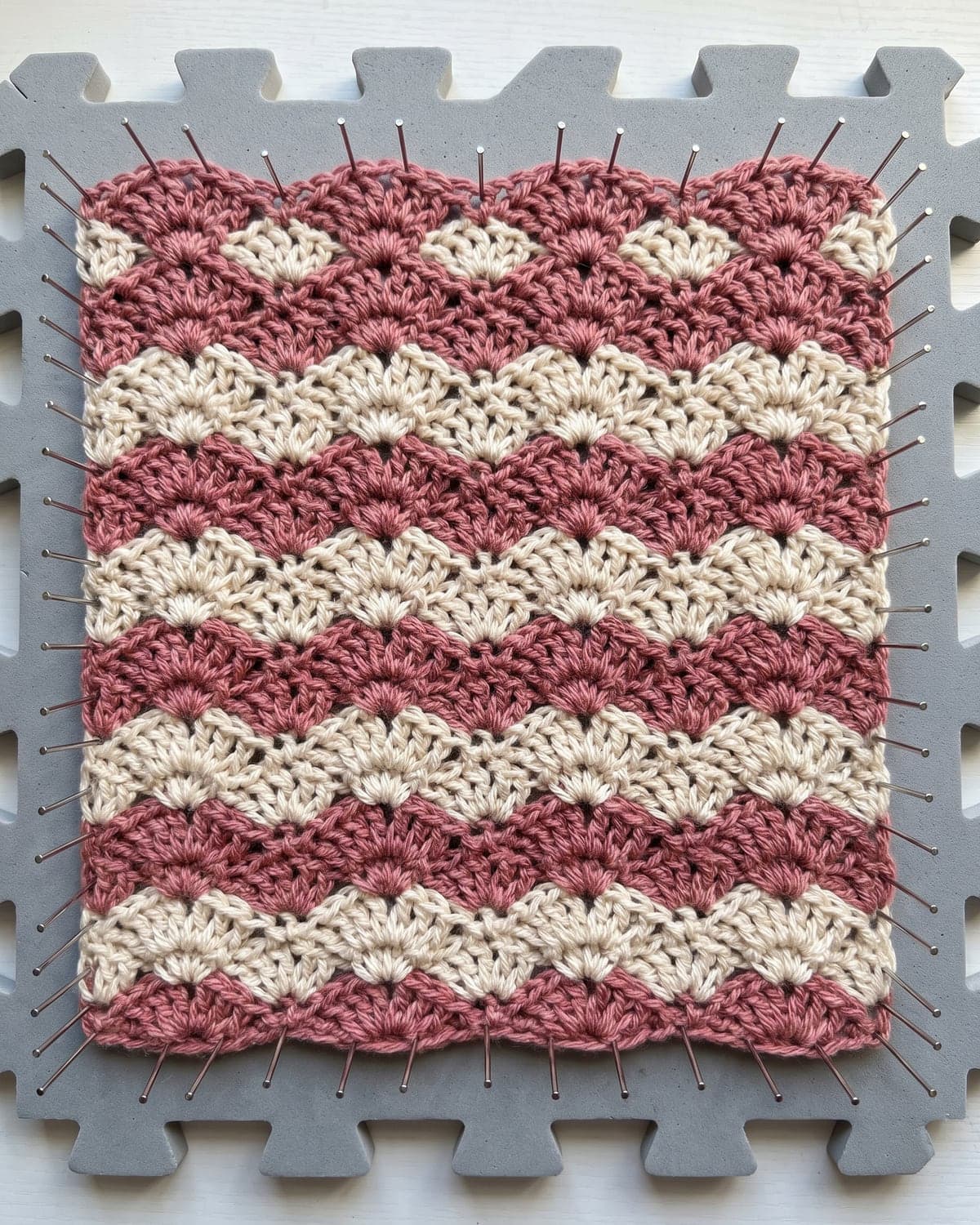 To change colour, work the last single crochet of row 3 until two loops remain on the hook. Finish the stitch with the new colour, then chain 3 and turn.
If you're using only two colours and two-row stripes, you don't need to cut the yarn. Each colour will be waiting at the same edge when you need it again. Carry it loosely up the side and hide the strands in a border later.
For a softer, ombré look, change colour after every single row. Each fan will then have a base of one colour and tips of the next.
How to use shell stitch as a border
A row of shells makes a classic finish for a plain blanket, especially a baby blanket.
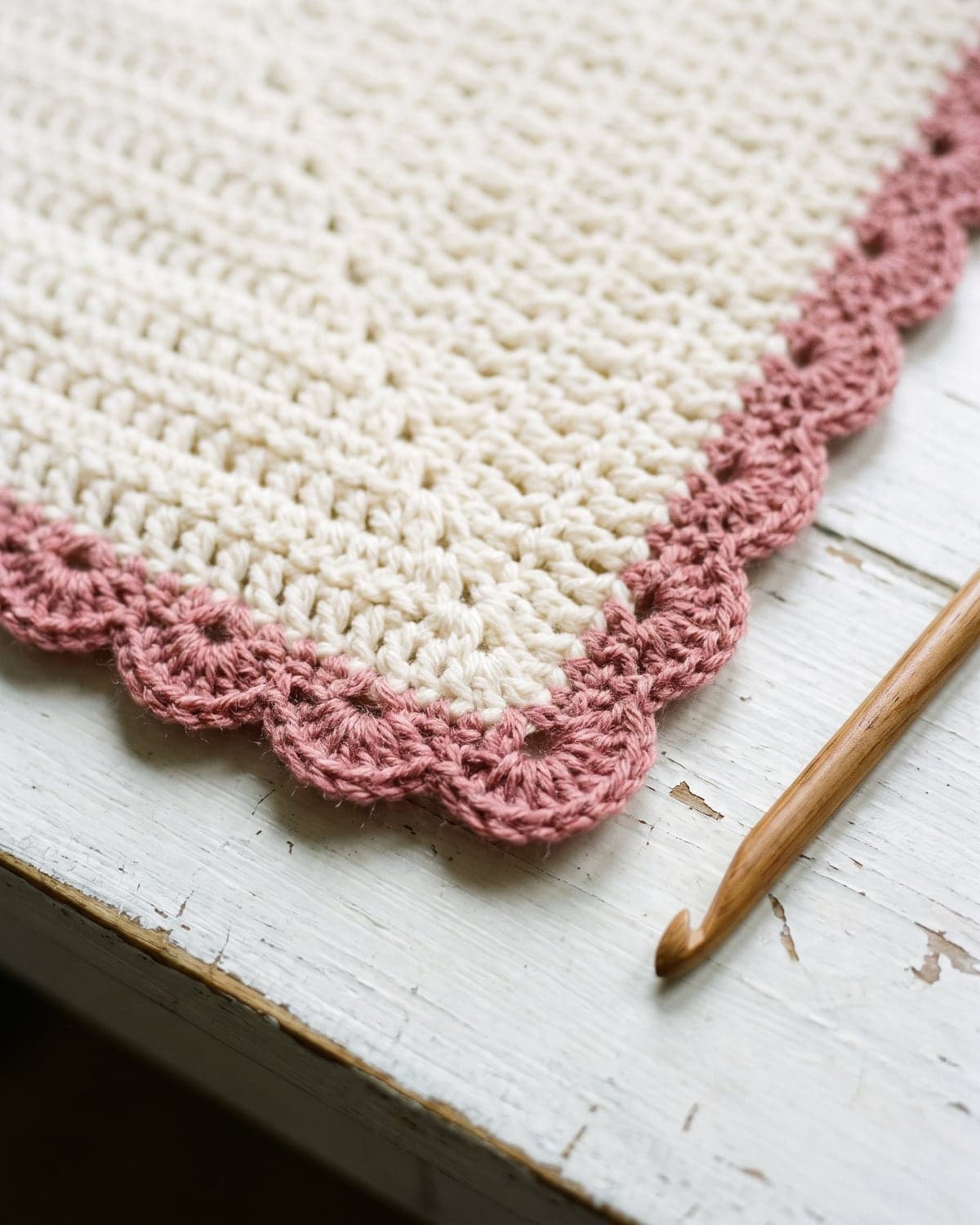
Step 1: Work a base round
Join your border colour in any corner. Work one round of single crochet evenly around the whole blanket, with 3 sc in each corner. Join with a slip stitch.
For the shells to fit exactly, the stitches along each side should be a multiple of 6. Don't worry if they aren't. You can fudge it, as explained below.
Step 2: Work the shells
Chain 1 and single crochet in the same stitch. Then repeat: skip 2 stitches, 5 dc in the next stitch, skip 2 stitches, single crochet in the next stitch.
At each corner, work a bigger shell of 7 dc into the corner stitch so the border lies flat as it turns.
If the numbers don't work out, adjust in the last few centimetres of a side. Skip only one stitch before or after a shell, once or twice, until a shell lands on the corner. Spread out like this, nobody will see it.
Join with a slip stitch to the first single crochet and fasten off.
A smaller edging uses 3-dc shells: skip 1 stitch, 3 dc in the next, skip 1, single crochet in the next. That needs a multiple of 4.
Shell stitch variations
- Small shells: 3 dc per shell, skipping 1 stitch on each side. Starting chain: a multiple of 4, plus 2. A lighter, quicker fabric.
- Large shells: 7 dc per shell, skipping 3 stitches on each side. Starting chain: a multiple of 8, plus 2. Bold and very scalloped.
- Open shells: (2 dc, chain 1, 2 dc) in one stitch. A lacier fabric for shawls.
- Shells in the back loop only: work each row-3 anchor into the back loop of the centre stitch for a slightly raised ridge.
What to make with shell stitch
- A baby blanket. Shell stitch in a soft washable yarn is a traditional baby gift. Chain a multiple of 6 plus 2 to the width you want. Sizes and safety notes are in the easy crochet baby blanket guide.
- A scarf or shawl. Use a hook one size bigger for more drape. The basic shape is in easy crochet scarf for beginners.
- A border. Add it to the chunky crochet blanket or a granny square blanket.
- Dishcloths and washcloths. A chain of 32 in cotton makes a pretty cloth.
Common problems and fixes
The fabric ruffles and won't lie flat. You're skipping too few stitches. Each shell needs two skipped stitches on each side.
The fabric pulls in and puckers. You're skipping too many stitches, or your double crochets are short. Pull each loop up to full height before finishing the stitch.
The piece is getting wider. There's a full shell where a half shell should be, at the end of row 2.
The piece is getting narrower. The last stitch of the row is being missed. On row 2 it's the final single crochet, and on row 3 it's the top of the chain 3.
The shells don't line up. An anchor went into the wrong stitch of a shell. Check that it sits on the peak.
The bottom edge is tight and curves. The foundation chain is tighter than the stitches. Chain with a hook one size larger.
The sides have gaps. The chain 3 is looser than a real double crochet. Try chaining 2 at the start of row 2 and treating it as the first dc.
Frequently asked questions
Is shell stitch good for beginners? Yes, once you can single and double crochet. The repeat is short, and the result looks impressive.
How many chains do I need for shell stitch? A multiple of 6, plus 2, for the classic 5-dc shell. For example 26, 32, 62 or 122.
Does shell stitch use more yarn? Yes. It's denser than plain double crochet. Buy a little extra.
What's the difference between a shell and a fan? The names are often used for the same thing. Some designers use "fan" for a shell with chains between its stitches.
What's the difference between a shell and a V-stitch? A V-stitch is two double crochets with a chain between them, worked into one place. A shell has more stitches and no chains.
Can I use shell stitch for a blanket? Yes. It's one of the most popular blanket stitches. It's warm, it has no large holes, and both edges finish with scallops.
Do I need to block shell stitch? It isn't essential, but a light blocking opens the fans and evens out the edges, especially in cotton.
More stitches to try
- The moss stitch is flat and woven-looking, and even easier.
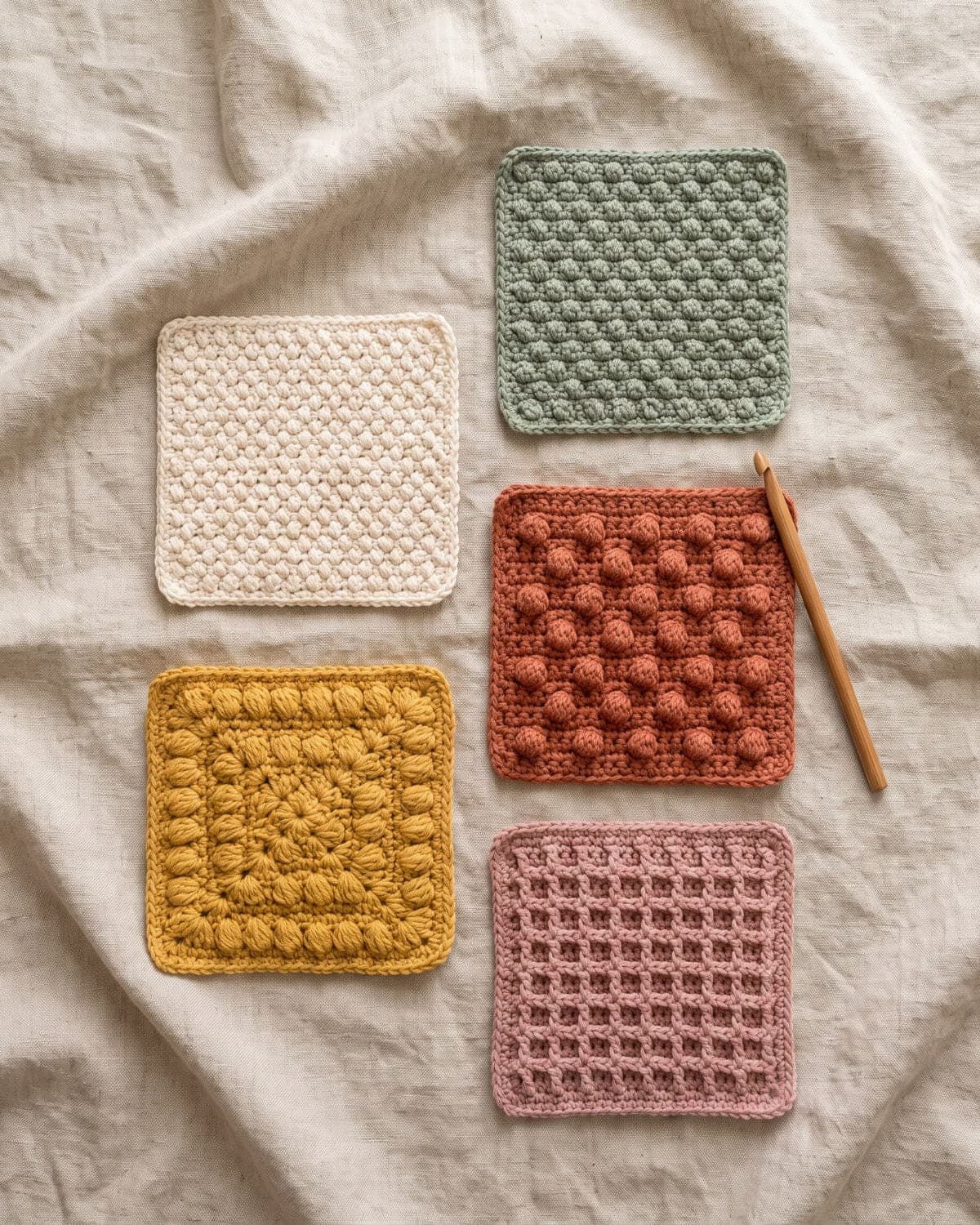
- Textured crochet stitches covers bobbles, puffs and waffle stitch.
- For a quick review of chain, single and double crochet, see easy crochet stitches for beginners.
All the stitch tutorials are in the crochet stitches section. If the shorthand in patterns is unfamiliar, how to read crochet patterns explains it, and the Craft Yarn Council keeps the standard list of crochet abbreviations.
Save it for later
Pin this to your Pinterest board so it's there when you're ready to stitch.
Keep stitching
Related crochet projects
Crochet stitches Moss Stitch Crochet: Easy Tutorial for a Beautiful Woven Texture
10 min read
Crochet stitches Easy Crochet Stitches for Beginners: 6 Basics to Learn First
10 min read
Crochet stitches Textured Crochet Stitches: 5 Easy Patterns for Beginners
11 min read
Beginner tutorials How to Crochet a Granny Square: Easy Step-by-Step for Beginners
12 min read