Easy Crochet Dishcloth: 2 Free Patterns for Beginners
Two easy crochet dishcloth patterns in cotton: a smooth classic cloth and a textured scrubby one. With a border, a hanging loop, size changes, a gift set idea and washing advice.
By AlixaPublished 10 min read
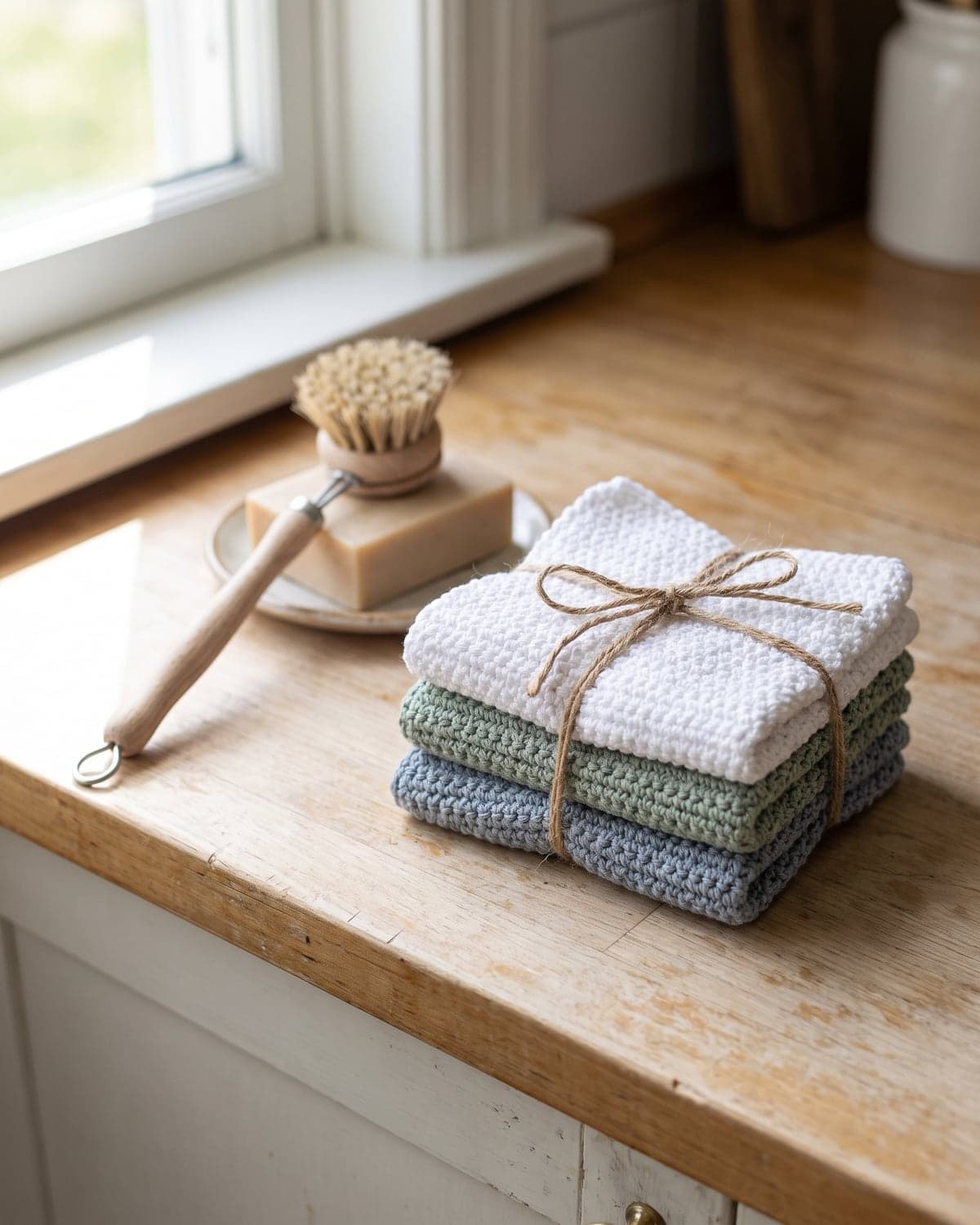
A dishcloth is the most useful thing you can make with a hook and one ball of cotton. It's a small square, so it's finished in an evening. It doesn't have to be perfect, because it's going to scrub pans. And it's good practice for straight edges, even tension and turning your work, which are the skills that every bigger project depends on.
This guide has two patterns. The first is a smooth, classic cloth in half double crochet. The second is a bumpy, textured cloth that scrubs better and is just as easy. Both come with a border and a hanging loop, and there's advice on the right yarn, washing and making a gift set.
Terms used here: US crochet terms. Single crochet (sc) is UK double crochet, half double crochet (hdc) is UK half treble, and double crochet (dc) is UK treble.
About these patterns: they're simple designs written for this guide. The stitch counts have been checked. Finished sizes are approximate and depend on your yarn and tension.
At a glance
| Skill level | Beginner |
| Stitches | Chain, single, half double and double crochet |
| Yarn | Worsted weight (weight 4) 100% cotton, about 60 to 75 m |
| Hook | 4.5 mm (US 7) |
| Finished size | About 20 cm (8 in) square |
| Construction | Worked flat in rows, with a border added at the end |
| Time | One to two hours a cloth |
What you need
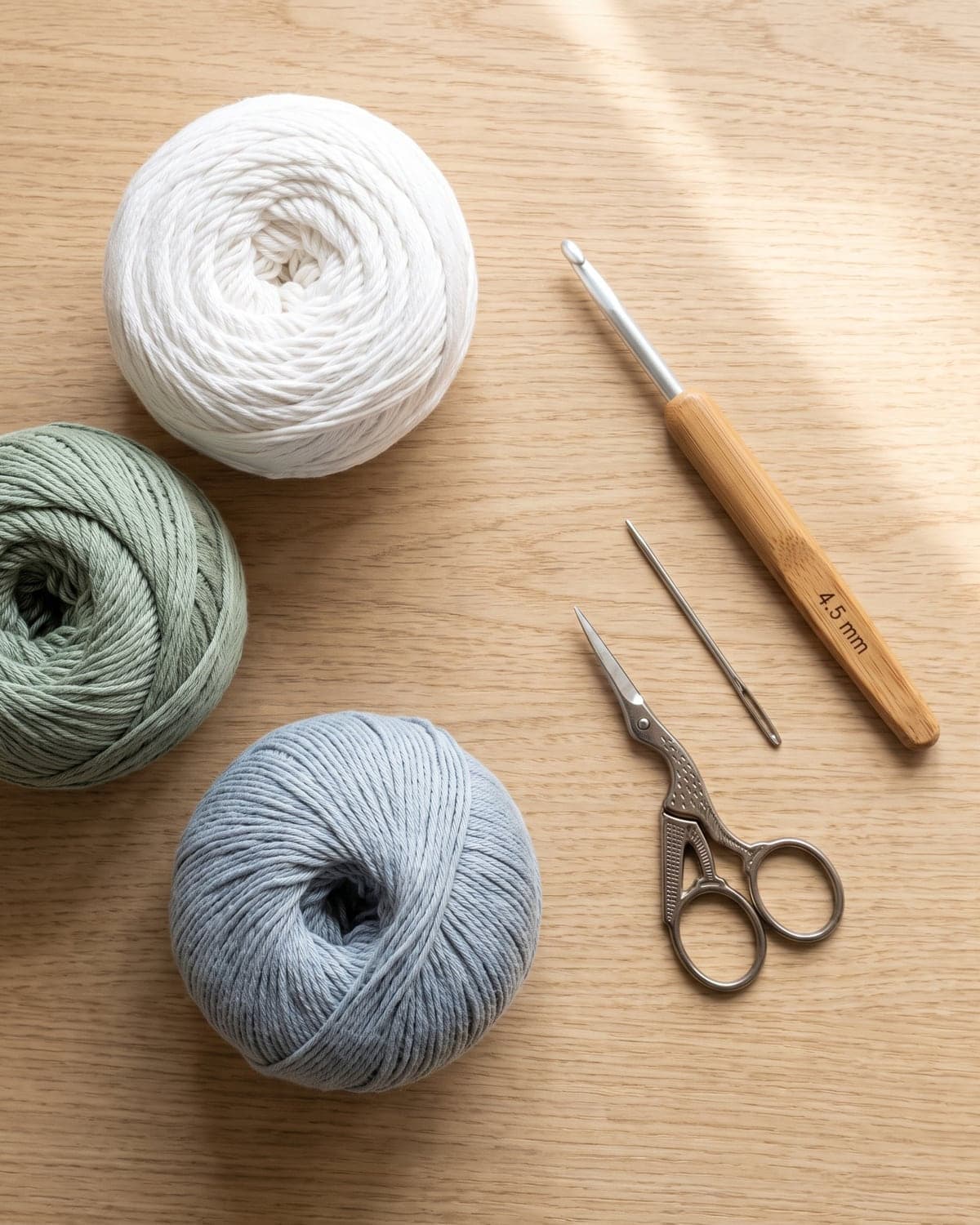
- 100% cotton yarn, worsted weight. One 50 g ball, about 75 to 85 m, makes one cloth of this size with a border. Check the length on the label.
- A 4.5 mm (US 7) hook. That's a little smaller than usual for worsted yarn, which gives a firm fabric that holds up to scrubbing.
- Scissors and a tapestry needle.
Why it has to be cotton
This is the one project where the fibre really matters.
- Cotton absorbs water. Acrylic doesn't. An acrylic cloth just pushes water around.
- Cotton can take heat. You can wash it hot, and it won't melt if it touches a hot pan. Acrylic can.
- Cotton gets softer and more absorbent with every wash.
Look for yarn labelled "kitchen cotton" or "dishcloth cotton". It's matte, slightly rough and inexpensive. Shiny mercerised cotton is less absorbent and better kept for other things. Cotton and linen blends work well too.
Light colours show stains. Mid-tones, such as sage, blue-grey, mustard and terracotta, hide them best.
Gauge
About 15 half double crochets and 11 rows measure 10 cm (4 in).
Gauge isn't important here. If your cloth comes out at 18 cm or 22 cm, it will still wash dishes. If it comes out much bigger, you may need more than one ball.
Pattern 1: classic dishcloth
This is a smooth, soft cloth made with a single stitch. If half double crochet is new, see easy crochet stitches for beginners.
- Chain 31.
- Row 1: hdc in the 2nd chain from the hook and in each chain across. (30 stitches)
- Row 2: chain 1 and turn. The chain doesn't count as a stitch. Hdc in the first stitch and in each stitch across. (30)
- Repeat row 2 until the cloth is square. That's about 22 rows.
Don't fasten off if you're adding the border in the same colour.
How to tell it's square: fold the bottom corner up diagonally, so the foundation edge lies along one side edge. When the top row is level with the point of the triangle, the cloth is as tall as it is wide.
Pattern 2: textured dishcloth
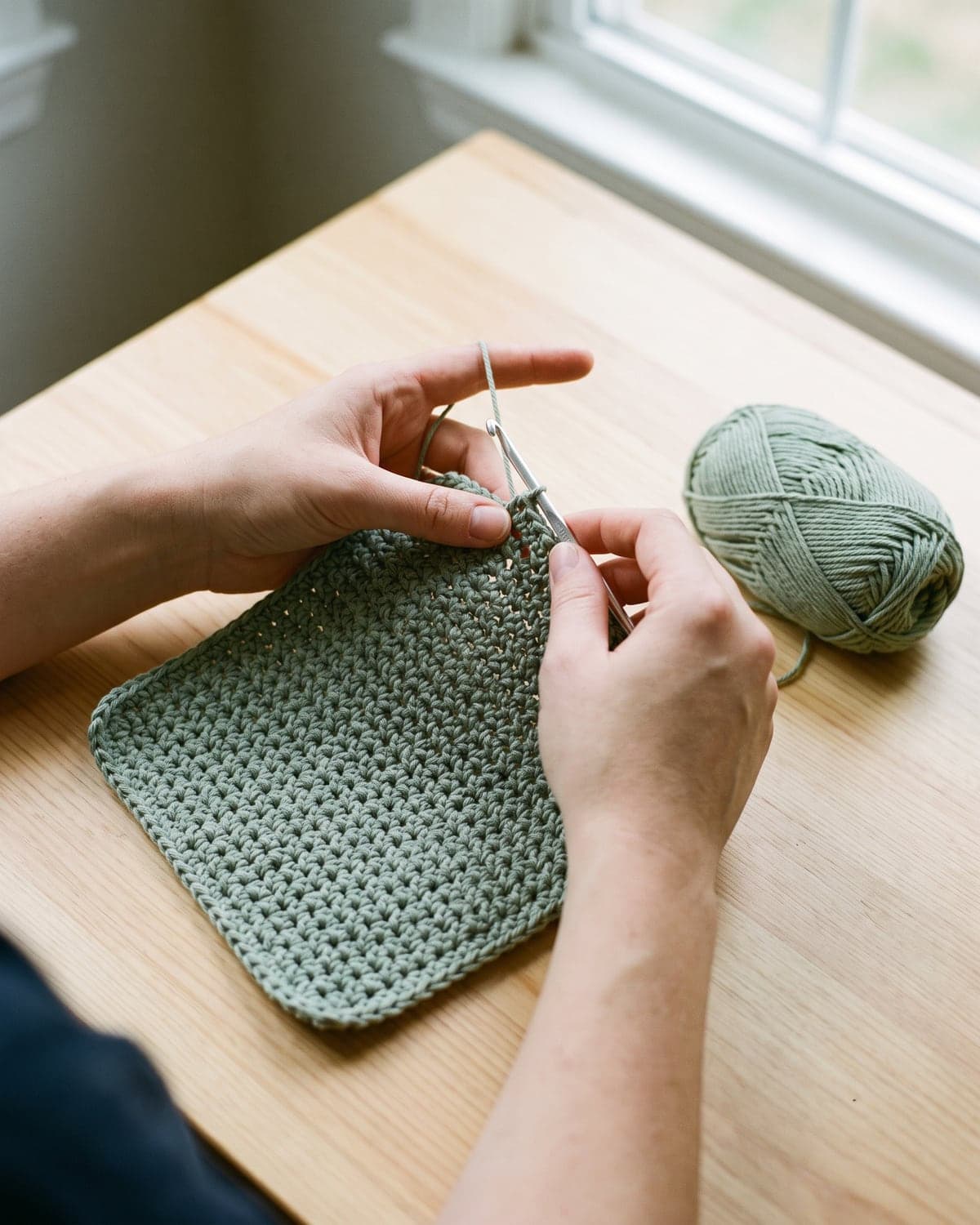
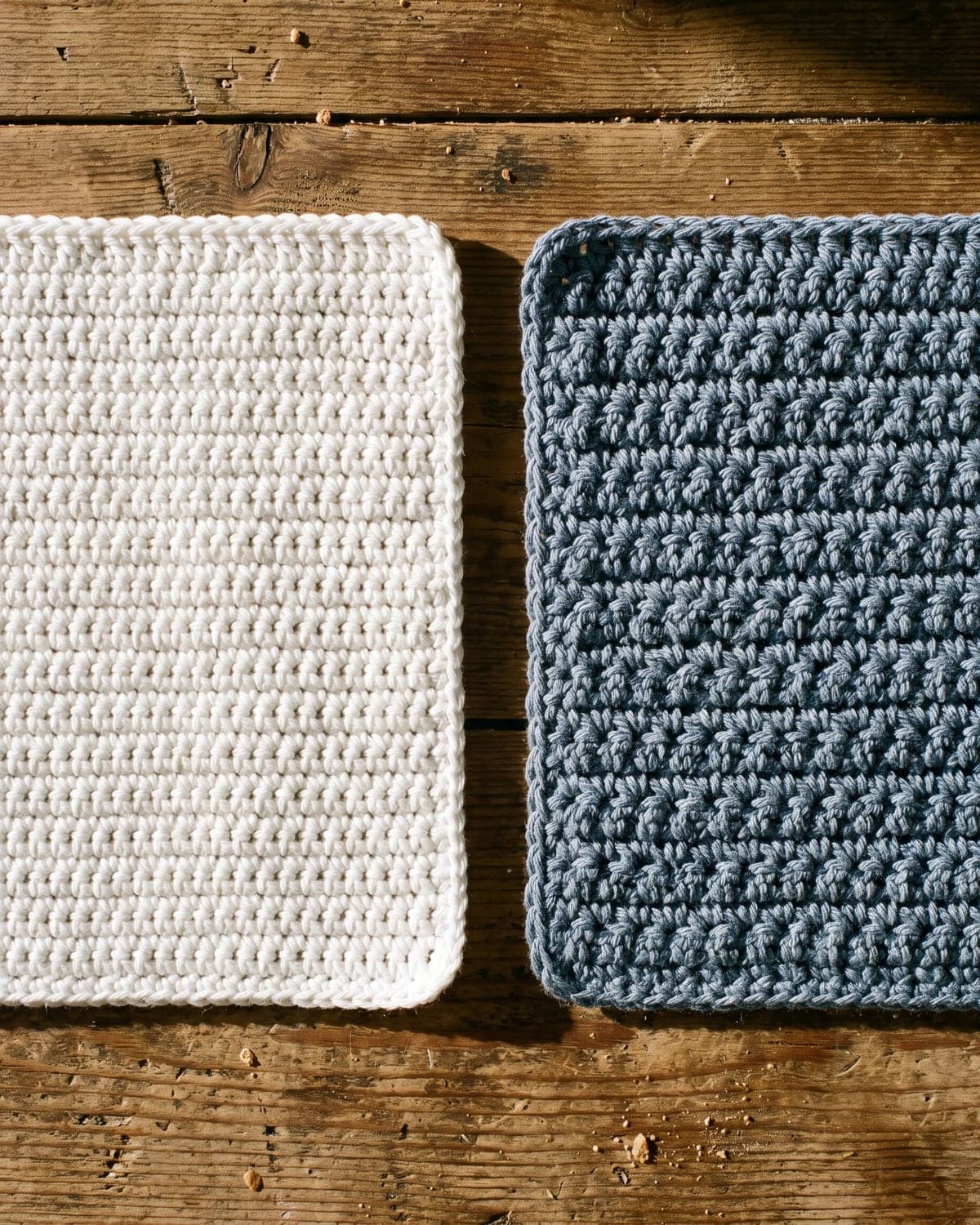
This cloth alternates a short stitch and a tall stitch. On the next row you swap them: a short stitch goes into each tall one, and a tall stitch into each short one. The tall stitches get squeezed and pop out as little bumps. The result is a pebbled fabric that's good at scrubbing.
- Chain 31.
- Row 1: sc in the 2nd chain from the hook, dc in the next chain. Repeat (sc in the next chain, dc in the next chain) across. The row ends with a dc. (30 stitches)
- Row 2: chain 1 and turn. Sc in the first stitch, which is a dc. Dc in the next stitch, which is an sc. Repeat (sc in the next dc, dc in the next sc) across. The row ends with a dc in the last sc. (30)
- Repeat row 2 until the cloth is square. That's about 26 rows.
Every row is the same: it starts with a single crochet and ends with a double crochet. If you ever find yourself putting a single crochet into a single crochet, you've lost your place. Count back to the start of the row.
The pattern needs an even number of stitches. This stitch is often called lemon peel stitch, and there's more about it in textured crochet stitches.
Border and hanging loop
A border straightens the edges and makes the cloth last longer. The loop lets you hang it up to dry, which is what keeps a dishcloth fresh.
Single crochet border
- At the end of your last row, chain 1. Don't turn.
- Work down the first side, into the row ends. For the classic cloth, work 1 sc into the end of each row, with an extra stitch now and then if the edge pulls in. For the textured cloth, work 1 sc into each sc row end and 2 sc into each dc row end.
- At the corner, work 3 sc in the same place.
- Work along the bottom, 1 sc in the base of each foundation chain. (30)
- Corner: 3 sc.
- Work up the second side, as you did the first.
- Corner: 3 sc.
- Work along the top, 1 sc in each stitch. (30)
- Last corner: 2 sc in the corner, then make the loop.
Hanging loop
Chain 10. Slip stitch back into the corner stitch. Work 1 more sc in the corner.
For a stronger loop, turn and work 12 sc around the chain loop, then slip stitch into the corner again.
Join the round with a slip stitch to the first sc. Fasten off and weave in the ends.
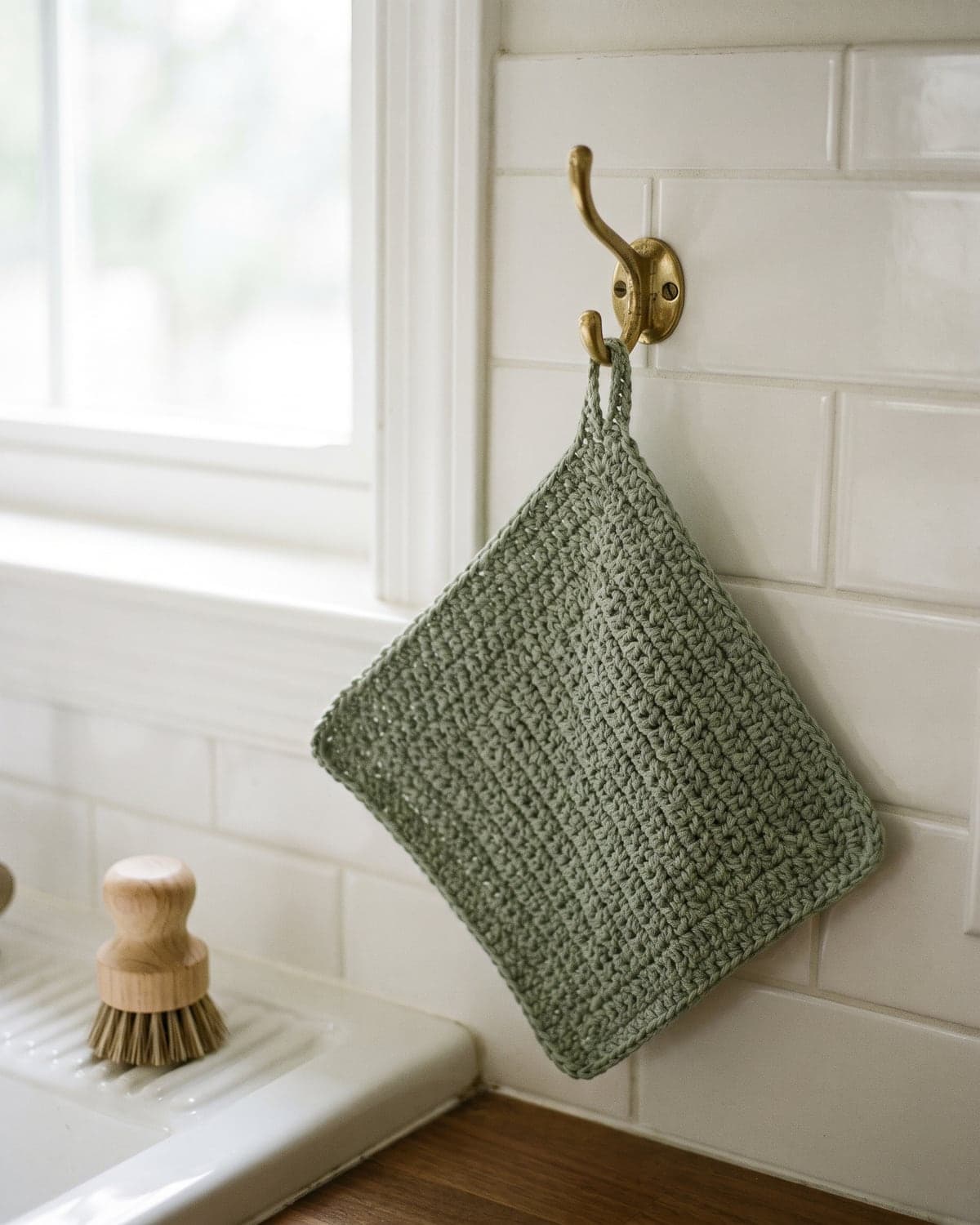 If the border ripples, there are too many stitches on the sides. Skip a row end every few stitches. If it pulls in, add a few.
Weaving in ends on a cloth that gets scrubbed
Dishcloths have a hard life, so secure the ends well. Run each tail through at least 5 cm of stitches, turn and go back through 2 or 3 cm, then turn once more. Three passes in cotton will stay put.
Variations
A different size
- Washcloth or face cloth: 23 to 25 cm square. Chain 37 and work until square. For a softer cloth for skin, use a 5 mm hook.
- Coaster or mini scrubby: chain 15 and work until square.
- Kitchen towel: chain 46 and work until the piece is about 45 cm long. Add a hanging loop on a short side.
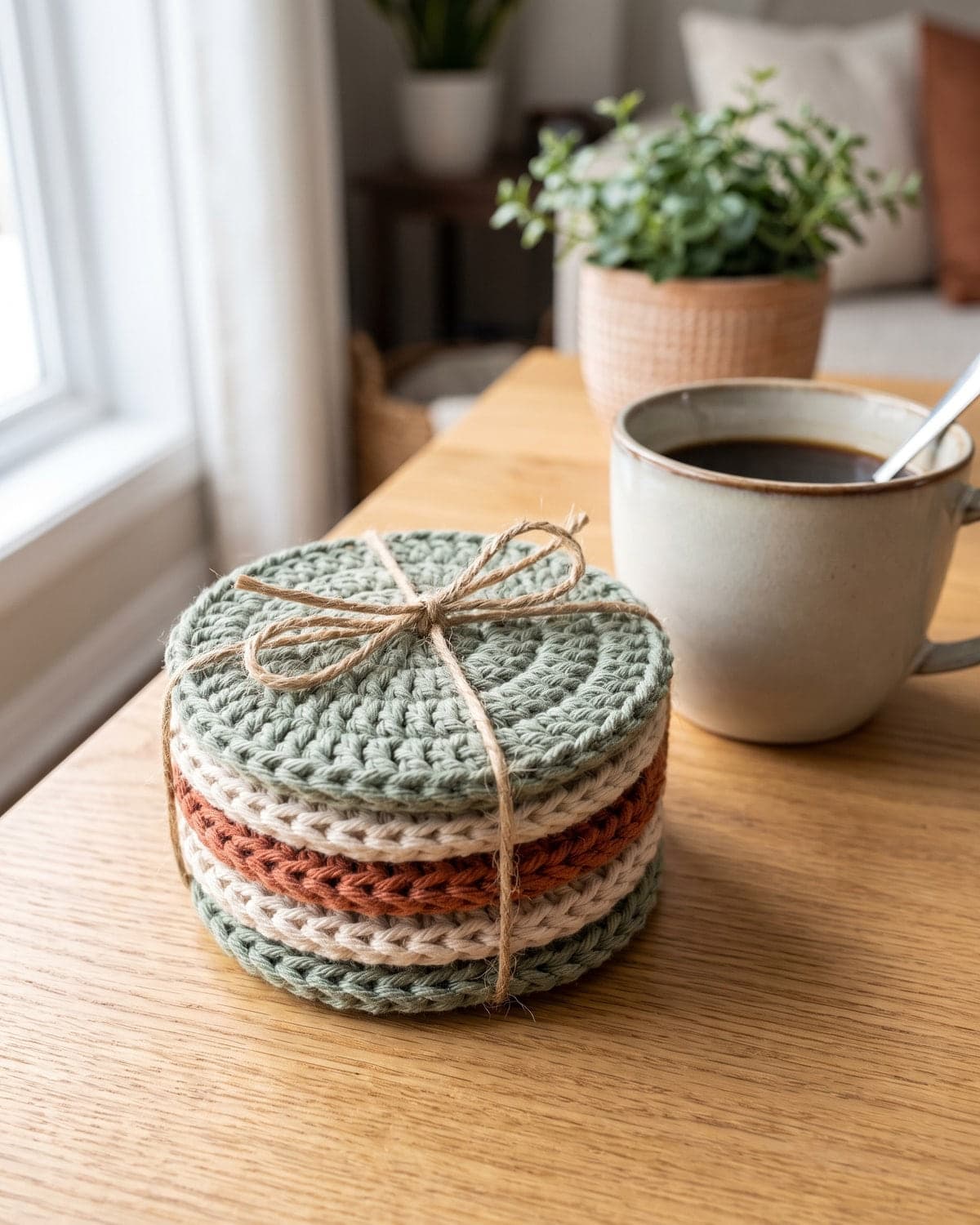
- Reusable make-up rounds: small flat circles. The method is in easy crochet coasters.
For any size with pattern 1, chain one more than the number of stitches you want. For pattern 2, the number of stitches must be even, so chain an odd number.
Stripes
Change colour every two rows and carry the unused yarn up the side, where the border will cover it. Two colours and two-row stripes mean there are only four ends.
Moss stitch cloth
A flat, woven-looking fabric that makes a very smart cloth. The pattern is in the moss stitch tutorial.
Scalloped edge
After the single crochet border, add a round of small shells. See the shell stitch tutorial.
Scrubby side
Hold a strand of polyester scrubby yarn together with the cotton for the last few rows, or make a small all-scrubby square for pans.
A handmade gift set
Dishcloths are one of the best small gifts you can make. They're quick, inexpensive and useful, and people do notice the difference from a shop-bought cloth.
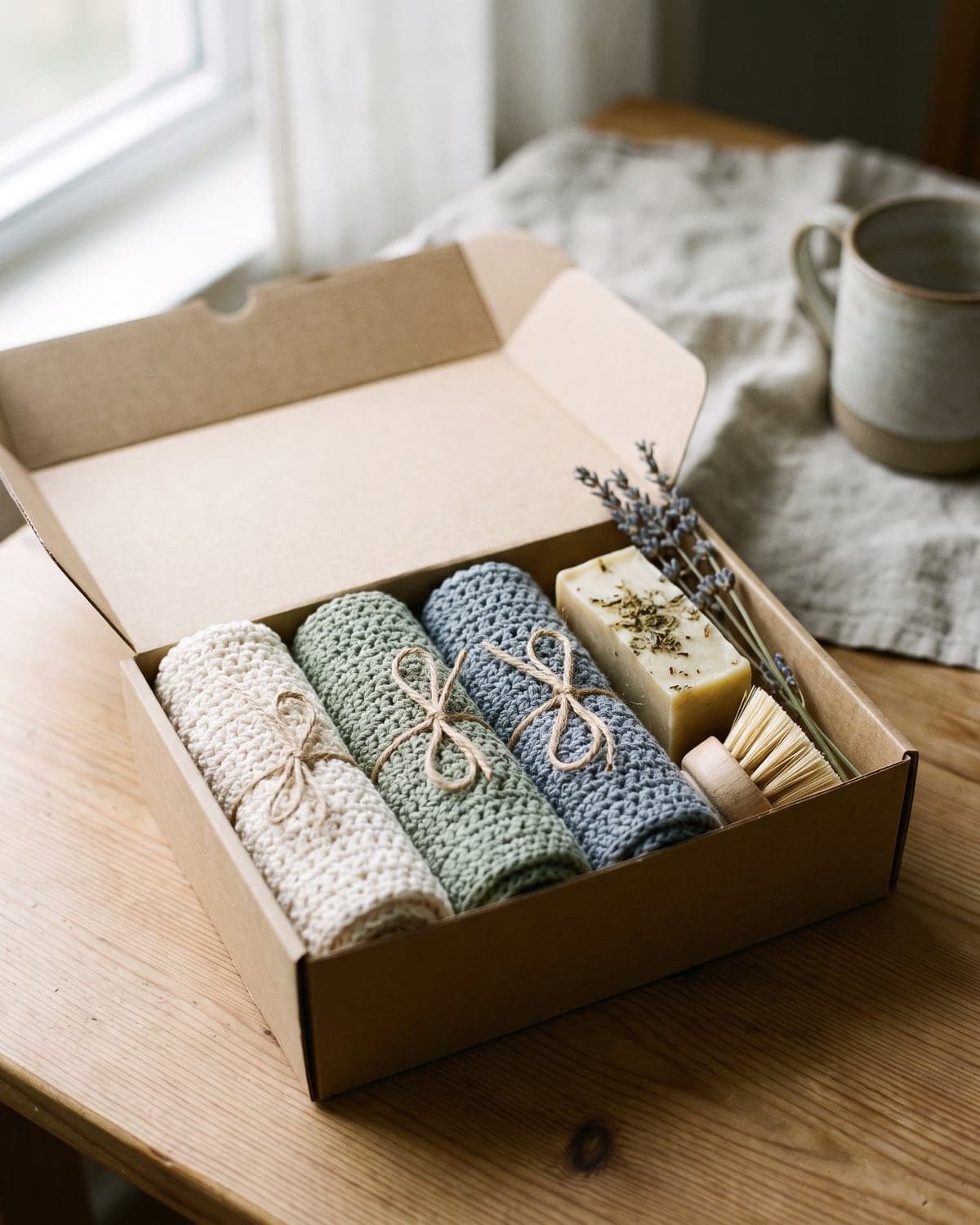
- Make three in colours that go together: one classic, one textured and one striped.
- Roll or stack them and tie them with twine.
- Add a bar of good soap, a wooden dish brush or a jar of dishwasher tablets.
- Include a care note: "100% cotton. Machine wash hot. Tumble dry or hang."
They're good for housewarmings, teacher gifts, Christmas stockings and craft-fair tables. For a matching piece, add an easy crochet basket to hold them.
Washing and hygiene
A dishcloth is only as good as it is clean.
- Rinse and wring it out after every use, and hang it by its loop so air gets all round it.
- Change it often. A fresh cloth every day or two is a sensible habit, and it's the reason to make several.
- Wash hot. Cotton cloths can go in a hot machine wash with towels. Dry them completely.
- Skip fabric softener. It coats the fibres and makes cotton less absorbent.
- Keep separate cloths for dishes, worktops and hands. Different colours make that easy.
- Retire a cloth when it thins or keeps a smell after washing.
Expect a little shrinkage and some fading in the first few washes. Bright and dark cottons can also release dye, so wash them with similar colours the first time.
Common problems and fixes
My cloth is a trapezoid. The stitch count is changing. Count 30 at the end of each row. A narrowing cloth is missing its last stitch. A widening one has a stitch in the turning chain.
The cloth is stiff. Cotton has no stretch, and tight stitches make it board-like. It softens a lot after its first wash. Next time, try a 5 mm hook.
The cloth is too holey. Go down a hook size. A dense fabric scrubs better.
My hands hurt. Cotton doesn't give the way wool does, so it's harder on the hands. Loosen your grip, take breaks and try a hook with a cushioned handle.
The yarn splits. Kitchen cotton is loosely twisted. Use a hook with a rounded head, and take care to catch the whole strand.
The texture in pattern 2 has disappeared. The stitches have lined up, sc over sc and dc over dc. Every row must start with an sc and end with a dc.
The corners curl. Three stitches in each corner should prevent it. A wash and flat drying will settle the rest.
The cloth grew when wet. Cotton stretches under its own weight when it's soaked. It tightens again in the dryer.
Frequently asked questions
What's the best yarn for crochet dishcloths? 100% cotton in worsted weight, often sold as kitchen or dishcloth cotton. It's absorbent and can be washed hot.
Can I use acrylic yarn for dishcloths? It's not a good choice. Acrylic doesn't absorb water, and it can melt against a hot pan.
How many chains do I need for a dishcloth? With worsted cotton and a 4.5 mm hook, chain 31 for a cloth about 20 cm wide.
What size should a dishcloth be? Between 18 and 23 cm (7 to 9 in) square. Smaller is easier to wring out, and bigger covers more.
How much yarn does one dishcloth use? About 60 to 75 metres. One 50 g ball of worsted cotton is usually enough.
What's the best stitch for a dishcloth? A dense one with some texture. Half double crochet, lemon peel and moss stitch are all good.
How long do crochet dishcloths last? With regular hot washing, usually a year or more. They soften with age.
Can I sell dishcloths made from these patterns? Yes. You're welcome to sell what you make.
What to make next
- More quick cotton makes for the kitchen and table: easy crochet coasters.
- Storage for the sink or bathroom: the easy crochet basket.
- Something for the sofa: the easy crochet pillow cover.
- New to all of this? Start with how to crochet for beginners.
There are more projects in the home decor section. The Craft Yarn Council's yarn weight system explains the weight numbers on yarn labels.
Save it for later
Pin this to your Pinterest board so it's there when you're ready to stitch.
Keep stitching
Related crochet projects
Home decor Easy Crochet Coasters: Round and Square Patterns for Beginners
10 min read
Flowers Crochet Sunflower Pattern: Easy Free Tutorial in 3 Simple Parts
11 min read
Flowers Easy Crochet Flowers: 4 Simple Patterns for Beginners
11 min read
Seasonal Crochet Christmas Ornaments: 4 Easy Patterns for Beginners
12 min read