Easy Crochet Baby Blanket for Beginners: Free V-Stitch Pattern
An easy crochet baby blanket in V-stitch, with a one-row repeat, three sizes, yarn amounts, a simple border, care advice and the safety points to know before you gift it.
By AlixaPublished 11 min read
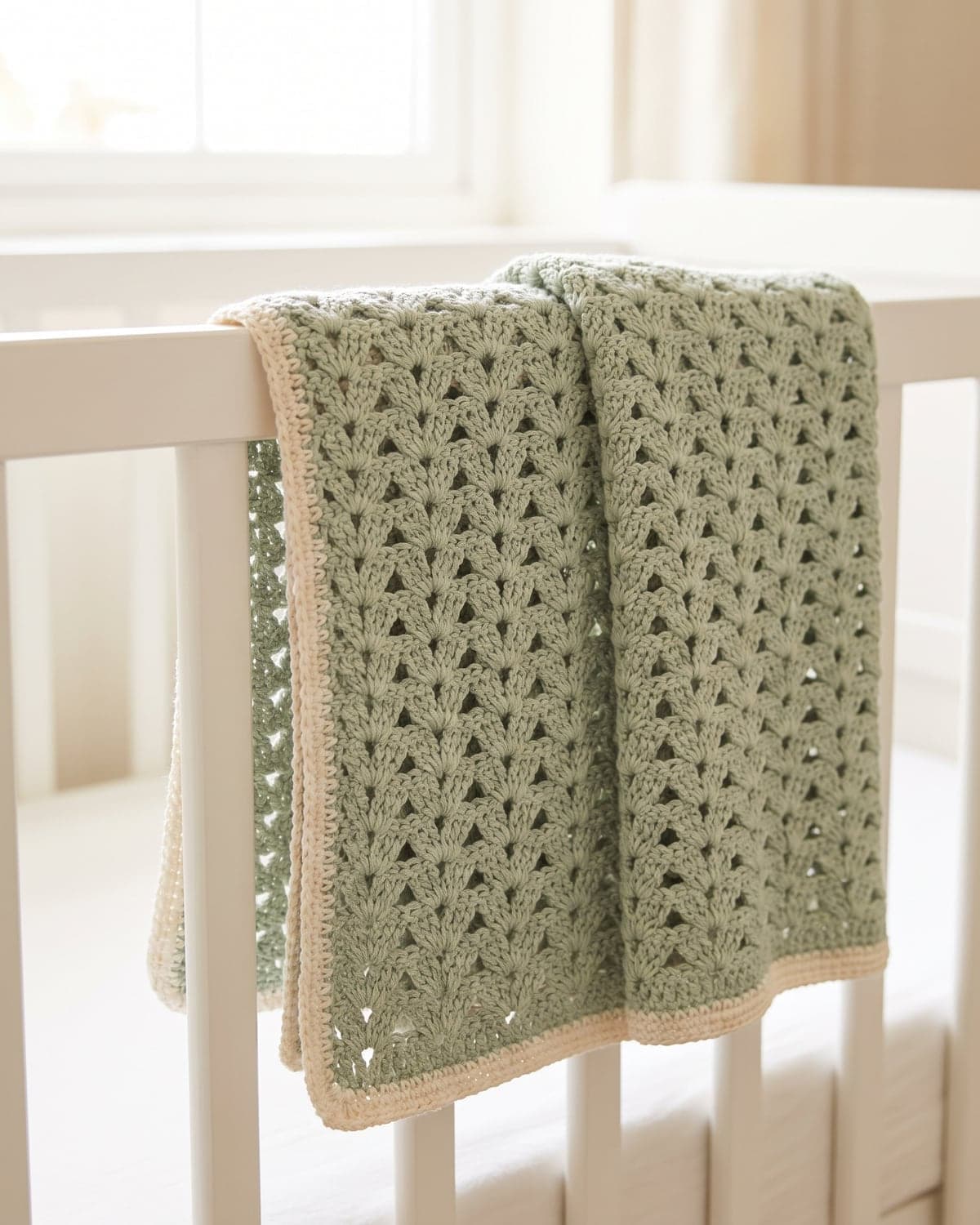
A baby blanket is one of the most rewarding things to crochet. It's small enough to finish, it's a simple rectangle with no shaping, and it's a gift that gets used and kept. This one is made in V-stitch, which is a single repeated row of double crochets and chains. It works up quickly, it's soft and light, and it's easy to count.
This guide gives you the pattern in three sizes, shows how to work out any other size, and covers yarn choice, a simple border, washing and the safety points that matter with anything made for a baby.
Terms used here: US crochet terms. Double crochet (dc) is called treble crochet (tr) in UK terms.
About this pattern: it's a simple design written for this guide. The stitch counts have been checked so the numbers add up. Sizes and yarn amounts are estimates, because they depend on your yarn and tension. Make a swatch, and buy an extra ball.
At a glance
| Skill level | Beginner |
| Stitches | Chain, double crochet, single crochet (border) |
| Yarn | DK / light worsted (weight 3) baby yarn |
| Hook | 5 mm (US H-8) |
| Sizes | Lovey 60 × 60 cm, stroller 76 × 90 cm, crib 90 × 120 cm |
| Construction | Worked flat in rows, with a border added at the end |
What you need
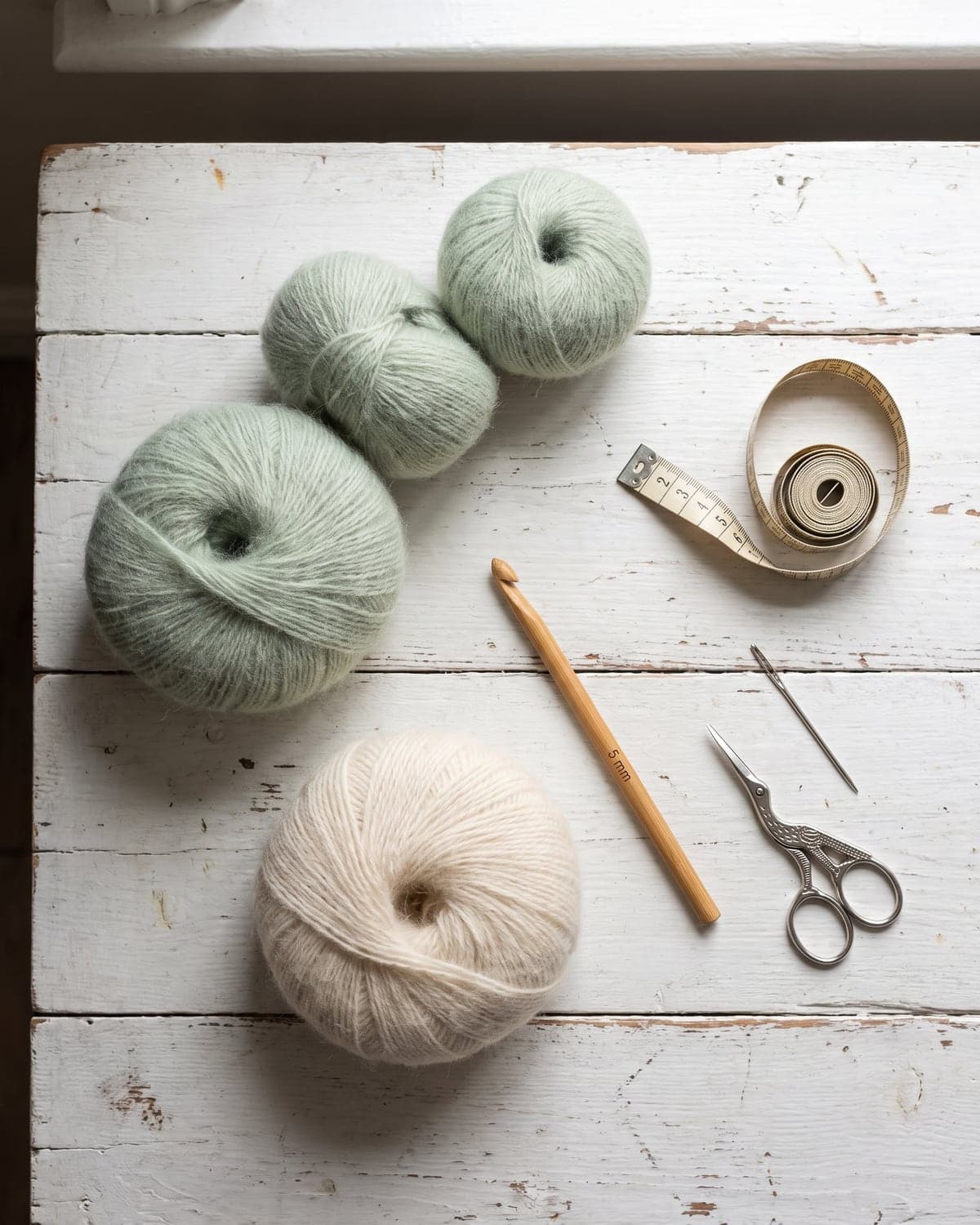
- Yarn. A soft, machine-washable DK yarn. See the amounts below.
- A 5 mm (US H-8) hook. This is a size or two larger than the label on most DK yarns suggests. The larger hook gives the blanket its drape.
- Scissors, a tapestry needle and a tape measure.
- Stitch markers for the edges.
Choosing yarn for a baby blanket
Babies have sensitive skin, and new parents have very little time. The best yarn is both soft and easy to wash.
- Acrylic baby yarn is soft, inexpensive, comes in many colours and survives the washing machine and the dryer. It's the practical choice.
- Cotton or a cotton blend is breathable and good for warm climates. It's heavier and has less stretch.
- Superwash merino is very soft and warm, costs more and needs a gentle wash.
Avoid mohair, fluffy and fuzzy yarns, which shed fibres. Avoid anything labelled hand wash only, unless you know the parents will enjoy that. Check that the label says the yarn is suitable for babies if that matters to you, and choose a smooth yarn while you learn, so you can see your stitches.
The Craft Yarn Council's yarn weight system explains what "weight 3" and "DK" mean on a label.
Sizes, starting chains and yarn
| Size | Finished size | V-stitches per row | Starting chain | Yarn (estimate) |
|---|---|---|---|---|
| Lovey / car seat | 60 × 60 cm (24 × 24 in) | 30 | 94 | 350 m (380 yd) |
| Stroller / receiving | 76 × 90 cm (30 × 36 in) | 38 | 118 | 650 m (710 yd) |
| Crib | 90 × 120 cm (36 × 47 in) | 45 | 139 | 1,100 m (1,200 yd) |
The measurements are before the border, which adds about 2 cm (0.75 in) all round. Allow one more ball in a second colour if you'd like a contrast border.
Gauge
About 5 V-stitches and 7 rows measure 10 cm (4 in) in the stitch pattern with DK yarn and a 5 mm hook.
Gauge isn't critical for a blanket, but it decides the finished size and how much yarn you need. Chain 22, work ten rows of the pattern and measure the middle. If you get more than 5 V-stitches in 10 cm, your blanket will come out smaller, so use a larger hook or add stitches. If you get fewer, it will come out bigger and use more yarn.
The V-stitch
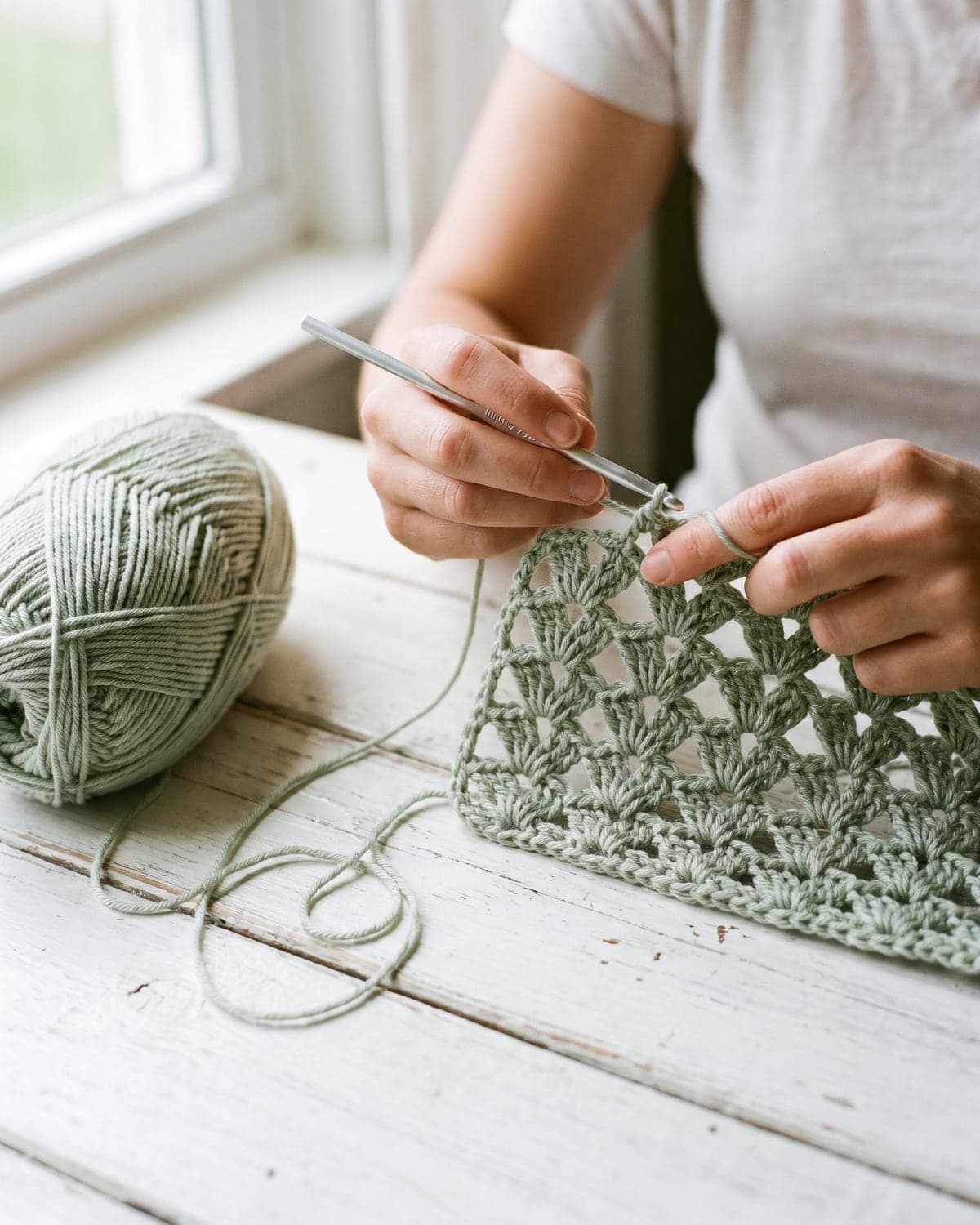
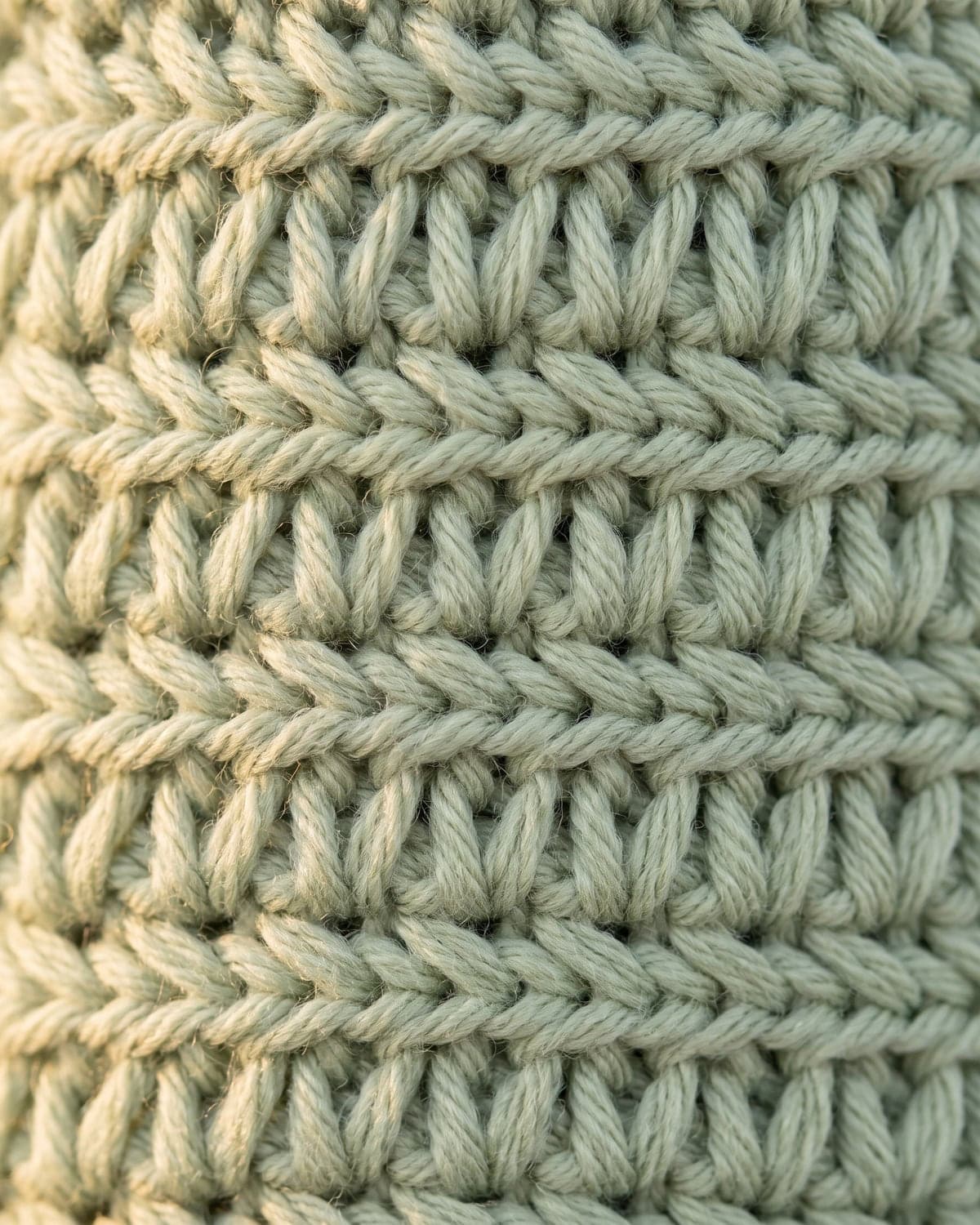
A V-stitch is (double crochet, chain 1, double crochet) all in the same place. The two double crochets lean apart and make a V.
On the first row, each V goes into a chain. On every later row, each V goes into the chain-1 space in the middle of the V below. You never have to work into the top of a stitch, except at the very end of each row.
If you'd like to practise double crochet first, see easy crochet stitches for beginners.
Baby blanket pattern
Foundation
Chain the number for your size: 94, 118 or 139. Keep the chain loose. A tight chain makes the bottom edge curve. If yours tend to be tight, use a 5.5 mm hook for the chain only.
For any other width, chain a multiple of 3, plus 4.
Row 1
- Work a V-stitch (dc, chain 1, dc) in the 5th chain from the hook. The skipped chains count as your first double crochet.
- Skip 2 chains, V-stitch in the next chain. Repeat until 2 chains remain.
- Skip 1 chain. Double crochet in the last chain.
Count your V-stitches: 30, 38 or 45. It's worth counting now. A mistake in row 1 is much easier to fix than one you find in row 20.
Row 2
- Chain 3 and turn. This chain counts as the first double crochet.
- Work a V-stitch into the chain-1 space of each V across.
- Double crochet in the top of the turning chain at the end of the row.
Repeat
Repeat row 2 until the blanket reaches the length for your size: about 42 rows for the lovey, 63 rows for the stroller blanket and 84 rows for the crib blanket. Measure, don't just count. Row height varies a lot from one person to another.
Every row has the same number of V-stitches, with one double crochet at each end.
Joining a new ball
Join new yarn at the end of a row whenever you can. Work the last double crochet until two loops are left on the hook, then pull the new yarn through to finish the stitch. Chain 3, turn and carry on. Ends at the edge are easy to hide in the border.
If you run out in the middle of a row, join in the same way and weave both ends in through the bases of the V-stitches, in opposite directions.
Fastening off
After the final row, don't fasten off if you're working the border in the same colour. For a contrast border, cut the yarn with a 15 cm (6 in) tail and pull it through the loop.
Keeping the edges straight
The V-stitches look after themselves. The two edge stitches are where things go wrong.
- At the start of the row, the chain 3 stands in for a double crochet. Don't work another stitch into the first stitch. Go straight to the first chain-1 space.
- At the end of the row, the last double crochet goes into the top of the chain 3 from the row below. It's easy to miss, because it leans away from you. Clip a stitch marker into it as soon as you've made it.
If you count the same number of V-stitches in every row and can see one upright stitch at each end, your edges will be straight.
Adding the border
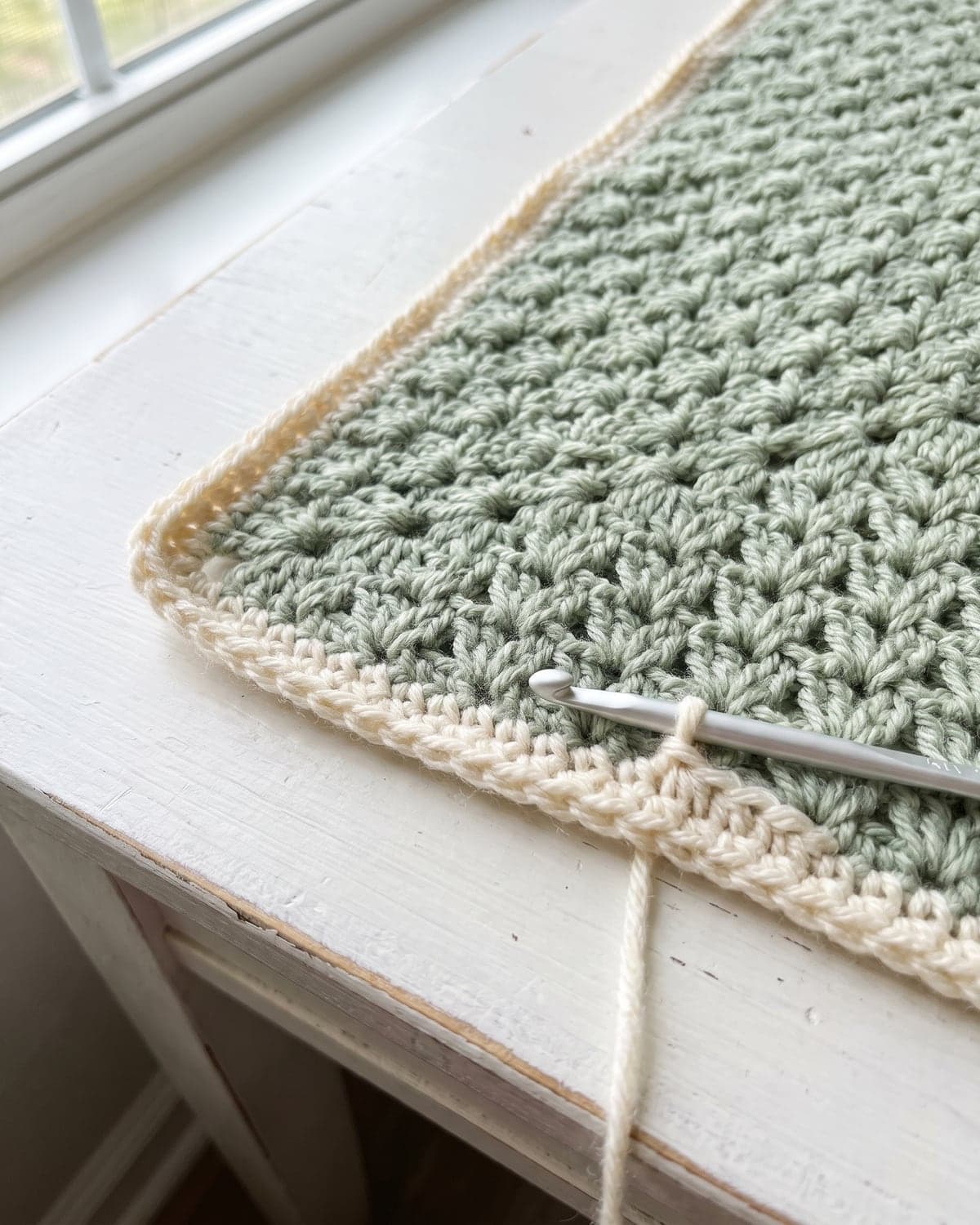
A border covers the row ends, hides the woven-in tails and gives the blanket a finished edge.
Round 1: single crochet
Join the border yarn in any corner with a slip stitch and chain 1.
- Along the top and bottom, work 1 single crochet in each double crochet and 1 in each chain-1 space.
- Along the sides, work 2 single crochets around the post of each row-end stitch.
- In each corner, work 3 single crochets in the same place.
Join with a slip stitch to the first single crochet.
If the edge ripples, you have too many stitches. Along the sides, work 2 stitches in one row end and 1 in the next, alternating. If it pulls in, add a few more.
Round 2: single crochet
Chain 1. Work 1 single crochet in each stitch, and 3 single crochets in the centre stitch of each corner. Join and fasten off.
Optional round 3: scallops
For a prettier edge, add a round of small shells: skip 1 stitch, 3 dc in the next stitch, skip 1 stitch, single crochet in the next stitch. The method, including how to turn the corners, is in the shell stitch tutorial.
Finishing
Weave in every end securely, running each one through several stitches and then back the other way. Babies pull at things, and blankets are washed often. Then wash and dry the blanket before you give it, following the yarn label.
How to change the size
The pattern works for any width.
- Measure your swatch to find out how many V-stitches you get in 10 cm.
- Multiply by the width you want, in tens of centimetres. At 5 V-stitches per 10 cm, a 100 cm blanket needs 50.
- Multiply the number of V-stitches by 3 and add 4. That's your starting chain: 50 × 3 + 4 = 154.
Yarn use grows with the area. A blanket twice as wide and twice as long needs four times the yarn.
Baby blanket safety
Please read this part, whether the blanket is for your own baby or a gift.
- Not for unsupervised sleep in the first year. Safe-sleep guidance says babies under 12 months should sleep on a firm, flat surface with no loose blankets, pillows or soft toys. A crocheted blanket is for supervised use: the stroller, tummy time, cuddles, the car seat once the baby is buckled in, and the nursery chair. The US Consumer Product Safety Commission publishes current safe sleep guidance.
- No small parts. Don't add buttons, beads, pompoms or appliqués that could come off.
- No long loops or fringe. Tassels and long chains can wrap around small fingers.
- Mind the holes. V-stitch has small gaps. They're much smaller than the gaps in lace or a loose granny square, but little fingers and toes can still catch. For a solid fabric with no gaps, use moss stitch or plain half double crochet.
- Secure every end. Loose strands are a hazard and a nuisance.
- Wash before gifting, with a mild, fragrance-free detergent.
Colour ideas
- One soft colour with a cream or white border, as shown here. Sage, oat, butter yellow and dusty blue all work for any baby.
- Wide stripes. Change colour every 8 or 10 rows.
- Thin stripes. Change every 2 rows and carry the yarn up the side, so there are few ends.
- Ombré. Five shades of one colour, from light to dark.
Washing and care
Follow the label on your yarn. As a general guide:
- Acrylic: machine wash on a gentle cycle, tumble dry low.
- Cotton: machine wash warm. Reshape and dry flat to limit stretching.
- Superwash wool: gentle cool wash, dry flat.
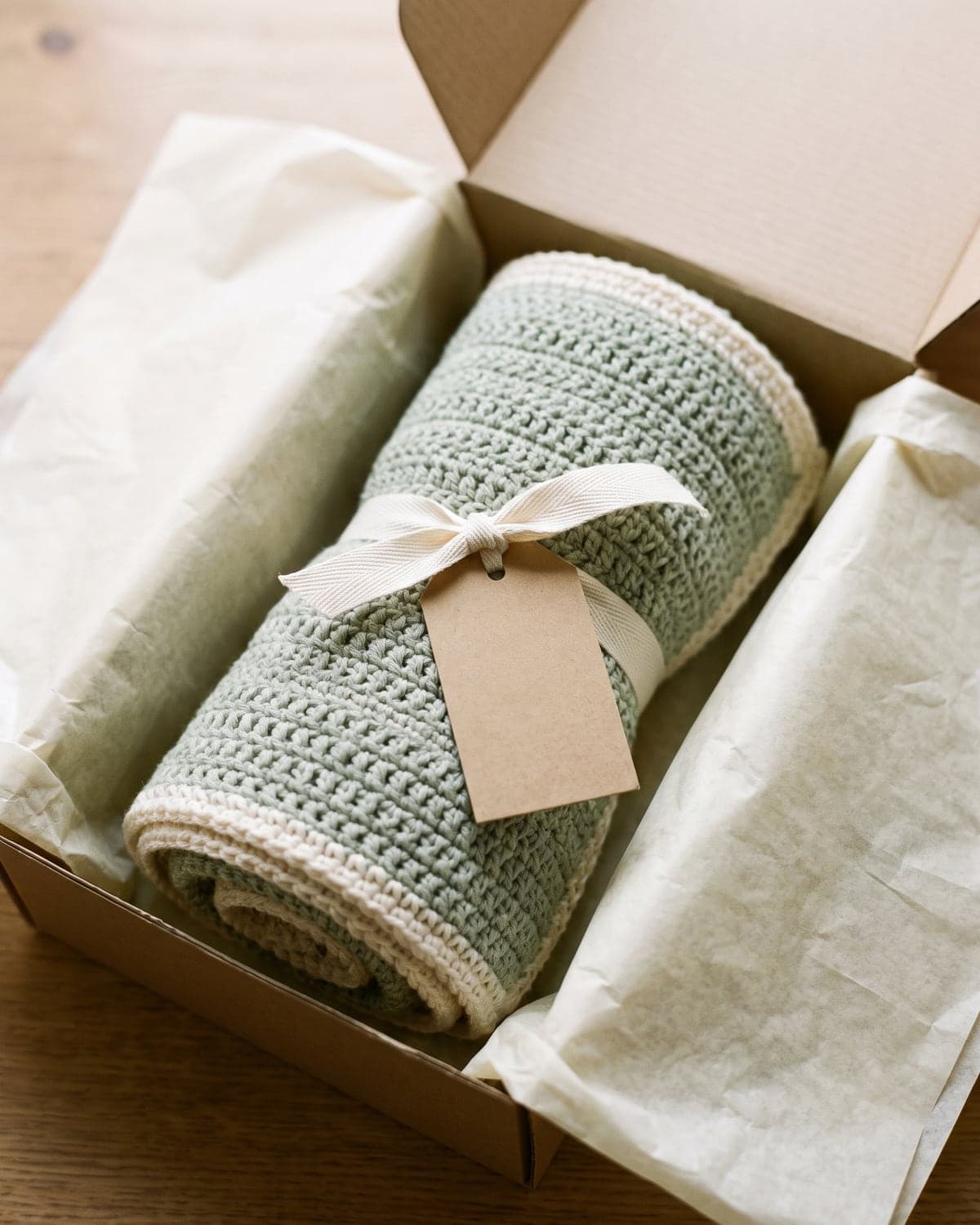
If the blanket is a gift, tuck the yarn band or a small care card in with it, so the parents know how to wash it.
Common problems and fixes
The blanket is getting narrower. The last double crochet of each row, in the top of the turning chain, is being missed.
The blanket is getting wider. There's an extra stitch at the start of the row, or two V-stitches in one space.
The bottom edge is tight and curved. The foundation chain is tighter than the rows. A border helps. Next time, chain with a larger hook.
The sides are wavy. Your turning chains vary in height. Try to make each chain 3 the same height as a double crochet.
I'm running out of yarn. Finish at the end of a row, and make the border in a second colour. A slightly shorter blanket with a contrast border looks deliberate.
The fabric feels stiff. The hook is too small for the yarn. Go up a size.
Frequently asked questions
What's the easiest crochet stitch for a baby blanket? A one-row repeat such as V-stitch, half double crochet or moss stitch. All three are suitable for a first blanket.
What size should a crochet baby blanket be? About 60 × 60 cm for a lovey or car seat blanket, 76 × 90 cm for a stroller or receiving blanket, and 90 × 120 cm for a crib-sized blanket.
How much yarn do I need for a baby blanket? For the stroller size in this pattern, roughly 650 metres of DK yarn. Treat that as an estimate and buy one extra ball from the same dye lot.
How long does it take to crochet a baby blanket? Most beginners finish the stroller size in two to three weeks of evenings. V-stitch grows faster than most stitches.
What's the best yarn for a baby blanket? A soft, machine-washable acrylic or cotton blend in DK or worsted weight.
Can I use worsted weight yarn? Yes. Use a 5.5 or 6 mm hook. You'll need fewer V-stitches for the same width, so swatch and use the formula above.
Can I sell blankets made from this pattern? Yes. You're welcome to sell what you make.
More blankets to try
- For a very quick, warm blanket in thick yarn, make the chunky crochet blanket for beginners.
- For colour and portability, try the granny square blanket for beginners.
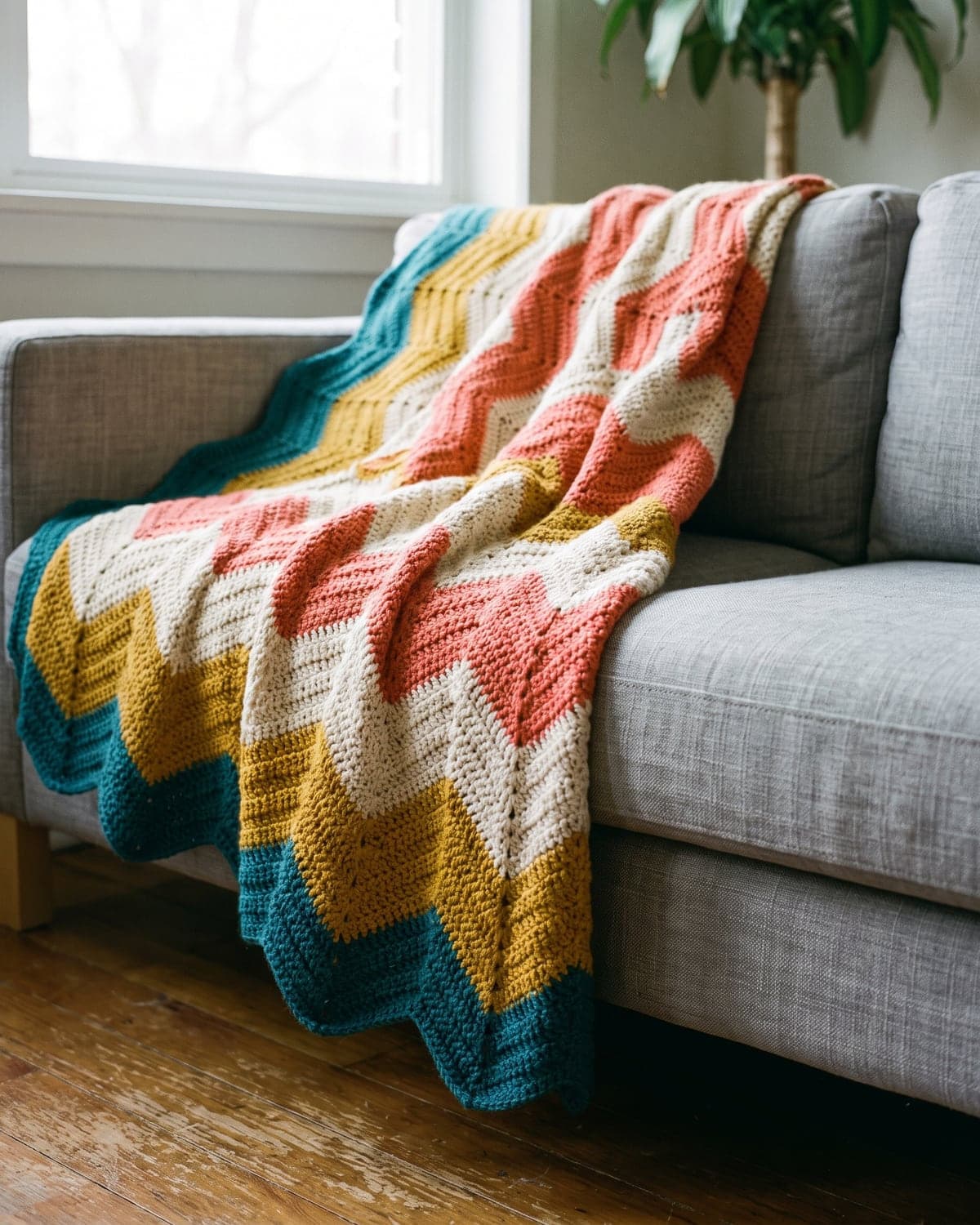
- For zigzag stripes, move on to the easy ripple crochet blanket.
There are more patterns in the blankets section.
Save it for later
Pin this to your Pinterest board so it's there when you're ready to stitch.
Keep stitching
Related crochet projects
Clothing Easy Crochet Beanie for Beginners: Free Pattern in 4 Sizes
11 min read
Clothing Easy Crochet Scarf for Beginners: One Stitch, Free Pattern
10 min read
Home decor Easy Crochet Dishcloth: 2 Free Patterns for Beginners
10 min read
Blankets Easy Ripple Crochet Blanket: Free Chevron Pattern for Beginners
10 min read