Crochet Placemats: Two Easy Free Patterns
Two easy crochet placemat patterns in cotton: a round placemat in double crochet with a scalloped edge, and a rectangular moss stitch placemat that lies perfectly flat. Sets, coasters, colour ideas and fixes.
By AlixaPublished 7 min read
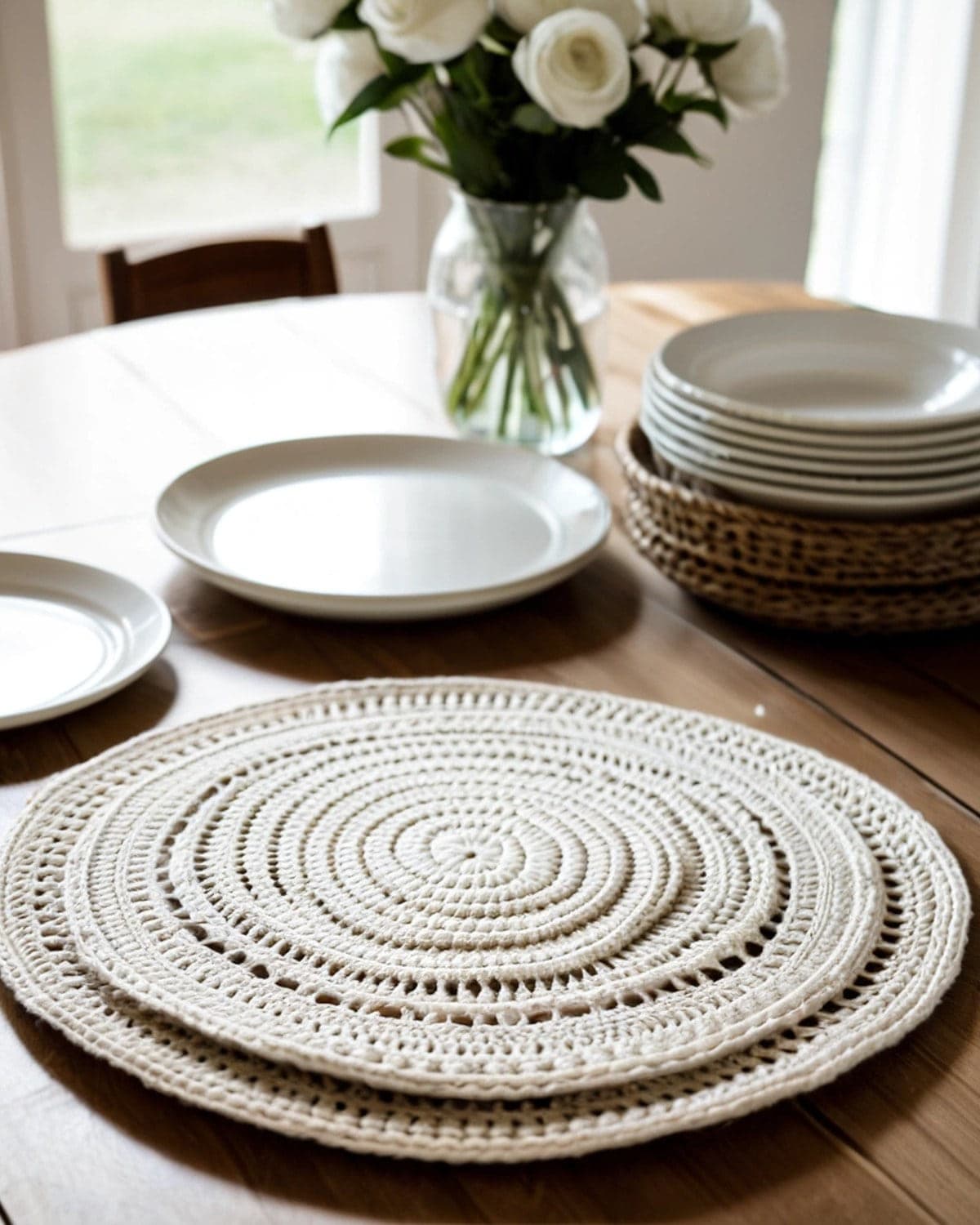
Crochet placemats bring warmth and texture to the table every day, not just for special dinners. Cotton placemats protect the table from hot plates, wash beautifully and look lovely in natural colours. This guide gives you two easy patterns: a round placemat worked in rounds of double crochet with a scalloped edge, and a rectangular placemat in moss stitch that lies perfectly flat.
Both are beginner friendly, use only basic stitches and take an evening each. Make a set of four or six in matching or mixed colours, with coasters to go with them.
Terms used here: US crochet terms. Single crochet (sc) is UK double crochet, and double crochet (dc) is UK treble crochet.
At a glance
| Skill level | Beginner |
| Stitches | Magic ring, ch, sl st, sc, dc |
| Yarn | Worsted (weight 4) 100 % cotton |
| Hook | 4.5 mm (US 7) for the round mat; 5 mm (US H-8) for the rectangle |
| Finished size | Round: about 35 cm (14 in) across. Rectangle: about 45 × 33 cm (18 × 13 in) |
| Time | 3 to 4 hours per placemat |
| Yarn per mat | About 110 m (120 yd) |
What you need
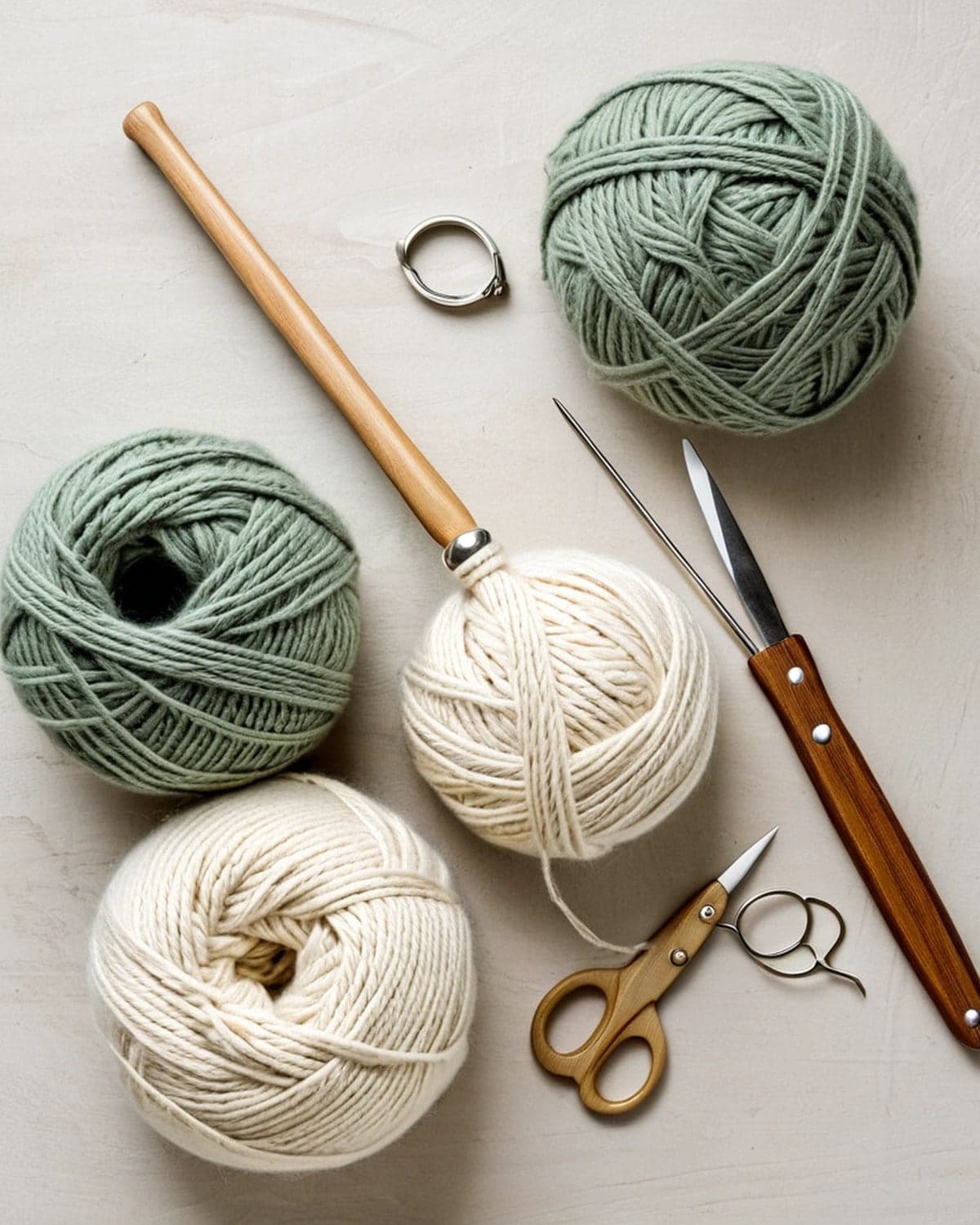
- Worsted (weight 4) 100 % cotton, about 110 m (120 yd) per placemat. Cotton is heat resistant, absorbent and washes well. Avoid acrylic, which can melt under a hot dish.
- A 4.5 mm and a 5 mm hook.
- A stitch marker, a tapestry needle and scissors.
- Optional: blocking mats and pins.
Round placemat
The round placemat is a flat circle of double crochet. Every round adds 12 stitches, and the increases move around so the circle stays round instead of turning into a hexagon.
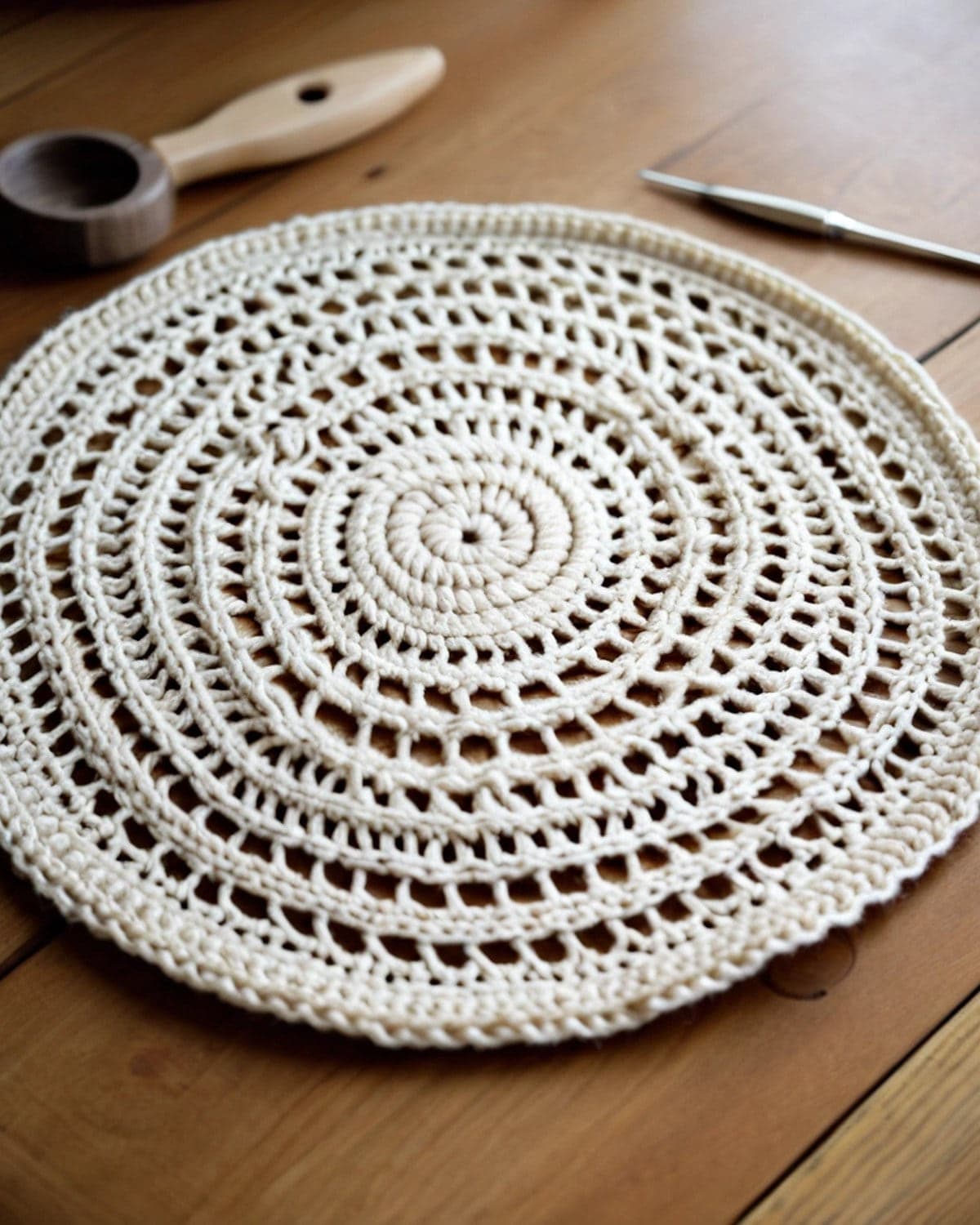 Use the 4.5 mm hook. Ch 3 at the start of each round counts as the first dc. Join each round with a sl st to the top of the ch 3.
- R1: In a magic ring, ch 3, 11 dc. Join. (12)
- R2: ch 3, dc in the same st, 2 dc in each st around. Join. (24)
- R3: ch 3, 2 dc in the next st, dc, 2 dc in the next st. Repeat around. Join. (36)
- R4: ch 3, dc in the next st, 2 dc in the next st, dc in the next 2 sts, 2 dc in the next st. Repeat around. Join. (48)
- R5: ch 3, dc in the next st, 2 dc in the next st, dc in the next st, dc in the next 2 sts, 2 dc in the next st, dc in the next st. Repeat around. Join. (60)
From round 6, the ch 3 counts as the first dc of the first repeat. On rounds 7 and 9, split the plain stitches as in round 5, with half before the increase and half after, so the increases don't stack up.
- R6: dc in the next 4 sts, 2 dc in the next st around. (72)
- R7: dc in the next 2 sts, 2 dc in the next st, dc in the next 3 sts around. (84)
- R8: dc in the next 6 sts, 2 dc in the next st around. (96)
- R9: dc in the next 3 sts, 2 dc in the next st, dc in the next 4 sts around. (108)
- R10: dc in the next 8 sts, 2 dc in the next st around. (120)
Check it lies flat after every round. If it ruffles, go down a hook size; if it cups, go up.
R11: ch 1, sc in each st around. Join. (120)
R12 (scalloped edge): ch 1, sc in the first st. Skip 2 sts, 5 dc in the next st, skip 2 sts, sc in the next st. Repeat around, ending with skip 2 sts, 5 dc in the next st, skip 2 sts, and join with a sl st to the first sc. (20 scallops) Fasten off.
The circle technique is explained in detail in how to crochet a circle, including why staggering the increases keeps it round.
Rectangular placemat in moss stitch
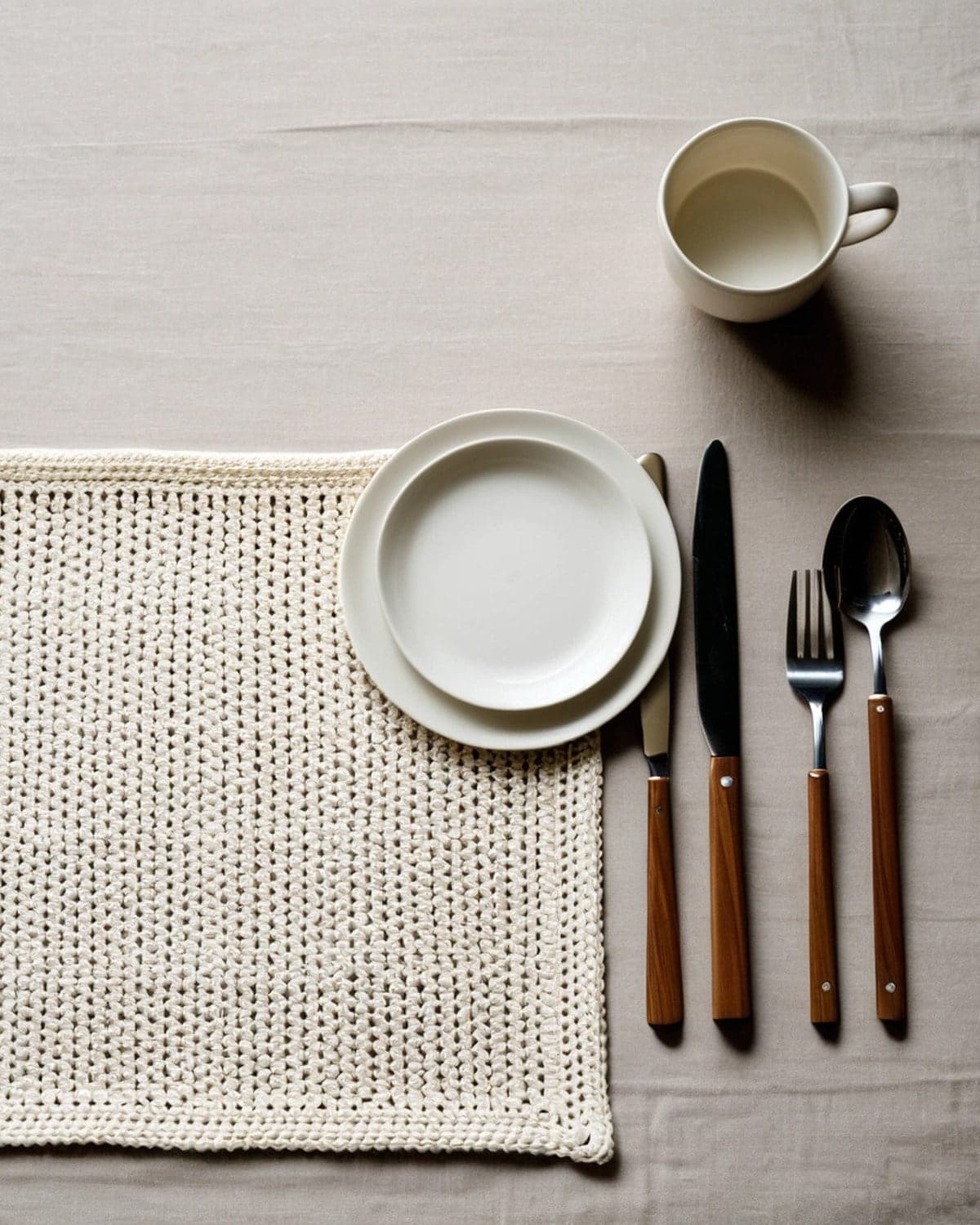
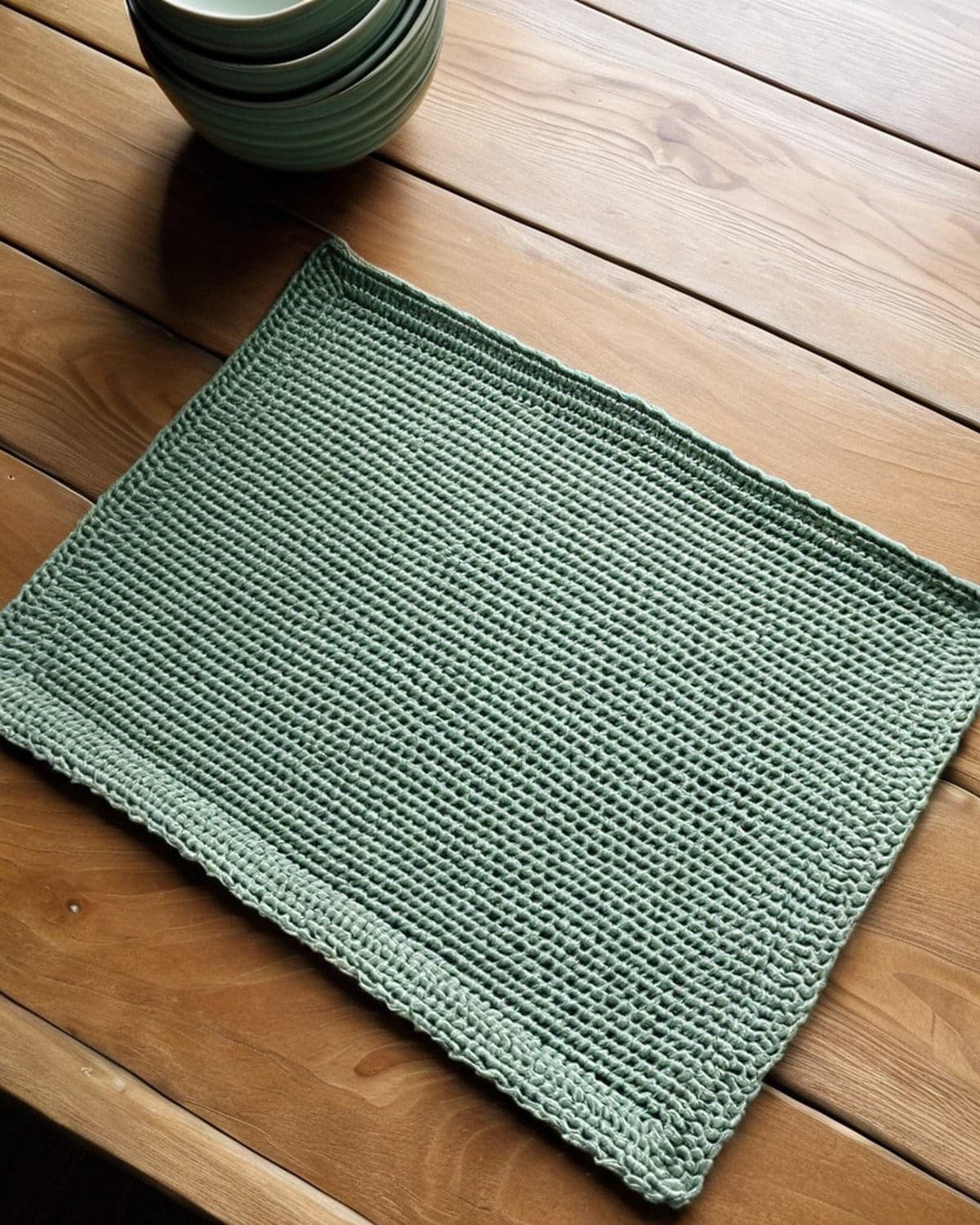 Moss stitch makes a flat, dense, woven-looking fabric that doesn't curl, which is ideal for a placemat. Use the 5 mm hook.
- Foundation: ch 72 (any even number works).
- Row 1: sc in the 4th ch from the hook. Ch 1, skip 1 ch, sc in the next ch. Repeat to the end. Turn. (35 sc)
- Row 2: ch 2 (counts as an edge stitch and a chain space), sc in the first ch-1 space. Ch 1, sc in the next ch-1 space. Repeat across, with the last sc in the space made by the turning chain. Turn. (35 sc)
- Repeat row 2 until the placemat is about 30 cm (12 in) tall, about 50 rows. Don't fasten off.
Border:
- R1: ch 1, and sc evenly around all four sides: 1 sc in each stitch and space along the top and bottom, 1 sc at the end of each row along the sides, and 3 sc in each corner. Join.
- R2: ch 1, sc in each sc around, with 3 sc in the middle sc of each corner. Join and fasten off.
The border brings it to about 45 × 33 cm (18 × 13 in). For the full moss stitch technique, see moss stitch crochet.
Blocking your placemats
Placemats look their best when they lie completely flat. Wet or spray block each one: pin it to its finished size on a mat, mist it with water and let it dry. Pin every scallop of the round placemat. See how to block crochet.
Making a set
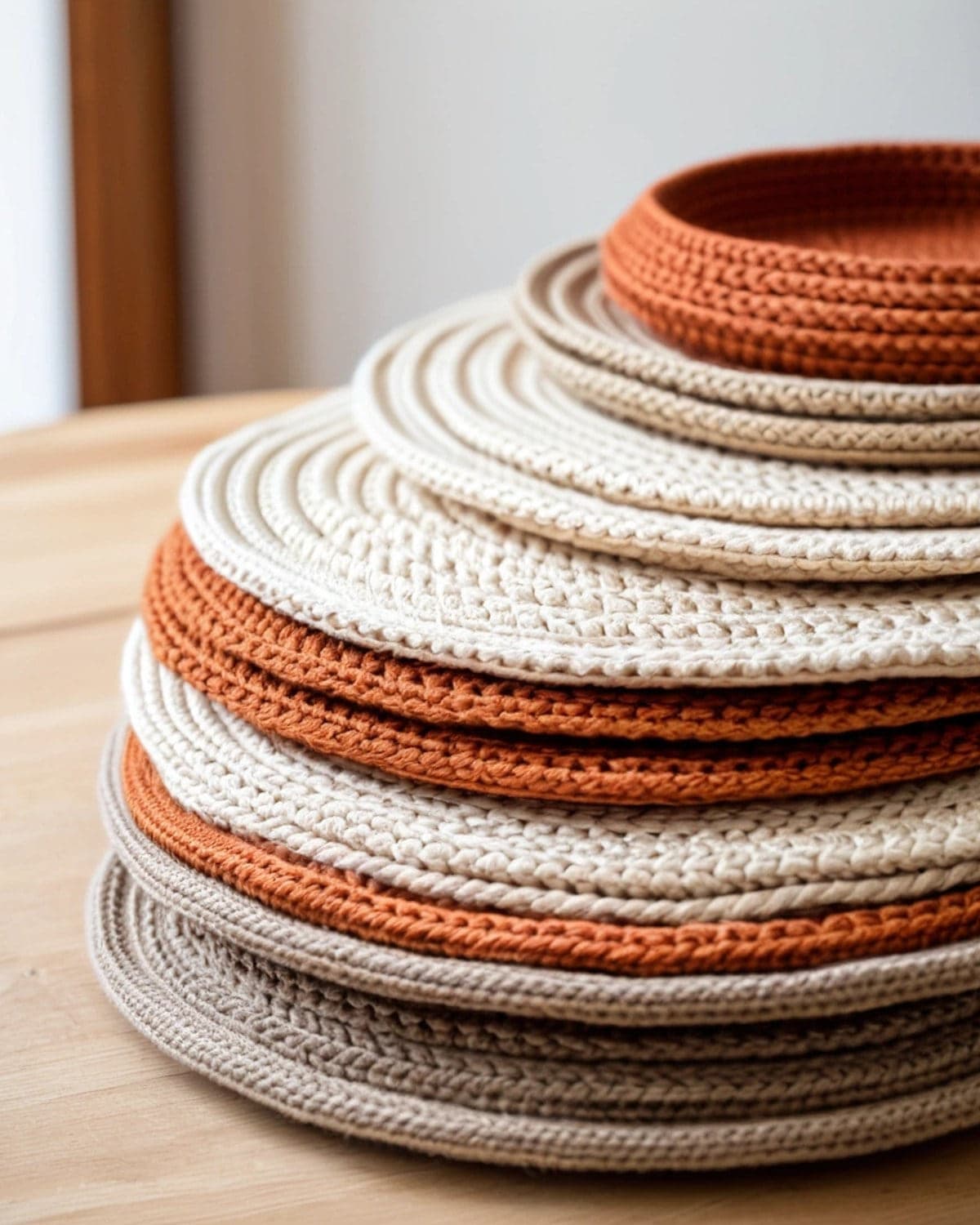
- Four or six placemats in one colour look calm and classic.
- Mixed neutrals, such as cream, sand, terracotta and sage, look relaxed and modern.
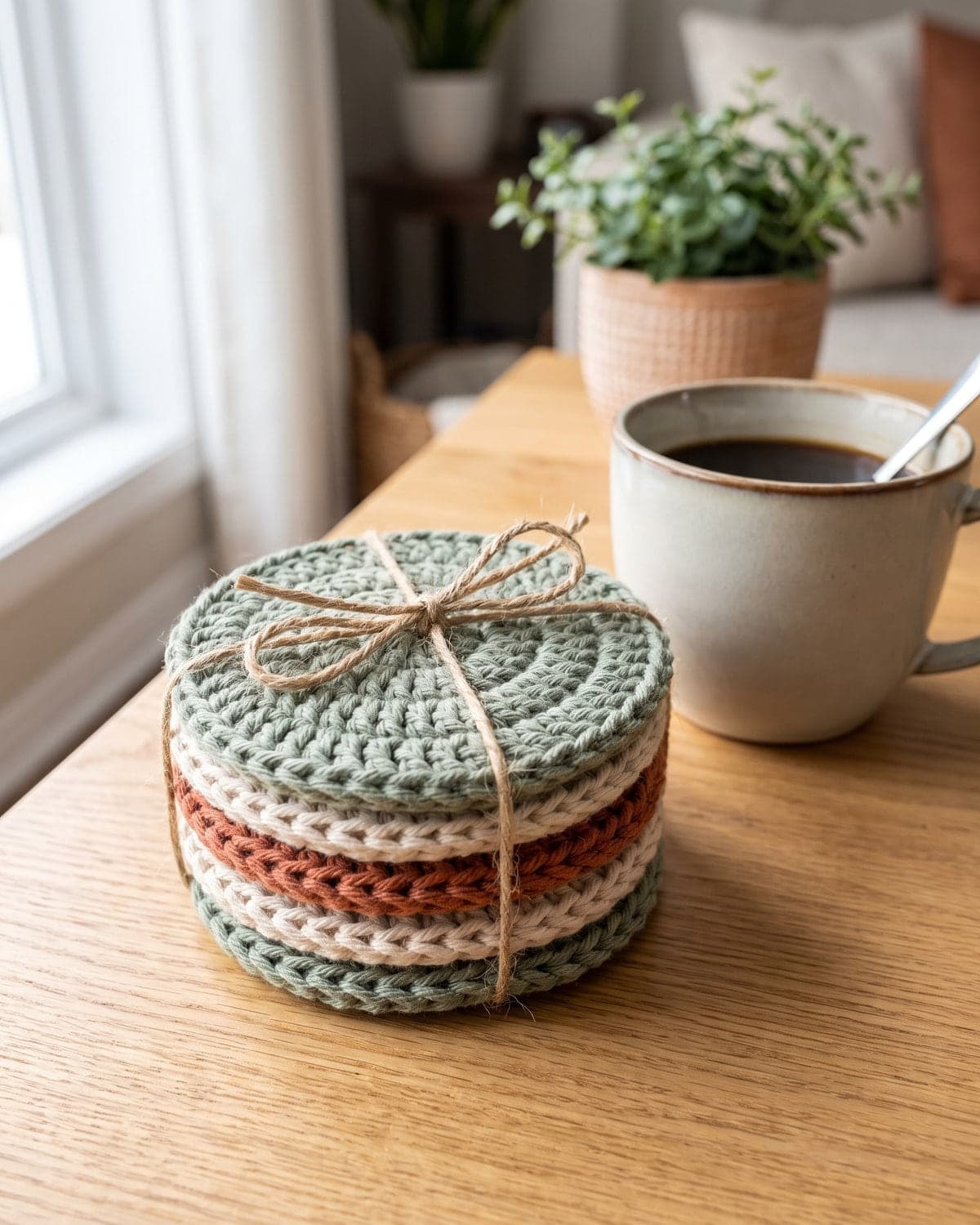
- Match the coasters: make the first 4 rounds of the round placemat and add the scalloped edge for a coaster. See easy crochet coasters for more.
- Add a table runner: work the moss stitch rectangle 30 cm (12 in) wide and as long as your table.
Colour ideas
- Natural: cream or unbleached cotton for a farmhouse table.
- Earthy: terracotta, sand and olive.
- Coastal: white with a navy border.
- Seasonal: red and green for Christmas, pastels for Easter, orange and mustard for autumn. See the seasonal section for more ideas.
- Striped rectangle: change colour every 6 rows of moss stitch.
Placemats have been used to protect tables and mark each diner's place for centuries. Wikipedia's placemat article has more.
Tips for neat placemats
- Use 100 % cotton. It's heat resistant and absorbent.
- Count every round of the round placemat; an extra stitch makes it ripple.
- Stagger the increases so the circle stays round.
- Mark the turning chain of each moss stitch row, so you don't miss the last stitch.
- Make all the mats in a set with the same hook and the same tension.
Common problems and fixes
The round placemat ruffles. You've added too many stitches, or your tension is loose. Count each round, or use a smaller hook.
The round placemat cups. Too few stitches, or your tension is tight. Use a larger hook.
It turned into a hexagon. Move the increases to a different place each round.
The rectangle is slanting. You've missed the last stitch in the turning chain space. Count the sc in each row.
The edges wave. Block the placemat flat, and check the border has 1 sc per stitch, not more.
Caring for your placemats
- Machine wash cotton placemats on a warm cycle.
- Reshape them while damp and dry them flat.
- A light steam iron on the back smooths them out if needed.
Check the yarn label before washing. The Craft Yarn Council's guide to care symbols explains the symbols.
Frequently asked questions
Are crochet placemats heat resistant? Cotton placemats protect a table from warm plates and serving dishes. For very hot pans, use a trivet as well.
How much yarn does a placemat take? About 110 m (120 yd) of worsted cotton for either design.
How long does one placemat take? About 3 to 4 hours.
Can I make them bigger? Yes. Add more rounds to the round placemat, adding 12 sts each round, or chain more and work more rows for the rectangle.
Can I sell placemats made from this pattern? Yes. You're welcome to sell what you make.
What to make next
- Add easy crochet coasters to match.
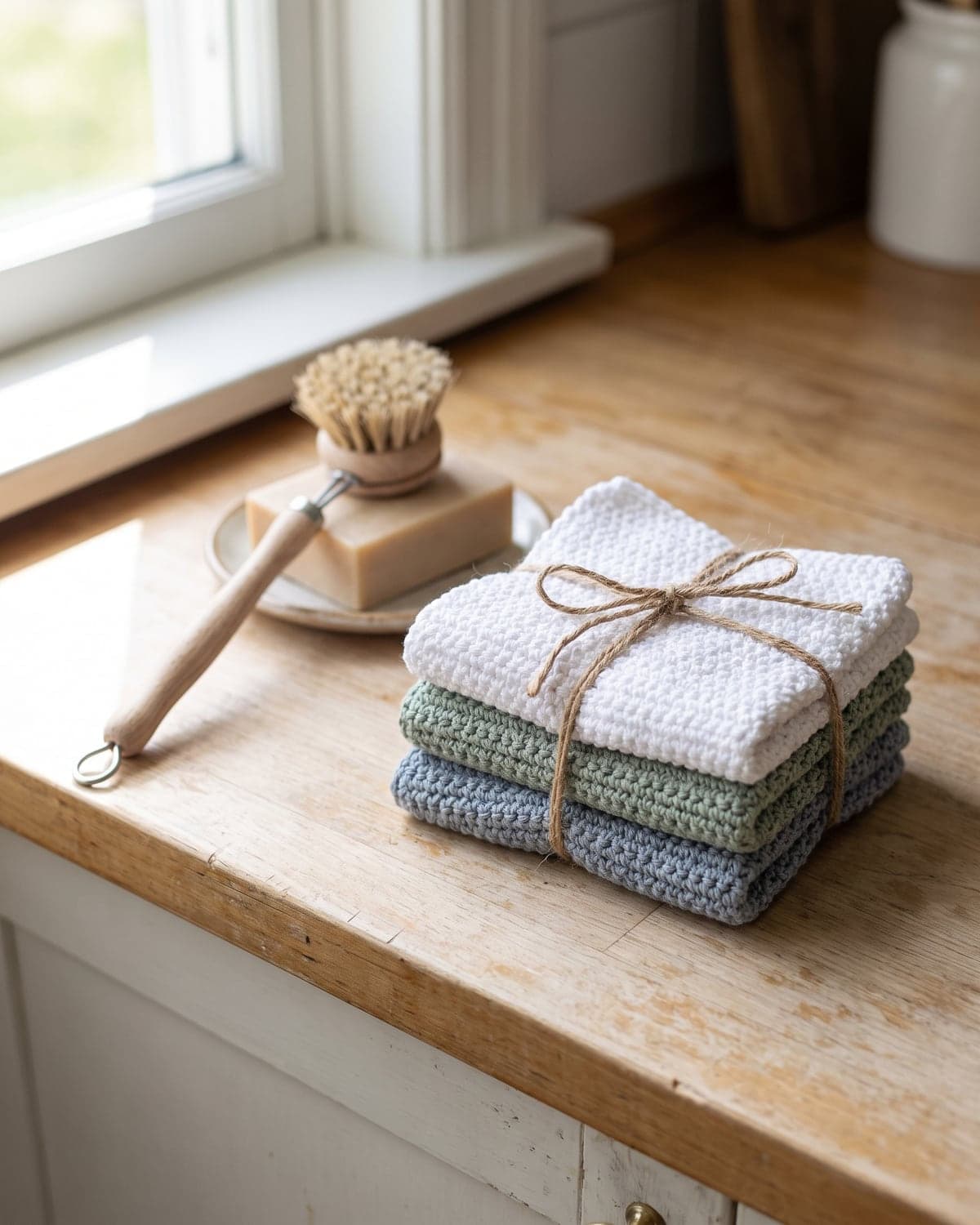
- Make an easy crochet dishcloth set for the kitchen.
- Hold bread or fruit in an easy crochet basket.
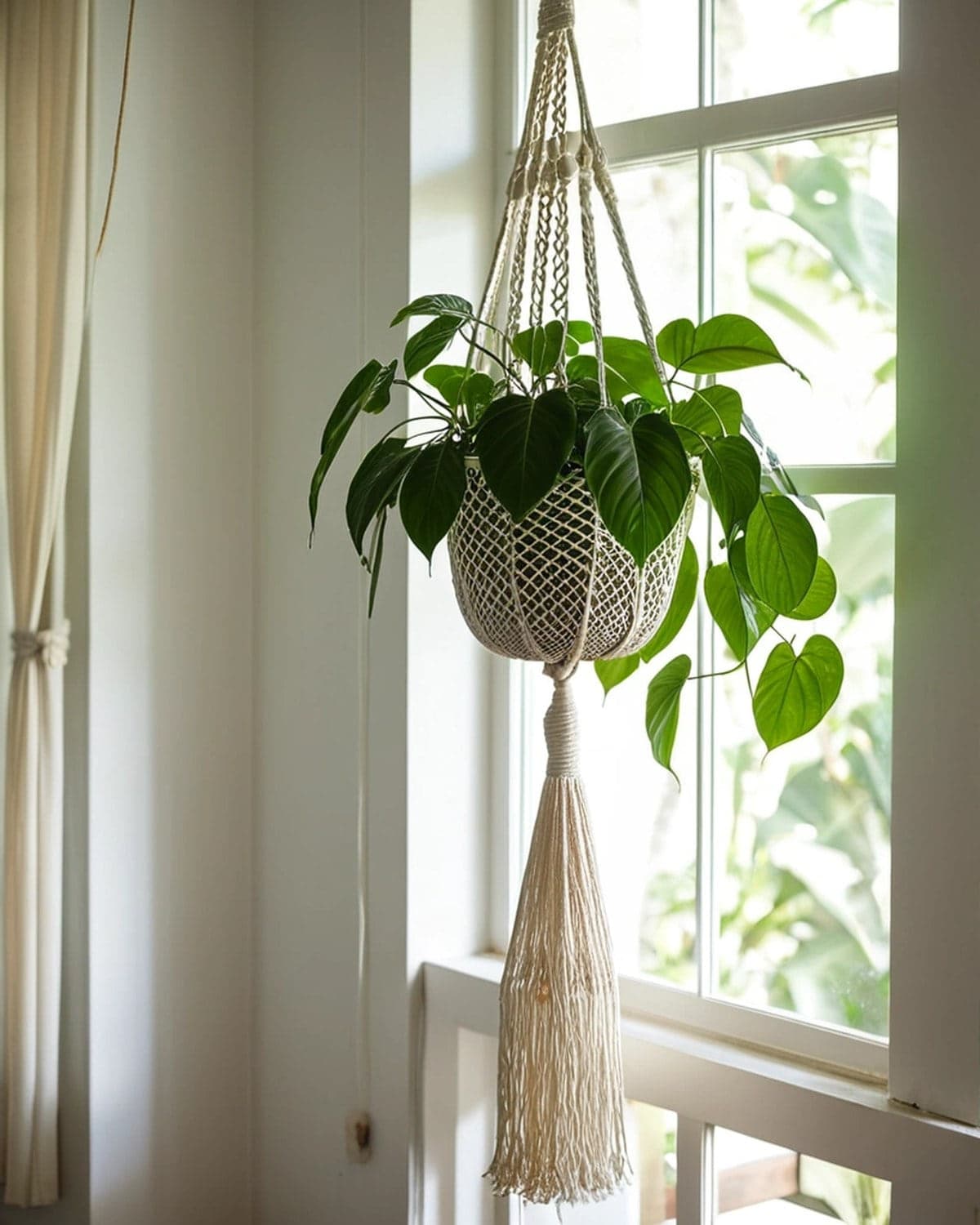
- Add greenery with a crochet plant hanger.
There are more free patterns in the home decor section.
Save it for later
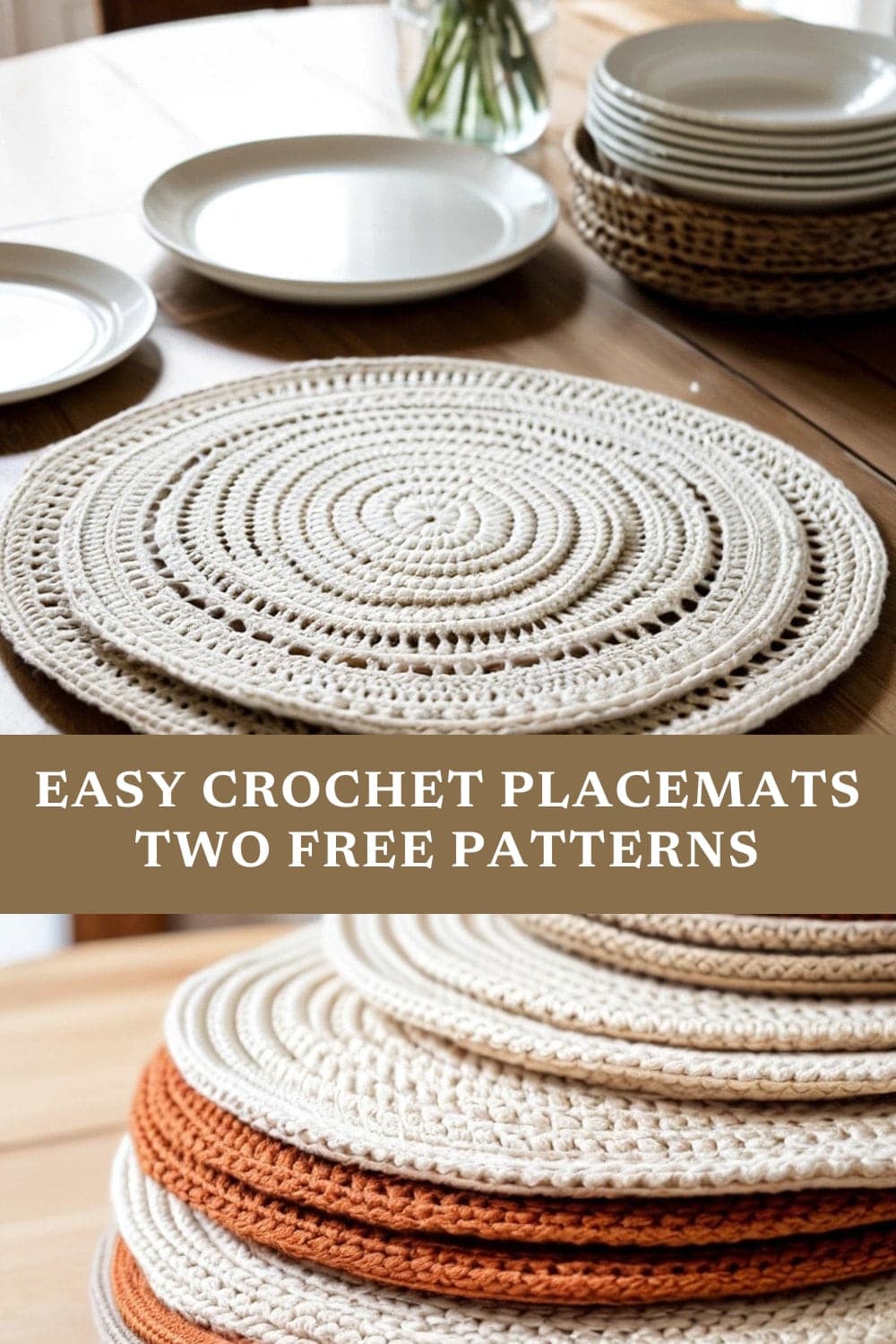
Pin this to your Pinterest board so it's there when you're ready to stitch.
Keep stitching
Related crochet projects
Home decor Easy Crochet Dishcloth: 2 Free Patterns for Beginners
10 min read
Home decor Easy Crochet Coasters: Round and Square Patterns for Beginners
10 min read
Home decor Crochet Plant Hanger: Easy Free Pattern for Any Pot
9 min read
Clothing Easy Crochet Tote Bag for Beginners: One-Piece Pattern
11 min read