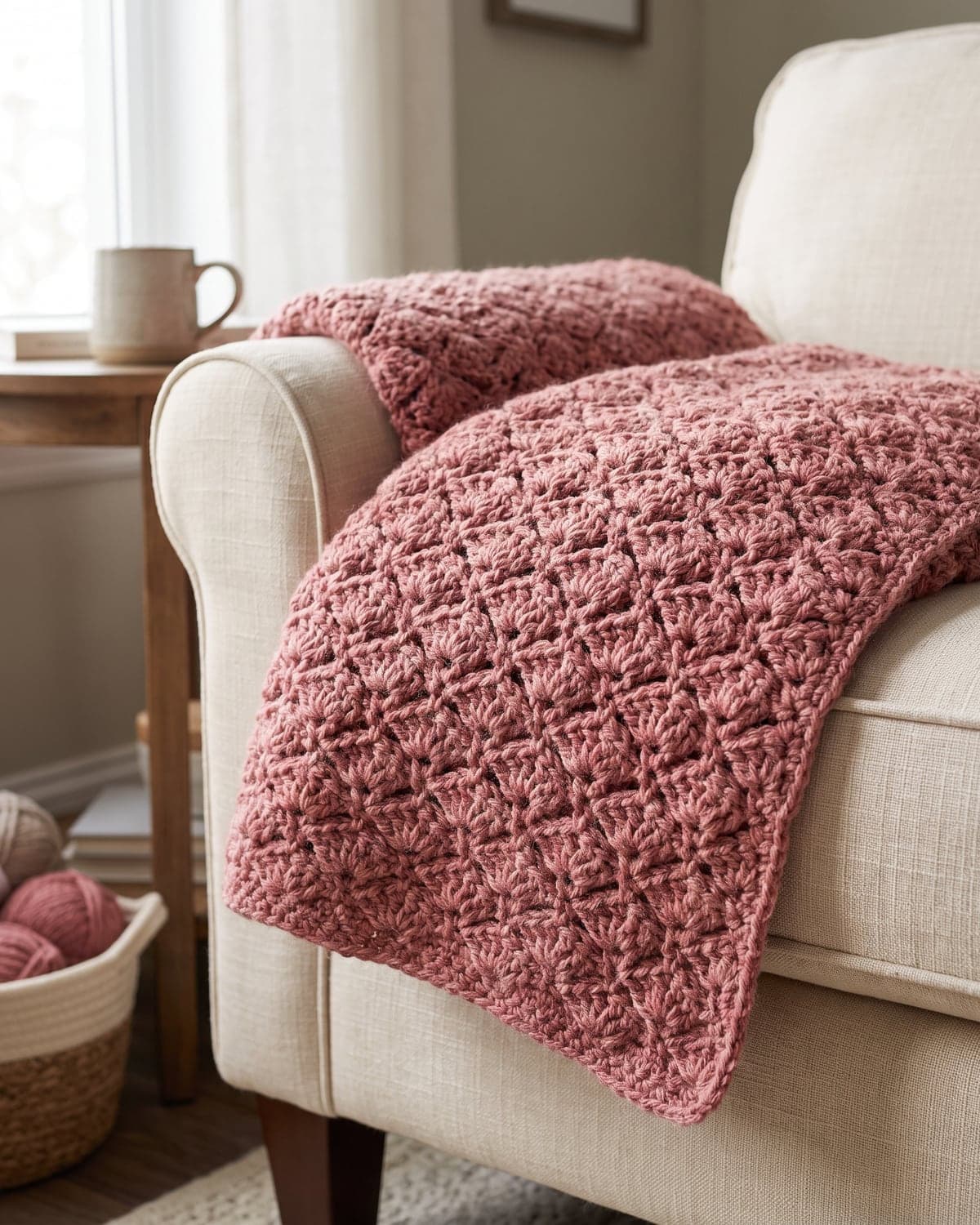
How to Crochet a Circle: Flat Circles in Any Stitch
Learn how to crochet a flat circle in single, half double and double crochet, with the one simple increase rule and stitch counts for every round. Plus how to stop hexagons, fix ruffles and cupping, and projects to make.
By AlixaPublished 10 min read

A flat crochet circle is the starting point for a surprising number of projects: coasters, rugs, the bottoms of baskets and bags, the crown of a hat, the head of almost every amigurumi and the centre of every mandala. Once you understand the one simple rule behind it, you can make a circle of any size, in any stitch, and keep it perfectly flat.
This guide explains that rule, then gives you three complete circle patterns, in single crochet, half double crochet and double crochet, with stitch counts for every round. You'll also learn how to stop a circle from turning into a hexagon, how to fix a circle that ruffles or cups, and how to work in a spiral or in joined rounds.
Terms used here: US crochet terms. Single crochet (sc) is UK double crochet, half double crochet (hdc) is UK half treble and double crochet (dc) is UK treble.
At a glance
| Skill level | Beginner (you can chain and work sc, hdc or dc) |
| You'll learn | The increase rule, three flat circles, spirals, joined rounds |
| Yarn | Worsted (weight 4) cotton or acrylic |
| Hook | 5 mm (US H-8) |
| Size | Any size: about 1 cm (0.4 in) of diameter per sc round in worsted |
| Time | 20 minutes for a 10 cm (4 in) circle |
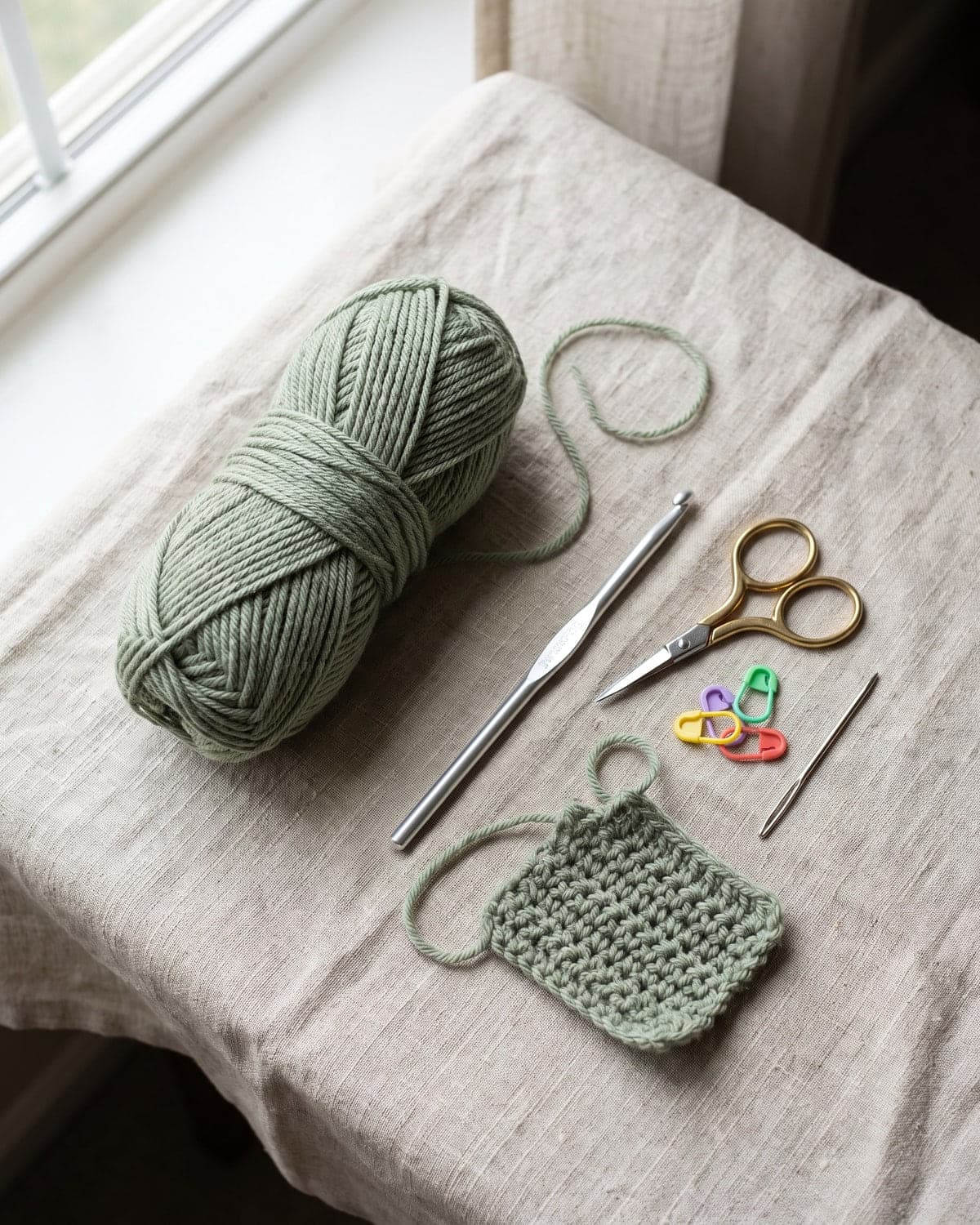
What you need

- Worsted yarn (weight 4) in a light, solid colour, so you can see your stitches. Cotton gives the flattest circles and is ideal for coasters.
- A 5 mm (US H-8) hook. The Craft Yarn Council's hook size chart shows the US, UK and metric names for each size.
- A stitch marker, or a scrap of contrast yarn, to mark the first stitch of each round. This is the most useful tool for circles.
- A tapestry needle and scissors.
The one rule for a flat circle
Each round of a circle is longer than the one before, because it's further from the centre. To keep the circle flat, you add the same number of stitches in every round. That number depends on the height of the stitch:
| Stitch | Start with | Add every round |
|---|---|---|
| Single crochet (sc) | 6 | 6 |
| Half double crochet | 8 | 8 |
| Double crochet (dc) | 12 | 12 |
Taller stitches make wider rounds, so they need more stitches to fill the extra space. The pattern of increases follows a simple rhythm:
- Round 2: increase in every stitch.
- Round 3: (1 stitch, increase) all around.
- Round 4: (2 stitches, increase) all around.
- Round 5: (3 stitches, increase) all around.
The number of plain stitches between increases goes up by one each round. Once you see this rhythm, you can keep going forever without a pattern.
Increase (inc) means two stitches in the same stitch.
How to start: the magic ring
Most circles start with a magic ring: an adjustable loop that you work your first round into, then pull closed so there's no hole in the middle. If you've never made one, follow how to crochet a magic ring first.
No magic ring? Chain 2 and work round 1 into the second chain from the hook. The centre will have a small hole, but it's fine for coasters and rugs.
Single crochet circle
The firmest, flattest circle. Use it for coasters, basket bases, amigurumi and anything that needs a dense fabric. This version works in a continuous spiral: you don't join at the end of each round, you simply carry on. Move your stitch marker up to the first stitch of every new round.
- R1: 6 sc in a magic ring (6)
- R2: inc in each st around (12)
- R3: (sc, inc) × 6 (18)
- R4: (2 sc, inc) × 6 (24)
- R5: (3 sc, inc) × 6 (30)
- R6: (4 sc, inc) × 6 (36)
- R7: (5 sc, inc) × 6 (42)
- R8: (6 sc, inc) × 6 (48)
- R9: (7 sc, inc) × 6 (54)
- R10: (8 sc, inc) × 6 (60)
Keep going with one more plain stitch between increases each round. To finish, slip stitch into the next stitch and fasten off. The slip stitch smooths the small step at the end of the spiral.
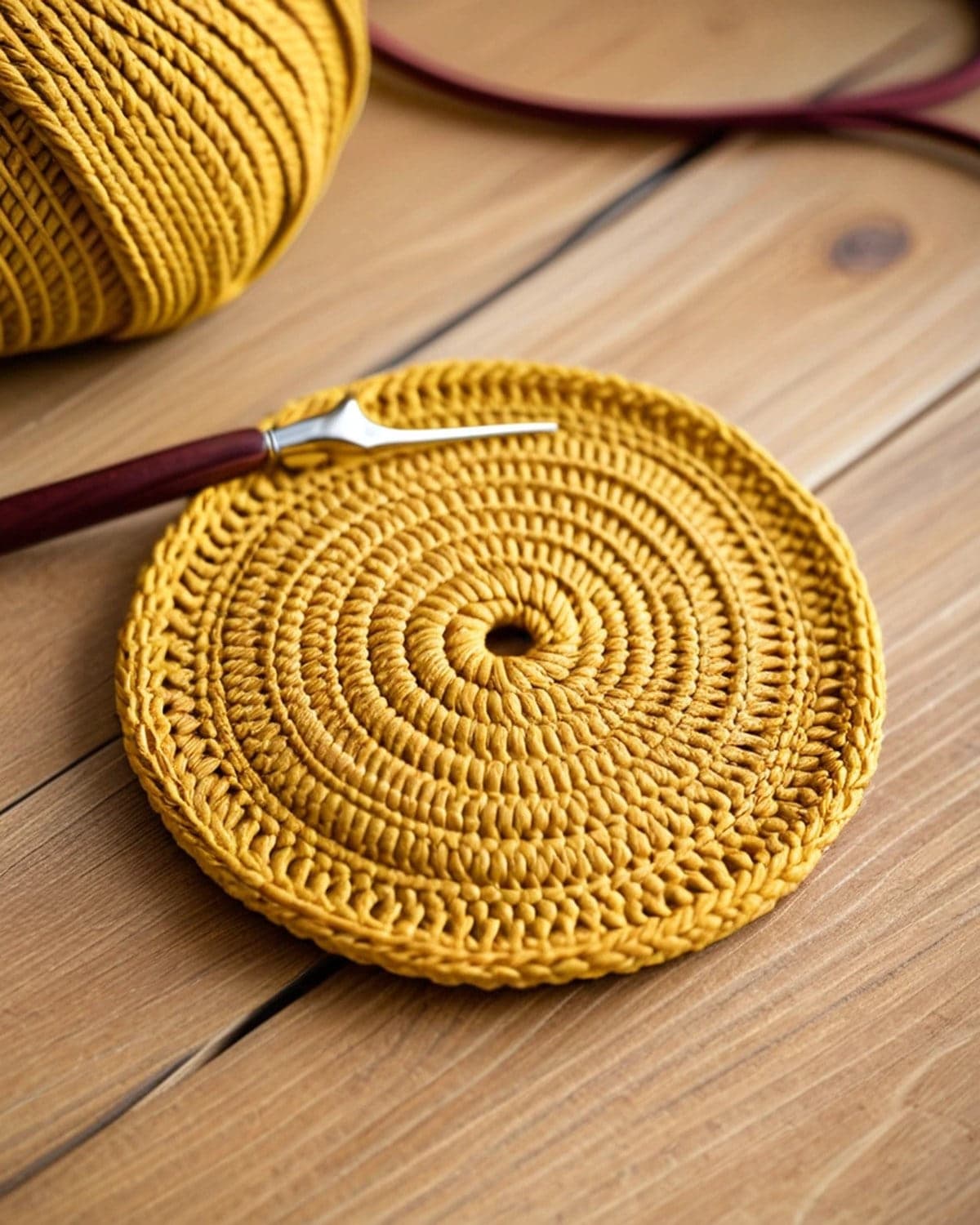 In worsted cotton with a 5 mm hook, 10 rounds make a circle about 10 to 11 cm (4 to 4.25 in) across: a perfect coaster.
Half double crochet circle
A little softer and faster than single crochet. Good for hat crowns, cushions and rugs. This one is worked in joined rounds: each round ends with a slip stitch into the first stitch, and the next starts with a chain.
The chain at the start of each round does not count as a stitch.
- R1: ch 2, 8 hdc in a magic ring. Sl st to the first hdc. (8)
- R2: ch 2, 2 hdc in each st around. Sl st to the first hdc. (16)
- R3: ch 2, (hdc, 2 hdc in next) × 8. Sl st to join. (24)
- R4: ch 2, (2 hdc, 2 hdc in next) × 8. Sl st to join. (32)
- R5: ch 2, (3 hdc, 2 hdc in next) × 8. Sl st to join. (40)
- R6: ch 2, (4 hdc, 2 hdc in next) × 8. Sl st to join. (48)
- R7: ch 2, (5 hdc, 2 hdc in next) × 8. Sl st to join. (56)
- R8: ch 2, (6 hdc, 2 hdc in next) × 8. Sl st to join. (64)
Each round adds 8. The crochet bucket hat uses exactly this circle for its crown.
Double crochet circle
The quickest circle, with an open, lacy look. Use it for mandalas, rugs, table mats and the centres of granny-style projects. Here, the chain-3 at the start of each round counts as the first double crochet.
- R1: ch 3 (counts as dc), 11 dc in a magic ring. Sl st to the top of the ch-3. (12)
- R2: ch 3, dc in the same st, 2 dc in each st around. Sl st to join. (24)
- R3: ch 3, 2 dc in next st, (dc, 2 dc in next) × 11. Sl st to join. (36)
- R4: ch 3, dc in next st, 2 dc in next, (2 dc, 2 dc in next) × 11. Sl st to join. (48)
- R5: ch 3, dc in next 2 sts, 2 dc in next, (3 dc, 2 dc in next) × 11. Sl st to join. (60)
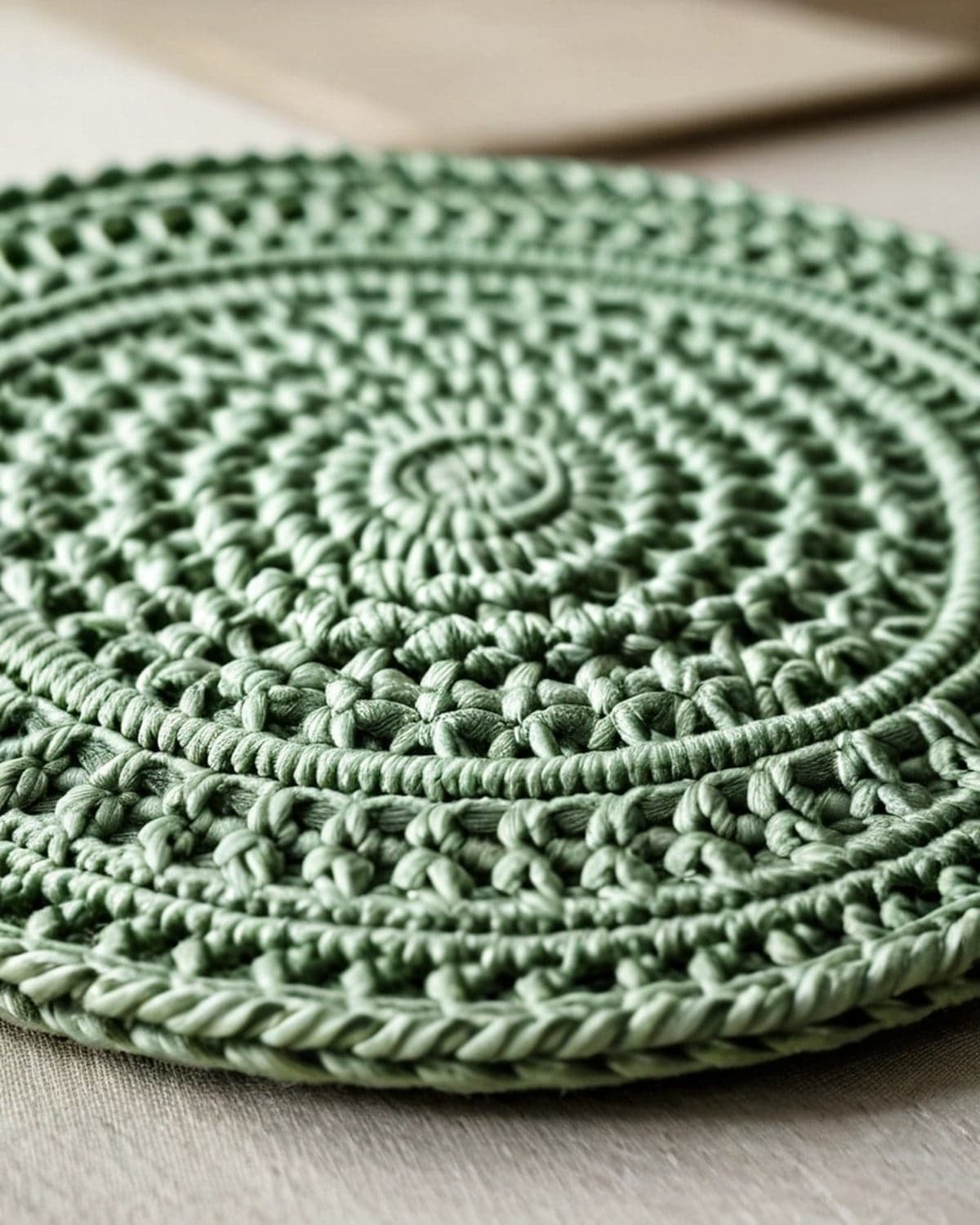 Five rounds of double crochet in worsted yarn make a circle of about 15 cm (6 in).
Why circles turn into hexagons, and how to stop it
If you always put the increases in the same place, they stack on top of each other. After 8 or 10 rounds, those stacks make six corners, and your single crochet circle becomes a hexagon. Double crochet circles go twelve-sided.
The fix is to stagger the increases: start some rounds halfway through the repeat, so the increase lands in a different place. Here are rounds 4 to 10 of the single crochet circle, staggered:
- R4: (sc, inc, sc) × 6 (24)
- R5: (3 sc, inc) × 6 (30)
- R6: (2 sc, inc, 2 sc) × 6 (36)
- R7: (5 sc, inc) × 6 (42)
- R8: (3 sc, inc, 3 sc) × 6 (48)
- R9: (7 sc, inc) × 6 (54)
- R10: (4 sc, inc, 4 sc) × 6 (60)
The stitch counts are exactly the same. Only the position of the increase moves. You can stagger hdc and dc circles the same way: on every other round, split the plain stitches before and after the increase.
Another trick: move your starting point. In joined rounds, start each round one or two stitches further along.
Spiral or joined rounds?
Spiral (continuous rounds)
- No visible seam.
- Best for single crochet, amigurumi and anything solid.
- Leaves a small step at the end, smoothed by a final slip stitch.
- You need a stitch marker to know where each round starts.
Joined rounds
- Each round is a neat ring, so they're easier to count.
- Best for taller stitches, stripes and colour changes.
- Leaves a faint diagonal seam where the rounds join. Starting each round in a slightly different place hides it.
For stripes in a circle, joined rounds give the cleanest colour changes. See how to change colours in crochet for the details.
How big should my circle be?
Work increase rounds until the circle reaches the size you need. As a rough guide in worsted yarn with a 5 mm hook:
| Diameter | Single crochet | Half double | Double crochet |
|---|---|---|---|
| 5 cm (2 in) | 5 rounds | 3 rounds | 2 rounds |
| 10 cm (4 in) | 10 rounds | 6 rounds | 4 rounds |
| 15 cm (6 in) | 15 rounds | 9 rounds | 5 rounds |
| 20 cm (8 in) | 20 rounds | 12 rounds | 7 rounds |
Your tension changes this, so measure as you go. For a hat crown, measure the head and divide by 3.14 to get the diameter you need.
From circle to bowl, tube or ball
The same circle becomes many other shapes. It's all about when you stop increasing.
- A bowl or basket. Make a circle for the base, then work one round in the back loops only to make a sharp edge, and continue without increasing. The sides go straight up. This is how the easy crochet basket and the crochet plant hanger begin.
- A ball. Increase for a few rounds, work a few rounds straight, then decrease the same way: (4 sc, dec), (3 sc, dec) and so on. This is the basis of most amigurumi heads.
- A cone. Increase only every second or third round. You'll get a pointed shape, like a gnome hat: see the crochet gnome pattern.
Projects that start with a circle
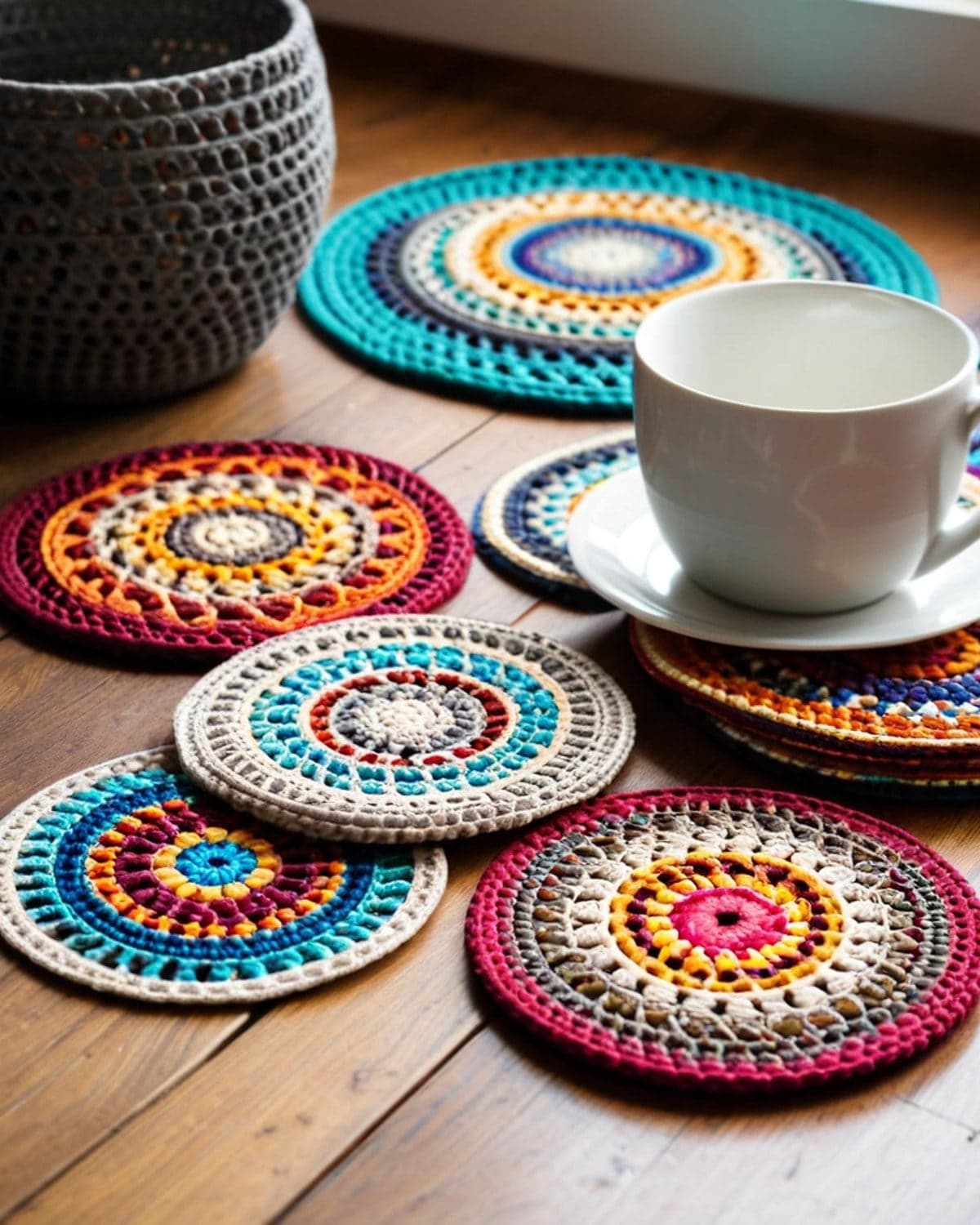
- Coasters. A 10-round single crochet circle in cotton, finished with a slip stitch edge. More shapes in easy crochet coasters.
- Round rugs. Use chunky yarn or several strands together and keep going to 60 to 80 cm (2 to 2.5 ft).
- Mandalas. Change colour every round and alternate stitches: a round of dc, a round of sc, a round of chain spaces.
- Pot holders. Two cotton circles joined together with a hanging loop.
- Hat crowns. A beanie or bucket hat crown is a flat circle the size of the top of the head.
- Bag and basket bases.
- Amigurumi. Heads, bodies and eyes all start as circles.
Common problems and fixes
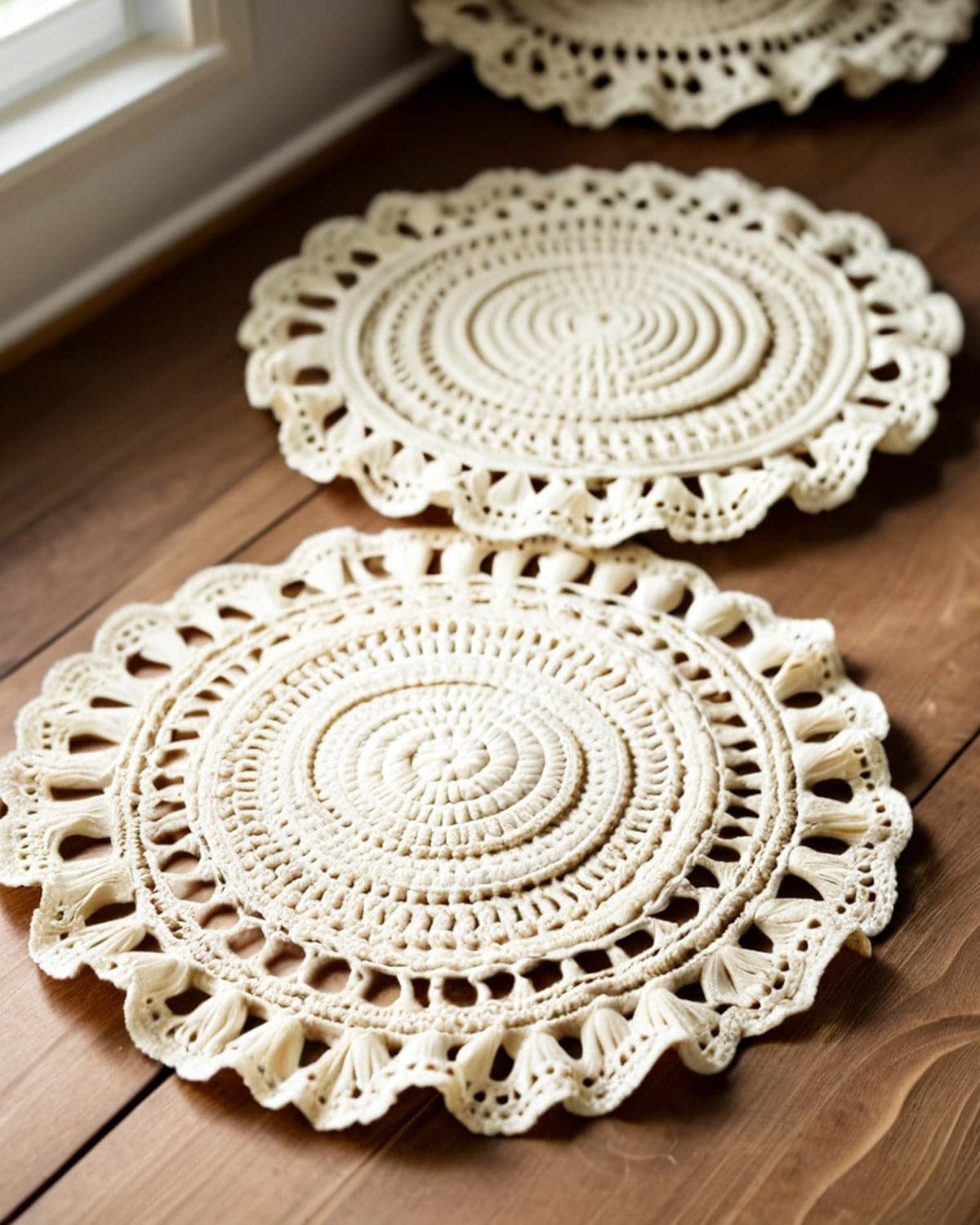 The circle ruffles like a wavy plate. There are too many stitches. Count each round: single crochet adds exactly 6. If the count is right, your stitches are loose, so go down half a hook size.
The circle cups into a bowl. There aren't enough stitches, or your tension is very tight. Check that you increased in every repeat, then try a larger hook.
It's turning into a hexagon. Stagger the increases as shown above.
I lose track of the round. Use a stitch marker in the first stitch of every round and move it up each time. Count stitches at the end of each round before you continue.
There's a hole in the middle. Pull the magic ring tighter before weaving in the tail, and weave the tail through the back of round 1 in two directions.
The joined seam slants. That's normal in joined rounds. Start each round one stitch along to hide it, or work in a spiral.
My double crochet circle has gaps. That's the nature of double crochet. For a solid look, use single or half double crochet instead.
Frequently asked questions
How many stitches do I start a crochet circle with? Six for single crochet, eight for half double crochet and twelve for double crochet.
How many stitches do I add each round? The same as you started with: 6, 8 or 12.
Does the turning chain count as a stitch? In this guide, the ch-2 in the hdc circle doesn't count, and the ch-3 in the dc circle does. Patterns vary, so always check the pattern's notes.
Can I make a circle without a magic ring? Yes. Chain 2 and work into the second chain from the hook, or chain 4, join into a ring and work into the ring.
Why does my amigurumi circle curl? Amigurumi uses tight stitches and a small hook, so circles naturally cup a little. That's fine for 3D shapes.
How do I make an oval? Start with a chain and work around both sides of it, adding increases at each end. Ovals are used for feet, bellies and bag bases.
What to make next
- For colourful circles, learn how to change colours in crochet.
- For a flat flower that starts with a circle, try the crochet sunflower pattern.
- For a 3D circle project, try amigurumi for beginners.
- For squares instead of circles, see how to crochet a granny square.
There are more step-by-step lessons in the beginner tutorials section.
Save it for later
Pin this to your Pinterest board so it's there when you're ready to stitch.

Keep stitching
Related crochet projects
Crochet stitches Alpine Stitch Crochet: Easy Textured Stitch Tutorial
10 min read
Crochet stitches Shell Stitch Crochet: Easy Step-by-Step Tutorial and Border
10 min read
Beginner tutorials How to Change Colors in Crochet: Easy Step-by-Step Guide
12 min read
Beginner tutorials How to Crochet for Beginners: A Step-by-Step Guide
11 min read