How to Block Crochet: Wet, Spray and Steam Blocking
Learn how to block crochet three ways: wet blocking, spray blocking and steam blocking. Which method suits each yarn, how to block granny squares to the same size, shawls, garments and blankets, and fixes for common problems.
By AlixaPublished 7 min read

Blocking is the finishing step that turns curling, wonky crochet into flat, even pieces with crisp edges and open lace. It takes a little water or steam, some pins and a flat surface, and it's the easiest way to make your work look professional. Granny squares line up, shawls open out and edges stop rolling.
This guide shows you how to block crochet three ways (wet blocking, spray blocking and steam blocking), which method suits which yarn, how to block granny squares to the same size, and how to fix the most common problems.
Terms used here: US crochet terms. Single crochet (sc) is UK double crochet.
At a glance
| Skill level | Beginner |
| Methods | Wet blocking, spray blocking, steam blocking |
| Best for | Granny squares, shawls, doilies, garments, blankets |
| Tools | Blocking mats, rust-proof pins, spray bottle, towel |
| Time | 15 minutes of work, then a few hours to a day of drying |
| Works on | Natural fibres, cotton, most blends; acrylic with steam |
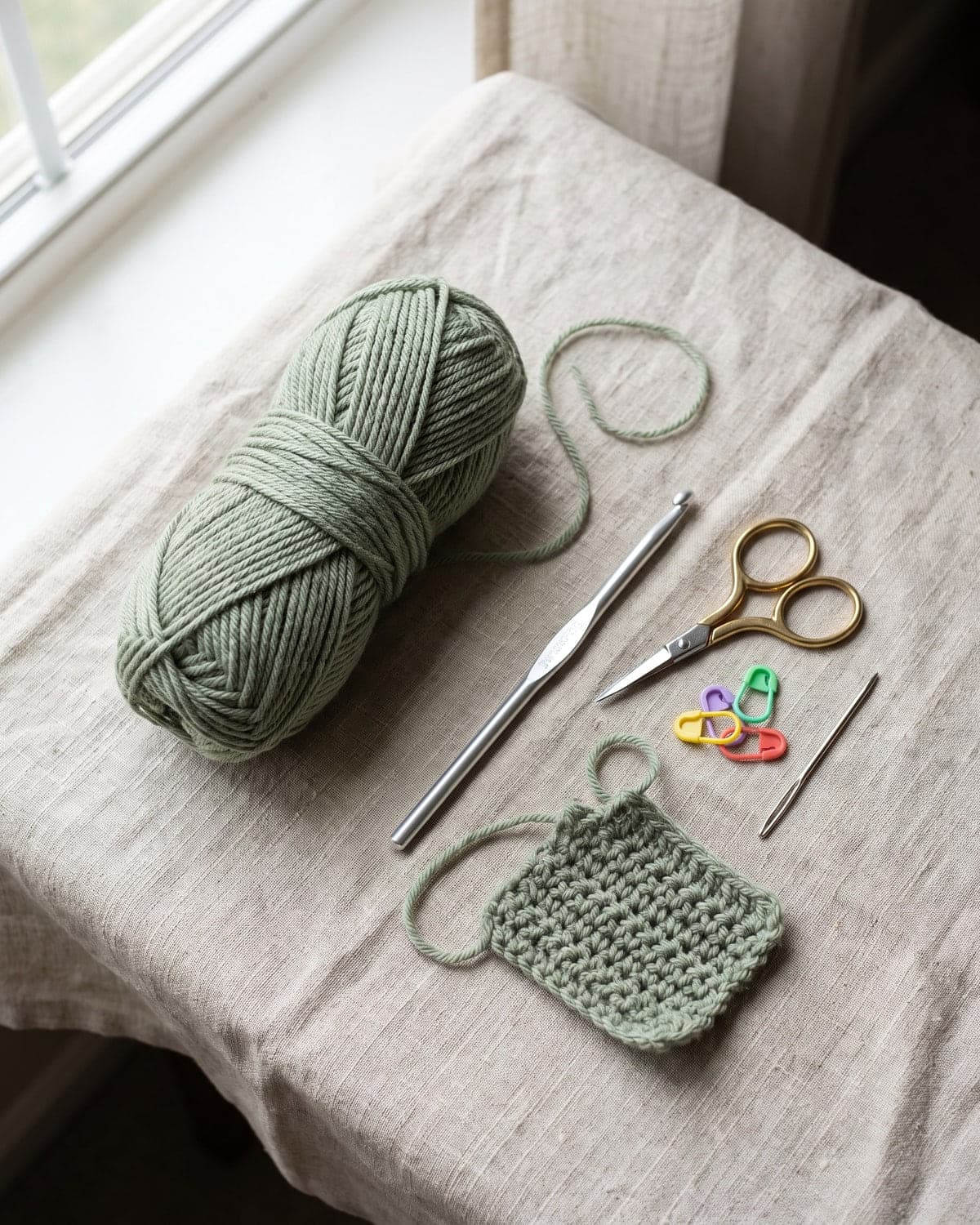
What you need

- A flat surface you can pin into. Interlocking foam blocking mats are ideal. A folded towel on a carpet, a spare bed or an ironing board also works for small pieces.
- Rust-proof pins. Stainless steel T-pins are easiest to push in and pull out. Ordinary dressmaking pins rust and can stain wet yarn.
- A spray bottle filled with cool, clean water.
- A tape measure or ruler, or mats printed with a grid.
- A clean towel for rolling out wet pieces.
- A steam iron or garment steamer for acrylic yarn.
- Optional: blocking wires for long straight edges, and a little wool wash.
Why block your crochet?
- It evens out stitches. Tight and loose stitches relax into the same size.
- It sets the shape. Squares become square, circles become round and points become sharp.
- It makes pieces match. Every granny square in a blanket can be blocked to exactly the same size, so joining is easy.
- It opens up lace. Shells, picots and mesh stitches only show their pattern once they're stretched and dried.
- It stops edges curling. Single crochet and tight edges roll less once blocked.
Blocking is a standard finishing step in knitting and crochet. Wikipedia's article on blocking explains its history.
Check your yarn first
Read the yarn label before you start. It tells you the fibre and how the yarn can be washed and heated. The Craft Yarn Council's guide to care symbols explains every symbol.
| Fibre | Best method | Notes |
|---|---|---|
| Wool, alpaca | Wet or spray | Blocks beautifully. Don't use hot water or rub it. |
| Cotton, linen | Wet or spray | Holds a crisp shape. Can be steamed too. |
| Acrylic | Steam | Water alone won't change it. Never touch it with the iron. |
| Wool/acrylic blend | Spray, then gentle steam | Test on a swatch first. |
| Mohair, angora | Spray | Brush the fluff up gently once it's dry. |
Not sure? Block a small swatch first and see how it behaves.
Wet blocking
Wet blocking gives the biggest change. Use it for natural fibres, lace and anything that needs a lot of reshaping.
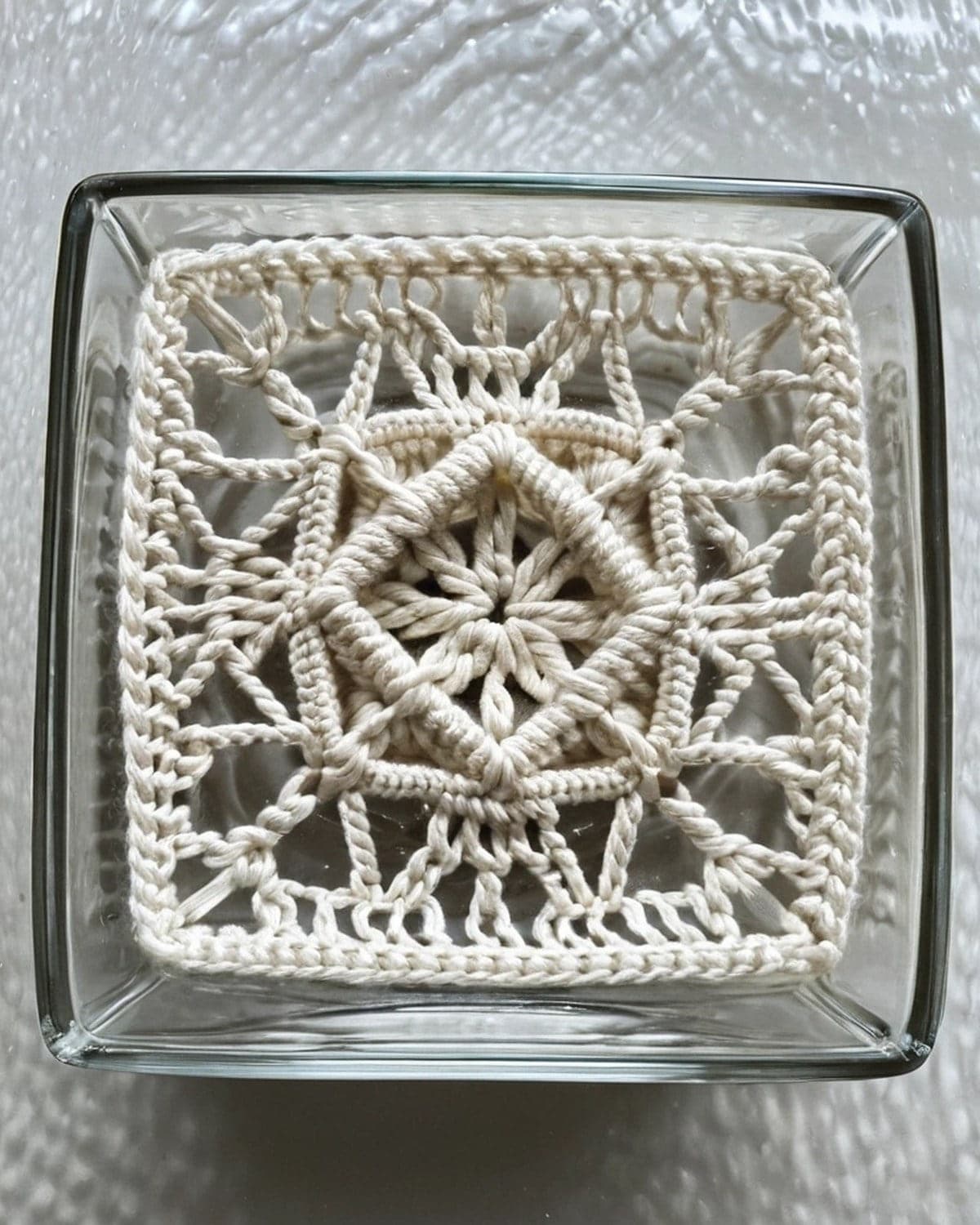
- Soak. Fill a bowl or sink with cool water and a few drops of wool wash. Push the crochet under gently and leave it for 15 to 20 minutes, until it's soaked through.
- Squeeze, don't wring. Lift it out in both hands, supporting the weight, and press out the water.
- Roll it in a towel. Lay the piece flat on a towel, roll the towel up and press or stand on it. The crochet should be damp, not dripping.
- Shape and pin. Lay it on the blocking mat and gently ease it to the size you want. Pin the corners first, then the middle of each side, then fill in between, every 2 to 3 cm (about 1 in).
- Leave it to dry completely. This can take a few hours for a granny square or a full day for a shawl. Don't unpin it until it's dry all the way through, or it will spring back.
Spray blocking
Spray blocking is gentler and quicker. It's perfect for granny squares, small motifs and cotton.
- Pin first. Pin the dry piece out to its finished size and shape on the mat.
- Spray. Mist it evenly with cool water until it's damp all over. Don't soak it.
- Pat it flat with your hand so the water gets into the fibres.
- Leave it to dry before unpinning.

Steam blocking
Steam blocking is the only method that changes acrylic, and it also works well on cotton and wool blends.
- Pin the dry piece to its finished size on a mat or ironing board.
- Hold a steam iron or steamer 2 to 3 cm (1 in) above the crochet. Never press the iron on the stitches: heat flattens and melts acrylic for good. This is sometimes called "killing" acrylic.
- Steam evenly over the whole piece for a few seconds at a time.
- Let it cool and dry completely before unpinning.
Test first. Steam a swatch of the same yarn. If the stitches go shiny or limp, you've used too much heat.
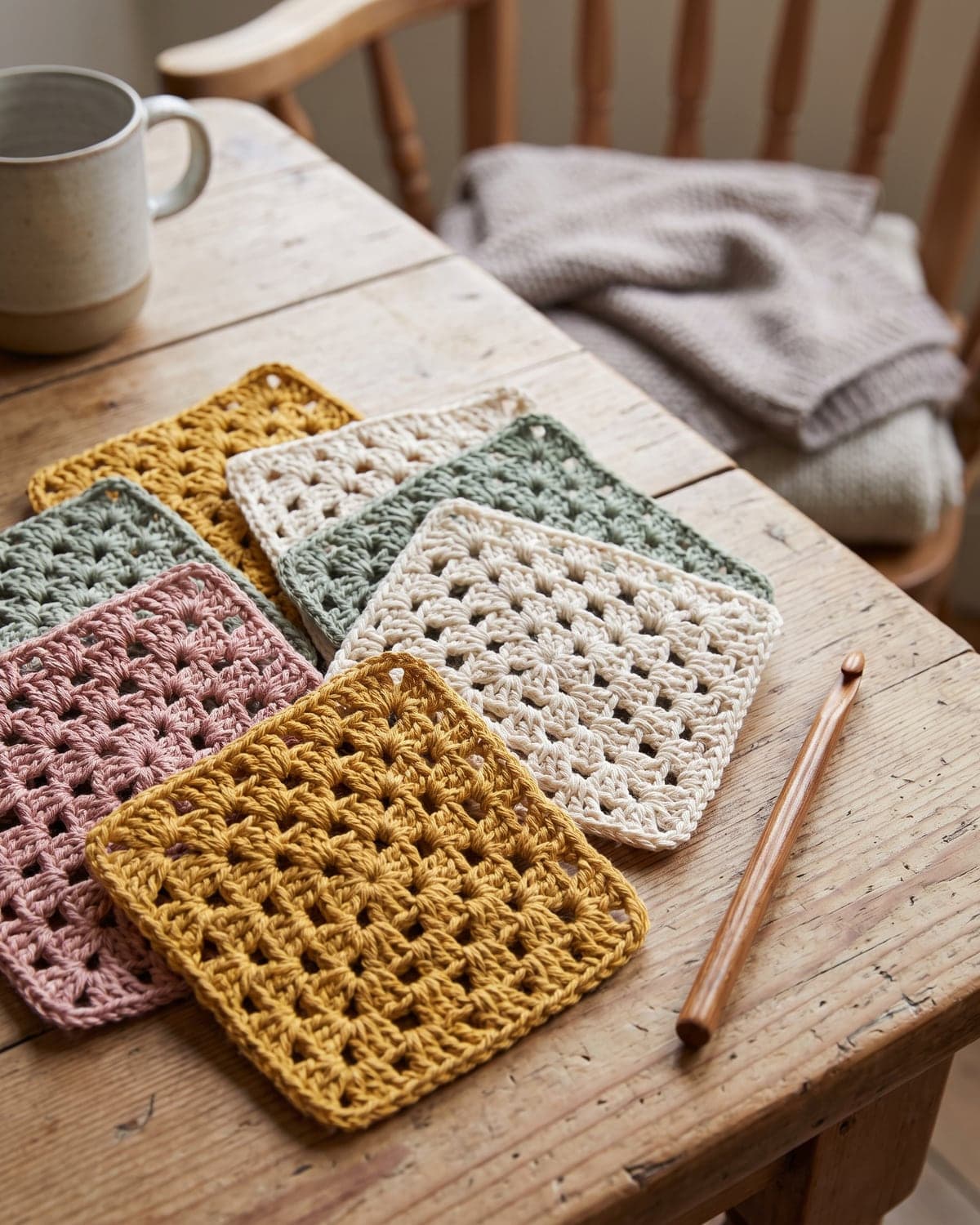
How to block granny squares to the same size

- Measure your squares. Find the size most of them are, and use that as your target.
- Mark the size on your mat. Use the grid, or push 4 pins into the mat at the corners of the target square.
- Pin each square to the marks, corners first, and spray them.
- Block several at once. On a large mat you can pin 6 to 12 squares in a grid.
- Leave them to dry, then stack them. They'll stay the same size for joining.
If you're making your first granny squares, see how to crochet a granny square.
Blocking shawls, lace and doilies
- Pin the straight edge first, in a straight line using the grid or a blocking wire.
- Pin every point of a scalloped or picot edge, so each one is sharp.
- Open the lace by stretching gently. Lace blocks larger than it was off the hook; that's what makes it look light.
- Doilies: pin the centre, then pin each round of points evenly, like the spokes of a wheel.
Blocking garments
- Block each piece before you sew it together. Sweater fronts, backs and sleeves are much easier to seam when they're flat and the right size.
- Use your pattern's schematic for the measurements.
- Block the finished garment again lightly with spray or steam once it's seamed.
For a simple first garment, the easy crochet cardigan for beginners is made from rectangles that block perfectly.
Blocking blankets
A whole blanket is heavy when wet. Spray blocking or steam blocking is usually easier.
- Block it on a spare bed or a clean floor covered with towels or foam mats.
- Pin the edges straight, working out from the middle of each side.
- For a ripple or chevron blanket, pin every peak and valley so the waves are even. See the easy ripple crochet blanket.

Tips for better blocking
- Use plenty of pins. Too few pins leave scallops between them.
- Don't overstretch. Stretch until the stitches are even and open, not until they strain.
- Keep pieces out of direct sun and away from radiators while they dry.
- Block before you weave in ends on lace, so the ends don't pull once the fabric stretches.
- Re-block after washing. Spray and pat a washed piece back into shape while it's damp.
Common problems and fixes
My squares are still different sizes. Block them again, this time all to the same marks. If one is much smaller, it may have been worked with a different hook or tension; remake it.
The edges are wavy between the pins. Add more pins, or use blocking wires along straight edges.
My acrylic didn't change. Water won't block acrylic. Use steam.
My acrylic went flat and shiny. It was overheated. That can't be undone, so keep the iron above the fabric next time.
The piece shrank back after unpinning. It wasn't completely dry. Leave it pinned longer.
There are rust marks. Use stainless steel pins only.
Frequently asked questions
Do I have to block crochet? No, but it makes a big difference to granny squares, lace and anything that needs to be a certain size.
How long does blocking take? About 15 minutes to pin, then a few hours to a day to dry.
Can I block without blocking mats? Yes. Use a folded towel on a carpet, a spare bed or an ironing board, and pin into that.
Does blocking last forever? On natural fibres it lasts until the piece is washed. Steam-blocked acrylic stays blocked.
Should I block amigurumi? No. Stuffed toys get their shape from the stuffing. You can steam flat parts like ears lightly.
What to learn next
- Make pieces worth blocking with how to crochet a granny square.
- Try a stitch that opens up beautifully when blocked: shell stitch crochet.
- Learn to keep circles flat in how to crochet a circle.
- New to crochet? Start with how to crochet for beginners.
There are more step-by-step guides in the beginner tutorials section.
Save it for later
Pin this to your Pinterest board so it's there when you're ready to stitch.

Keep stitching
Related crochet projects
Beginner tutorials How to Crochet a Granny Square: Easy Step-by-Step for Beginners
12 min read
Beginner tutorials How to Crochet a Circle: Flat Circles in Any Stitch
10 min read
Beginner tutorials How to Read Crochet Patterns: A Beginner's Guide
12 min read
Beginner tutorials How to Crochet for Beginners: A Step-by-Step Guide
11 min read