Alpine Stitch Crochet: Easy Textured Stitch Tutorial
Learn the alpine stitch: a thick, cosy crochet texture of raised, staggered columns made with single crochet, double crochet and front post double crochet. Step-by-step swatch, stitch multiples and project ideas.
By AlixaPublished 10 min read

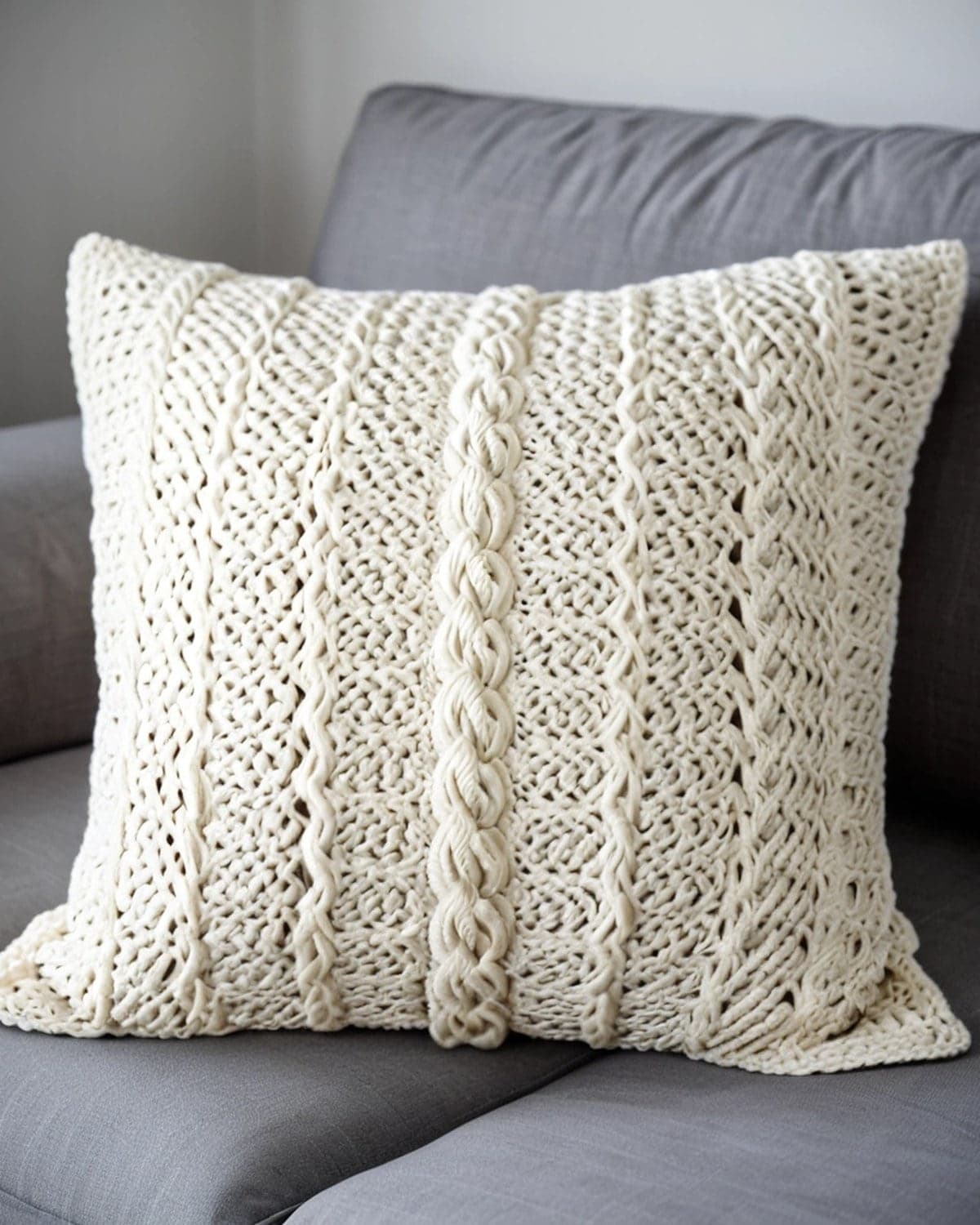
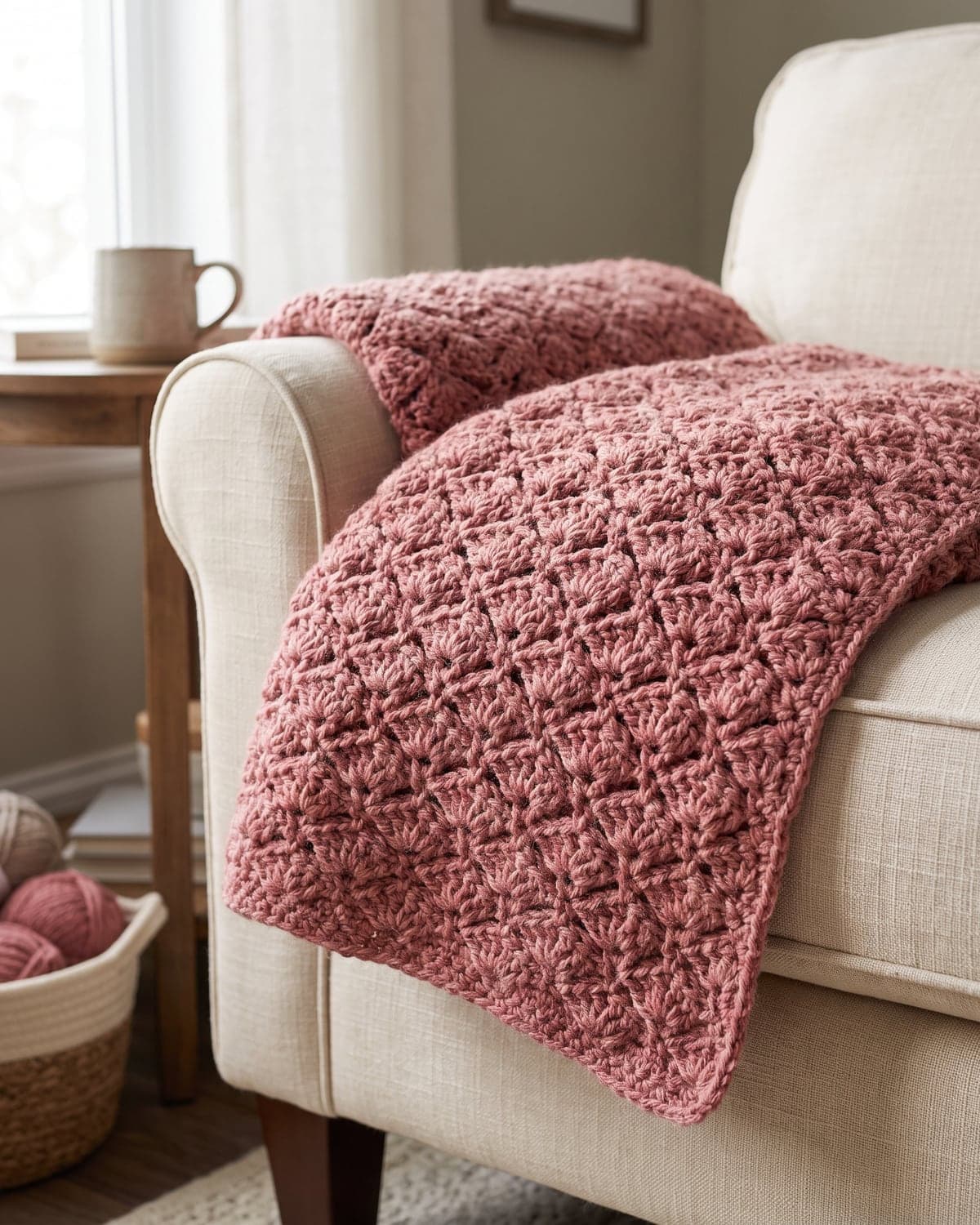
The alpine stitch is one of the most loved textured stitches in crochet. It makes a thick, cosy fabric covered in little raised columns that zigzag across the surface, a bit like the timber frames of an Alpine chalet. It looks complicated, but it uses only three stitches you probably know already: single crochet, double crochet and the front post double crochet.
This tutorial teaches the alpine stitch step by step with a practice swatch, explains how the posts lean and cross, and shows you how to use it in blankets, scarves, cushions and ear warmers. You'll also find stitch multiples for any width, colour ideas, tips for neat edges and fixes for the common mistakes.
Terms used here: US crochet terms. Single crochet (sc) is UK double crochet, double crochet (dc) is UK treble, and front post double crochet (fpdc) is UK front post treble (fptr).
At a glance
| Skill level | Advanced beginner |
| Stitches | Chain, sc, dc, front post double crochet (fpdc) |
| Stitch count | Any even number |
| Row repeat | 4 rows (2 right side, 2 wrong side) |
| Yarn | Worsted (weight 4) in a smooth, light colour for practice |
| Hook | 5 mm (US H-8) |
| Fabric | Thick, warm, reversible-looking texture with almost no holes |
What you need

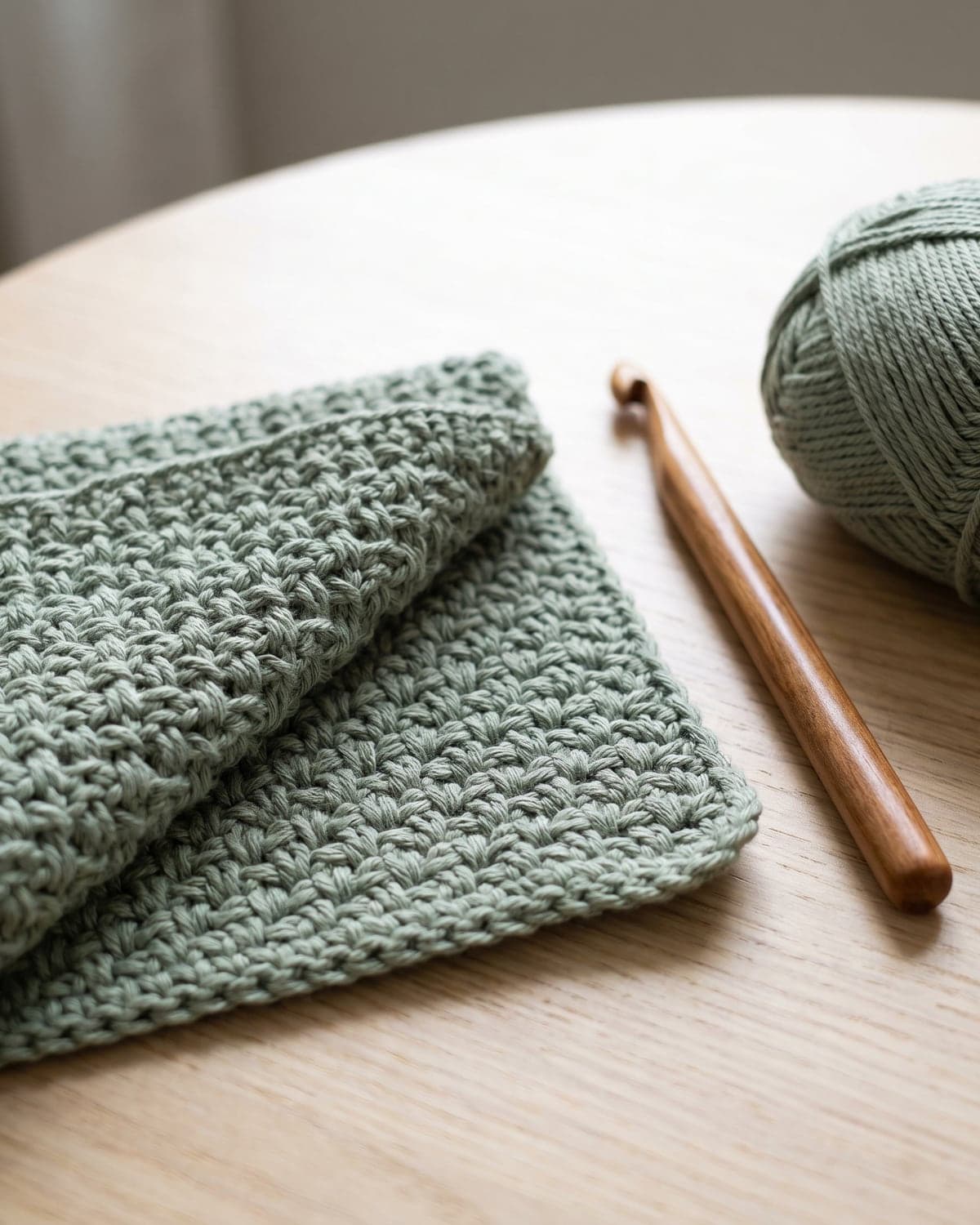
- Worsted weight yarn (weight 4). A smooth acrylic, wool blend or cotton in a light, solid colour shows the texture best. Fluffy and dark yarns hide it.
- A 5 mm (US H-8) hook.
- A tapestry needle and scissors.
- Stitch markers (optional), to mark the right side of the work.
The alpine stitch uses noticeably more yarn than plain double crochet, roughly a third more, because each post stitch wraps around a stitch below. Keep that in mind when you buy yarn for a big project.
Stitches you'll use
-
Single crochet (sc) and double crochet (dc). All abbreviations follow the Craft Yarn Council's standard crochet abbreviations. If you need a refresher, see easy crochet stitches for beginners.
-
Front post double crochet (fpdc). Instead of going into the top of a stitch, you work around its "post", the vertical body of the stitch:
- Yarn over.
- Insert the hook from front to back to the right of the post, and bring it out to the front again on the left of the post, so the hook passes behind the stitch.
- Yarn over and pull up a loop. You have 3 loops on the hook.
- (Yarn over, pull through 2 loops) twice.
Left-handed crocheters work from left to right, so insert the hook to the left of the post and out to the right.
What does "2 rows below" mean? In alpine stitch, the fpdc goes around a double crochet two rows down: the dc of the last right-side row, under the single crochet row you just made. The single crochet row sits on top and acts as a spacer, which makes the posts stand out.
How the alpine stitch works
The fabric alternates between two kinds of rows:
- Wrong side (WS) rows are plain single crochet. They're quick, and they add thickness.
- Right side (RS) rows are double crochet with a front post stitch in every other stitch. The posts reach down two rows and wrap around a dc.
On each right side row, the posts shift over by one stitch. That's what makes the posts look staggered, and gives the alpine stitch its slanted, woven look.
Important: when you work a fpdc, skip the single crochet behind it. The post stitch takes its place, so your stitch count never changes.
Alpine stitch swatch
Make this swatch first. It's 20 stitches wide and about 14 cm (5.5 in) across in worsted yarn.
The chain-2 at the start of the double crochet rows does not count as a stitch.
- Foundation: ch 21.
- Row 1 (WS): sc in the 2nd ch from the hook and in each ch across. Turn. (20 sc)
- Row 2 (RS): ch 2, dc in each st across. Turn. (20 dc)
- Row 3 (WS): ch 1, sc in each st across. Turn. (20 sc)
- Row 4 (RS): ch 2, dc in the first st, *fpdc around the dc 2 rows below in the next st, dc in the next st*; repeat from * 8 more times; dc in the last st. Turn. (20 sts: 9 fpdc and 11 dc)
- Row 5 (WS): ch 1, sc in each st across. Turn. (20 sc)
- Row 6 (RS): ch 2, dc in the first 2 sts, *fpdc around the st 2 rows below in the next st, dc in the next st*; repeat from * 8 more times. Turn. (20 sts: 9 fpdc and 11 dc)
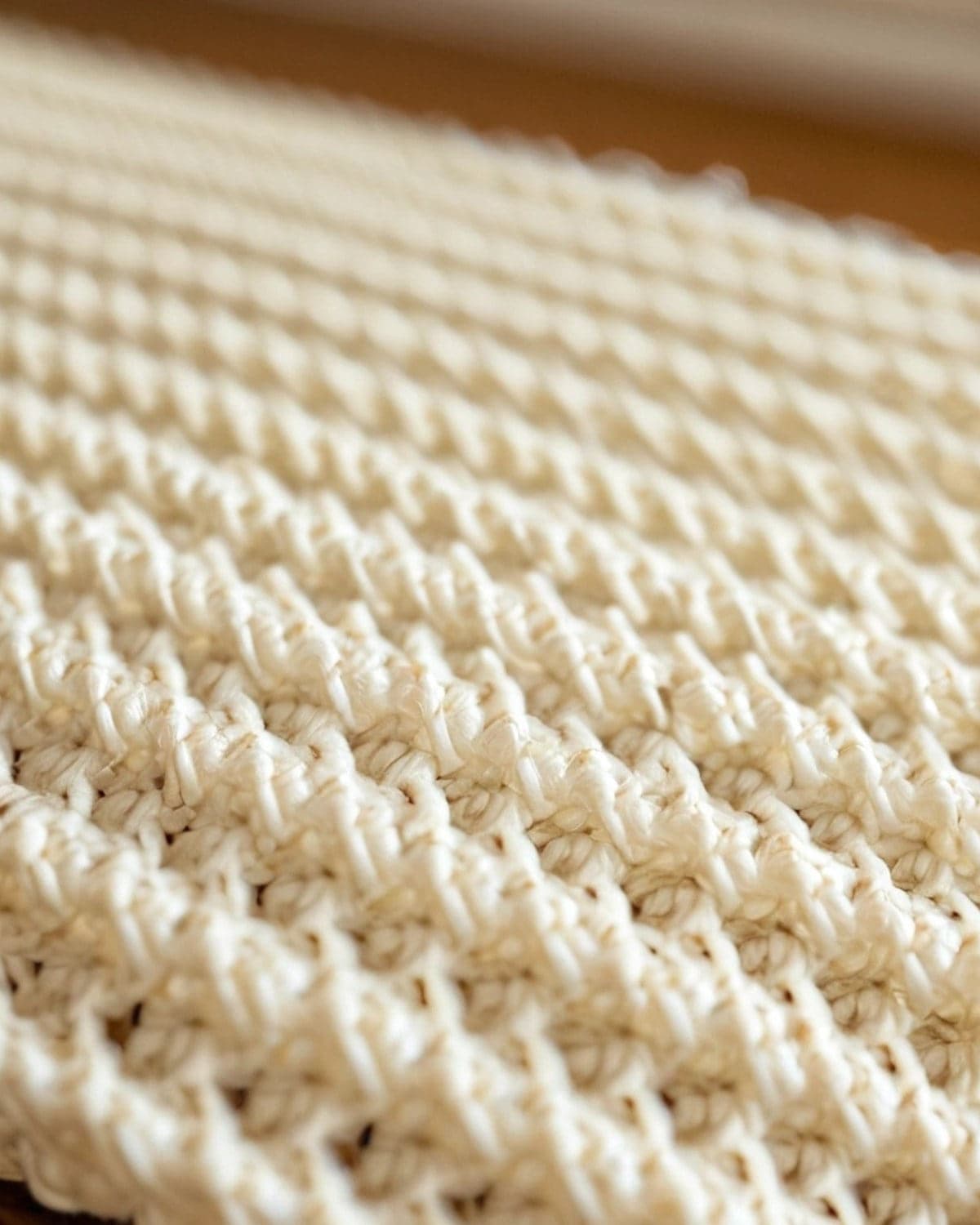 Repeat rows 3 to 6 for the pattern. In row 4 the posts sit on stitches 2, 4, 6 and so on up to 18. In row 6 they move over to stitches 3, 5, 7 and so on up to 19. The edge stitches are always plain dc, which keeps the sides straight.
After 18 to 20 rows, the swatch should be roughly square. End with a WS row of single crochet and fasten off.
Reading the fabric
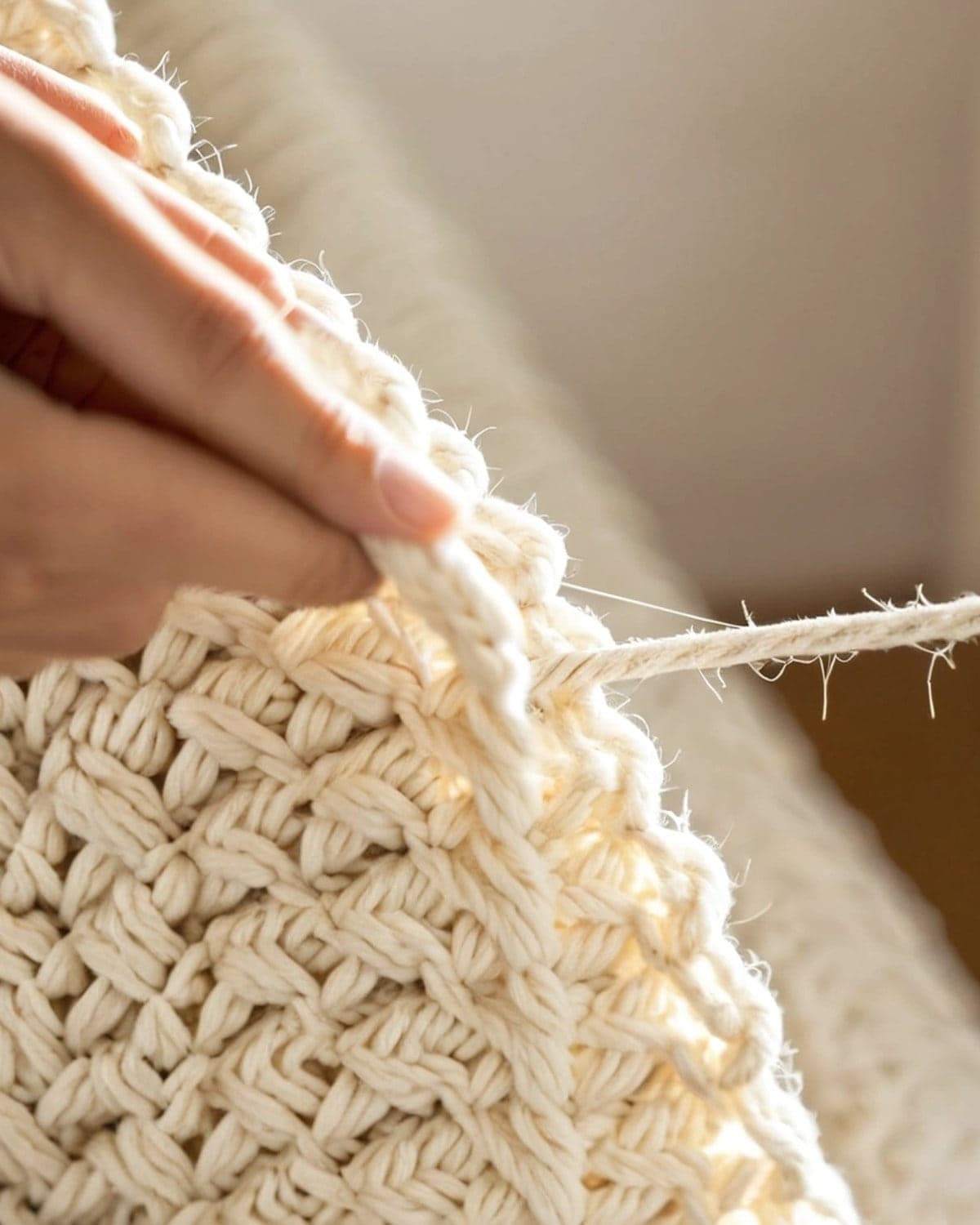
After a few repeats you'll see a pattern of raised, slightly slanted columns with small "bumps" of single crochet between them. Turn the swatch over: the back is flat and pebbly, a nice texture too.
Working out your stitch count
The alpine stitch works over any even number of stitches. For a project:
- Make a swatch and measure how many stitches fit in 10 cm (4 in).
- Multiply by the width you want, divided by 10 (or by 4 in inches).
- Round to the nearest even number.
- Chain that number plus 1, and start with row 1.
In worsted yarn with a 5 mm hook, most people get about 14 stitches and 12 rows to 10 cm (4 in). Here are some starting points:
| Project | Stitches | Chain | Approximate width |
|---|---|---|---|
| Ear warmer | 14 | 15 | 10 cm (4 in) |
| Scarf | 30 | 31 | 21 cm (8.5 in) |
| Cushion cover front | 56 | 57 | 40 cm (16 in) |
| Baby blanket | 106 | 107 | 76 cm (30 in) |
| Throw blanket | 170 | 171 | 120 cm (48 in) |
Alpine stitch projects
Alpine stitch scarf
Chain 31 and work the pattern until the scarf is 150 to 170 cm (60 to 67 in) long. That takes about 4 balls of 100 g worsted. Add fringe to the short ends if you like. For a plainer scarf, see the easy crochet scarf for beginners.
Alpine stitch ear warmer
Chain 15 and work the pattern until the band fits snugly around your head, about 50 cm (20 in) for an adult. Seam the short ends, then wrap a strip of yarn tightly around the seam a few times to pinch it into a twist at the front.
Alpine stitch blanket
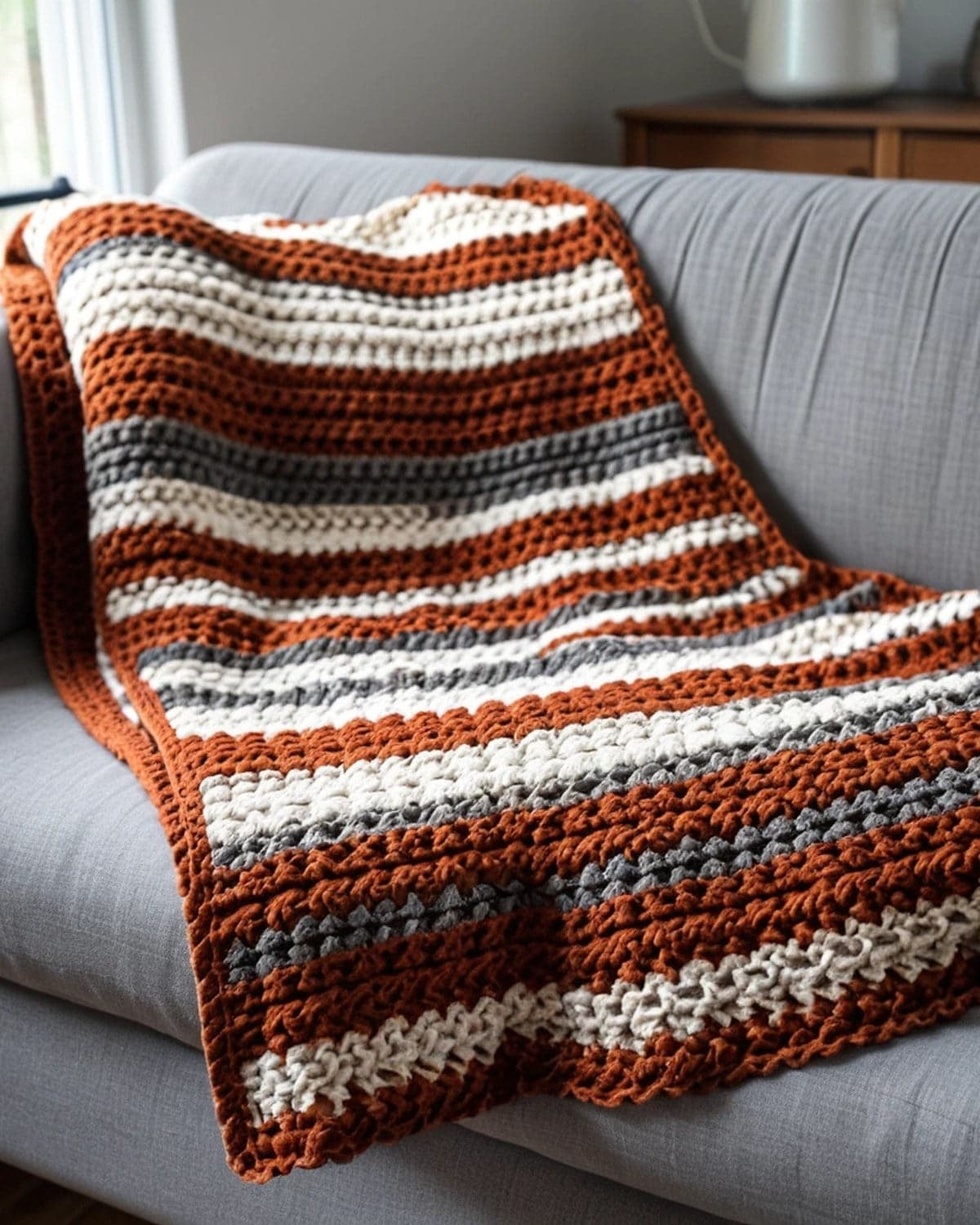 Alpine stitch blankets are warm, heavy and very satisfying to make. Choose your size from the table above. Work in one colour for a classic look, or in stripes: change colour at the end of a WS row, so each colour starts on a RS post row. For a neat stripe, see how to change colours in crochet.
Finish with a simple border of 2 or 3 rounds of single crochet. If you've made a blanket before, the chunky crochet blanket for beginners has more on borders and sizing.
Alpine stitch cushion
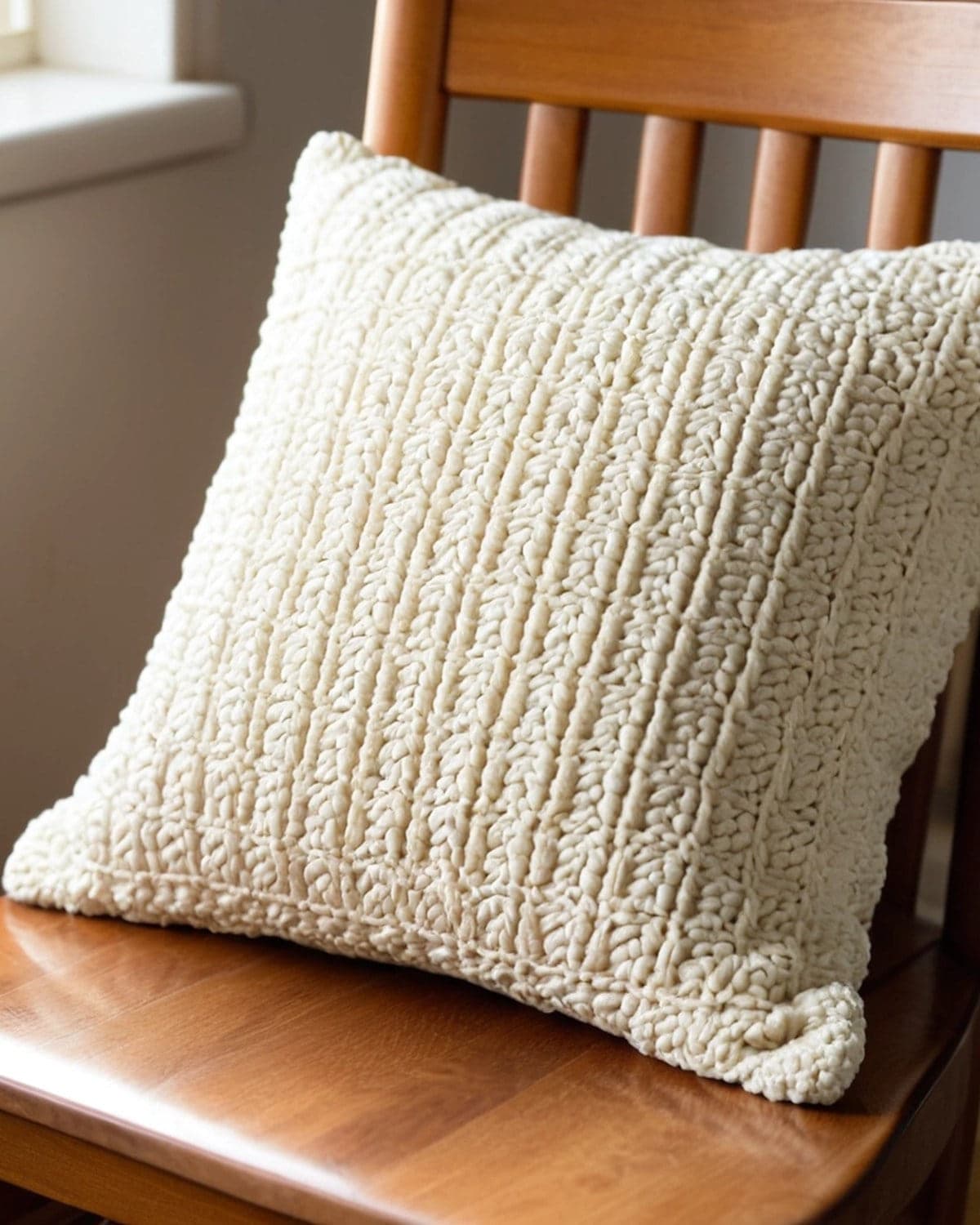 Make two panels of 56 stitches, about 40 × 40 cm (16 × 16 in), and join them around three sides with single crochet. Insert a cushion pad and close the last side. The easy crochet pillow cover shows a back that needs no zip.
Colour ideas
- One colour: cream, oatmeal or stone grey for a timeless, Scandinavian look.
- Two-colour alpine: work every WS sc row in colour A and every RS row in colour B. The posts in colour B stand out against the A background.
- Fade: change colour gradually from dark to light across the blanket.
- Variegated yarn: short colour changes break up the texture, so choose yarn with long colour repeats.
Tips for a neat alpine stitch
- Mark the right side. Put a marker on the RS of the swatch. All post rows are worked with the RS facing you.
- Don't pull the posts tight. The post should reach comfortably down two rows. If it's tight, the fabric will pucker and narrow.
- Count your stitches every few rows. The most common mistake is working into the single crochet behind a post as well as the post itself, which adds a stitch.
- Keep your edges plain. Always start and end the RS rows with a regular dc.
- Use a hook half a size larger if the fabric feels stiff.
- Block gently. Wool and wool blends relax beautifully with a light steam; acrylic needs only a little.
Common problems and fixes
The fabric is getting wider. You're adding stitches, probably by working into the sc behind each fpdc. Remember: the post replaces that stitch.
The fabric is getting narrower. You missed the last stitch of a row. Count the stitches, especially on WS rows.
The posts aren't staggered. Rows 4 and 6 are different. Row 4 starts with 1 dc, row 6 with 2 dc.
The posts look loose and floppy. You're working around the wrong stitch. Find the dc two rows below, not three.
The edges are wavy. Make sure the ch-2 at the start of RS rows doesn't count, and that you dc into the very first stitch.
I can't see where to put the post. Look below the sc row: you'll see a row of dc posts. Work around the one directly below the next stitch.
Caring for alpine stitch projects
Alpine stitch fabric is thick, so it holds water and takes a long time to dry. A little care keeps the texture crisp for years.
- Check the yarn label first. The symbols tell you whether the yarn can go in the machine. The Craft Yarn Council's guide to care symbols explains each one.
- Acrylic: machine wash on a gentle, cool cycle in a laundry bag, then dry flat. Avoid hot tumble drying, which can flatten the posts.
- Wool and wool blends: hand wash in cool water with a wool wash, squeeze gently in a towel and dry flat. Never wring, or the fabric will stretch.
- Reshape while damp. Pat the fabric back to its original size and straighten the edges.
- Store folded, not hung. A heavy alpine blanket or scarf stretches if it hangs on a hook for months.
Frequently asked questions
Is the alpine stitch hard? Not if you can make a double crochet. The front post stitch is the only new technique, and you'll have it after a few tries.
Is the alpine stitch reversible? The back is a flat, pebbly texture that looks good too, so it's great for scarves and blankets where both sides show.
What's the difference between the alpine stitch and the waffle stitch? The waffle stitch uses front post stitches on every row to make a grid of squares. The alpine stitch alternates sc and post rows, and makes staggered columns. You can try waffle stitch in textured crochet stitches.
Does the alpine stitch use a lot of yarn? Yes, about a third more than plain double crochet. It's also much warmer.
Can I work the alpine stitch in the round? Yes. In joined rounds you always have the right side facing, so replace the WS sc rows with sc rounds and keep the post rounds the same.
Is it a good stitch for baby blankets? It's thick and soft, so it's lovely for a pram or play mat. Choose a soft acrylic or cotton blend that can be machine washed.
What to learn next
- For crossed post stitches, try the crochet cable stitch.
- For a softer, flatter texture, try moss stitch crochet.
- For five more textures, see textured crochet stitches.
- For a pretty edge, try shell stitch crochet.
There are more stitch guides in the crochet stitches section.
Save it for later
Pin this to your Pinterest board so it's there when you're ready to stitch.
Keep stitching
Related crochet projects
Crochet stitches Crochet Cable Stitch: Easy Step-by-Step Cable Tutorial
10 min read
Crochet stitches Waffle Stitch Crochet: Easy Thick Textured Stitch
7 min read
Crochet stitches Shell Stitch Crochet: Easy Step-by-Step Tutorial and Border
10 min read
Crochet stitches Moss Stitch Crochet: Easy Tutorial for a Beautiful Woven Texture
10 min read