Crochet Temperature Blanket: Easy Pattern and Colour Chart
Record a whole year of weather in yarn: one row a day in the colour of that day's temperature. A ready-made colour chart in Celsius and Fahrenheit, three methods, yarn amounts, borders and tips to keep going.
By AlixaPublished 10 min read
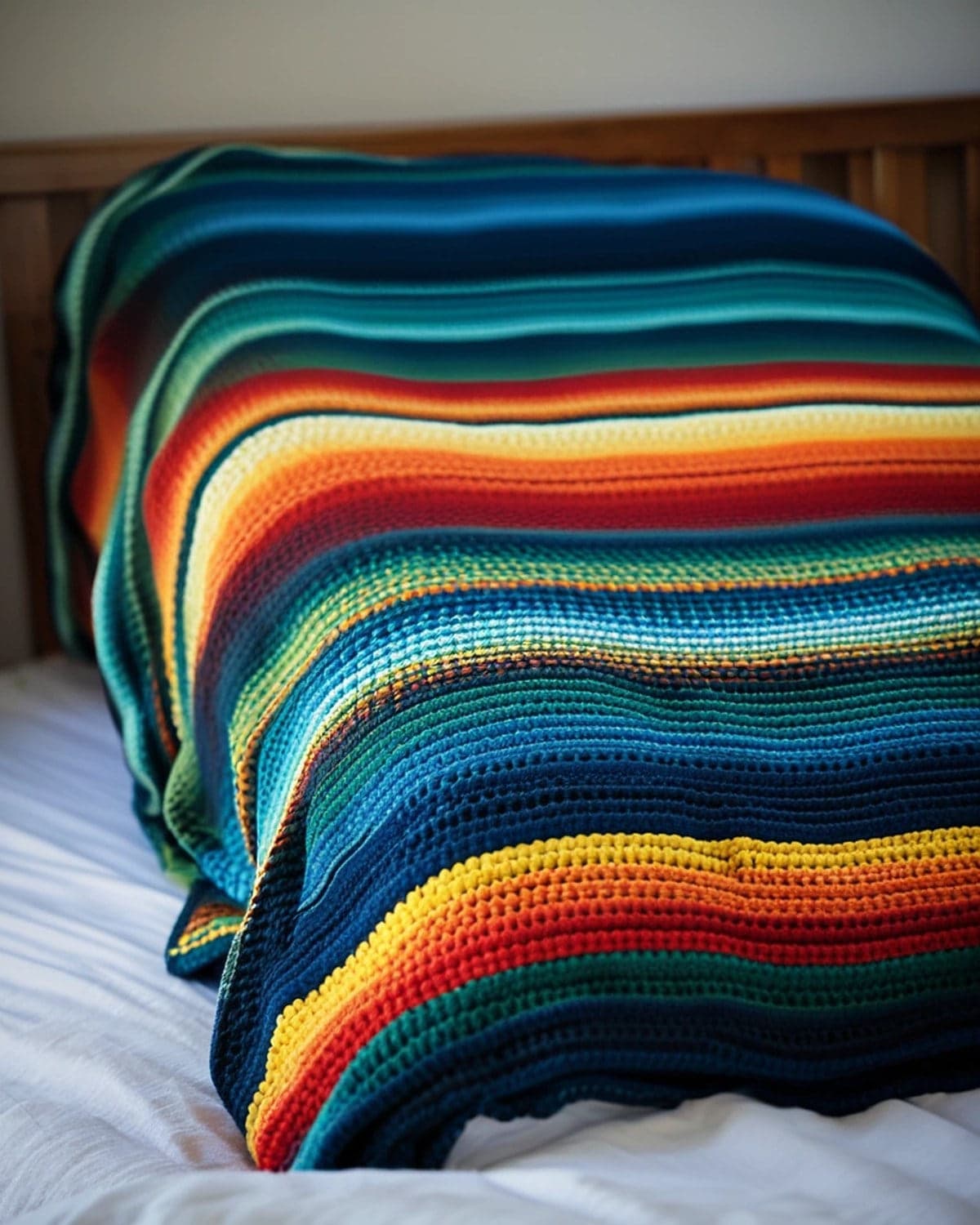
A crochet temperature blanket records a whole year of weather in yarn. Every day you crochet one row, in a colour that matches that day's temperature. By the end of the year, you have a cosy blanket that shows your summer heat waves, your coldest weeks and every surprise in between. It's a lovely project to start on 1 January, for a baby's first year, or for any year you want to remember.
This guide explains how a temperature blanket works, gives you a ready-made colour chart in both Celsius and Fahrenheit, and offers three ways to make one: a row a day in moss stitch, a granny square a day, and weekly stripes for the time-poor. You'll also find yarn amounts, how to find your local temperatures, ideas for borders, and tips to keep going all year.
Terms used here: US crochet terms. Single crochet (sc) is UK double crochet, and double crochet (dc) is UK treble.
About this pattern: it's a simple design written for this guide. The yarn amounts and sizes are approximate and depend on your yarn, hook, tension and how warm your year turns out to be.
At a glance
| Skill level | Beginner |
| Stitches | Chain, sc (moss stitch), optional granny square |
| Yarn | DK (weight 3) acrylic in 10 to 12 colours |
| Hook | 4 mm (US G-6) |
| Finished size | About 110 × 150 to 180 cm (43 × 59 to 71 in), depending on the method |
| Time | 10 to 15 minutes a day, for a year |
What you need
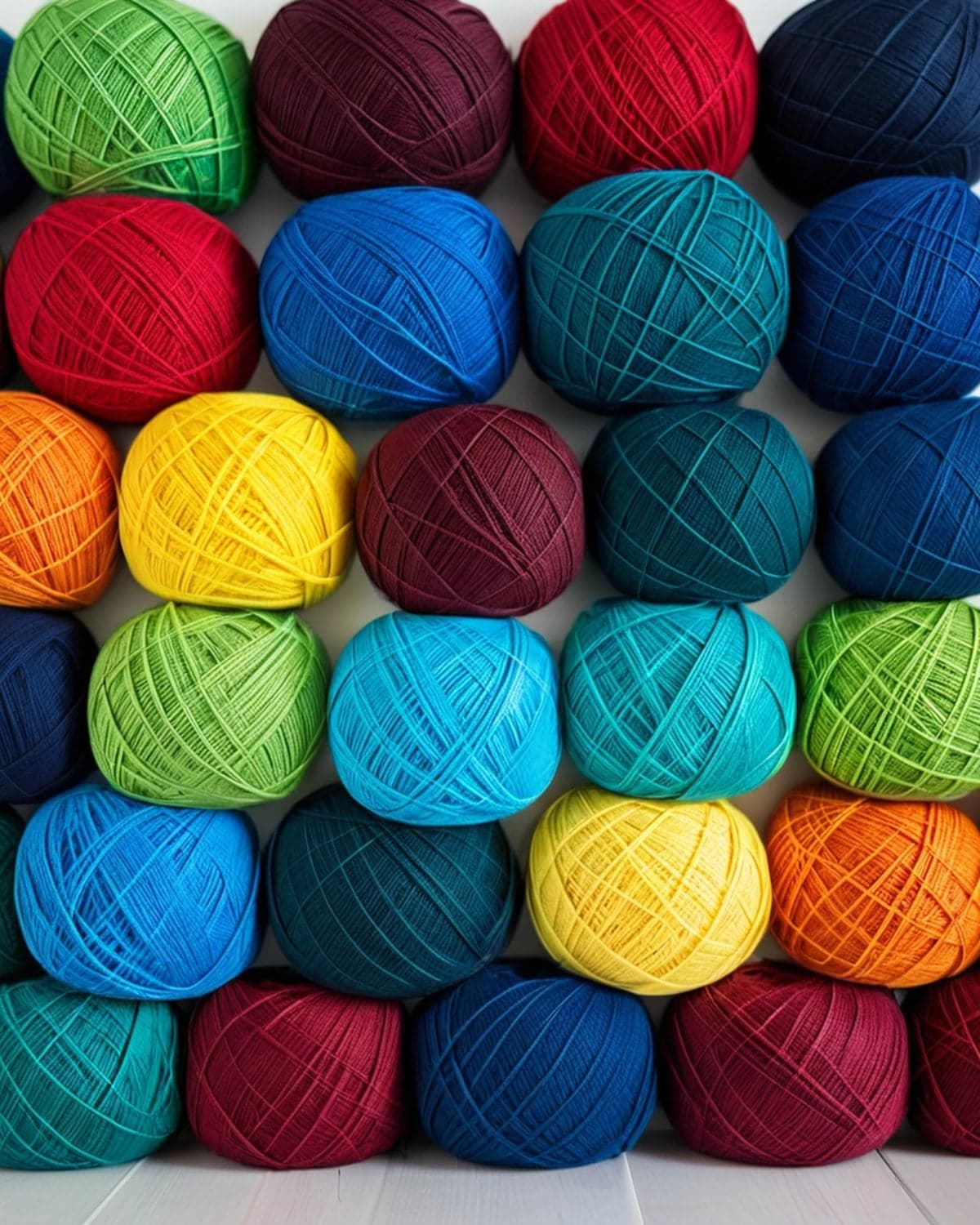
- DK yarn (weight 3) in 10 to 12 colours, one for each temperature range on your chart. Acrylic is the usual choice: it's soft, comes in lots of colours and can be machine washed. Choose one yarn range so all the colours have the same thickness.
- A 4 mm (US G-6) hook.
- A tapestry needle and scissors.
- A notebook or a printed chart to log each day's temperature and colour.
- A project bag big enough for a growing blanket and all your colours.
How a temperature blanket works
- Choose what to record. Most people use the day's high temperature. Some use the low, or the average, or work a two-colour row with both.
- Make a colour chart. Divide the range of temperatures where you live into steps of 5 °C (or about 9 °F), and give each step a colour.
- Crochet one row each day in the colour for that day's temperature.
You don't have to crochet every single day. Many people catch up once a week from their notes.
Colour chart
This chart works for most places with cold winters and warm summers. Adjust it to your climate: you want each colour to appear several times during the year, and no single colour to dominate.
| Daily high (°C) | Daily high (°F) | Colour suggestion |
|---|---|---|
| Below −5 | Below 23 | Navy |
| −5 to 0 | 23 to 32 | Royal blue |
| 0 to 5 | 32 to 41 | Sky blue |
| 5 to 10 | 41 to 50 | Teal |
| 10 to 15 | 50 to 59 | Green |
| 15 to 20 | 59 to 68 | Lime |
| 20 to 25 | 68 to 77 | Yellow |
| 25 to 30 | 77 to 86 | Orange |
| 30 to 35 | 86 to 95 | Red |
| Above 35 | Above 95 | Burgundy |
For a warm climate, start at 10 °C (50 °F) and use 3 °C (5 °F) steps, so you still get a good spread of colours.
For a calmer palette, use one colour family: from deep plum through pinks to cream, or from forest green through sage to oatmeal.

Finding your daily temperatures
You can record them each day from your weather app, or look them up afterwards. Free historical weather data is available from sites such as timeanddate.com, which shows past weather for cities around the world, and from your national weather service.
Tip: pick one source and use it all year. Different sources may give slightly different numbers.
Method 1: a row a day in moss stitch
The classic temperature blanket: 365 rows, one per day, in moss stitch. Moss stitch makes a soft, dense fabric where each colour shows as a neat line, and it doesn't curl. For a full tutorial, see moss stitch crochet.
Foundation
- Ch 228 (an even number). For a narrower blanket, use any even number.
In DK yarn with a 4 mm hook, 228 chains make a blanket about 110 cm (43 in) wide.
The rows
- Row 1: sc in the 4th ch from the hook, *ch 1, skip the next ch, sc in the next ch*; repeat from * to the end. Turn.
- Row 2: ch 2 (counts as sc and ch-1 space), sc in the first ch-1 space, *ch 1, sc in the next ch-1 space*; repeat from * to the end, working the last sc into the turning chain space. Turn.
Repeat row 2 for every day of the year. Change colour at the end of each row, in the last stitch, using the method in how to change colours in crochet.
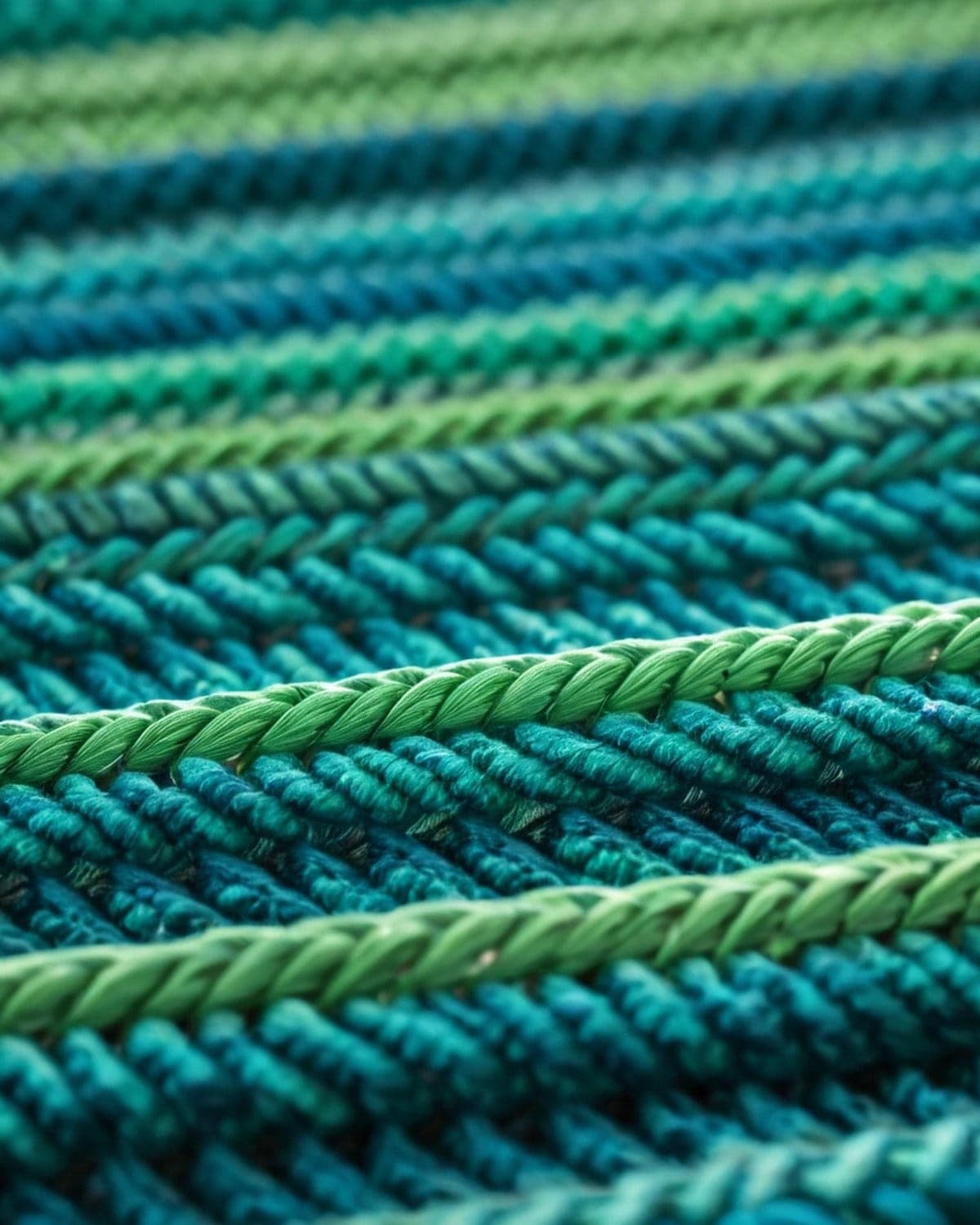 Each moss stitch row is about 0.4 to 0.5 cm (0.2 in) tall in DK yarn. A full year of 365 rows makes a blanket of roughly 150 to 180 cm (59 to 71 in) long.
Carry or cut? When two days in a row have the same colour, simply carry on. When the colour changes, cut the old yarn with a 15 cm (6 in) tail, or carry it up the side if you'll need it again in a day or two.
Weave in ends weekly. With 365 rows, you'll have hundreds of ends. Weave them in every Sunday, or crochet over them as you go.
Method 2: a granny square a day
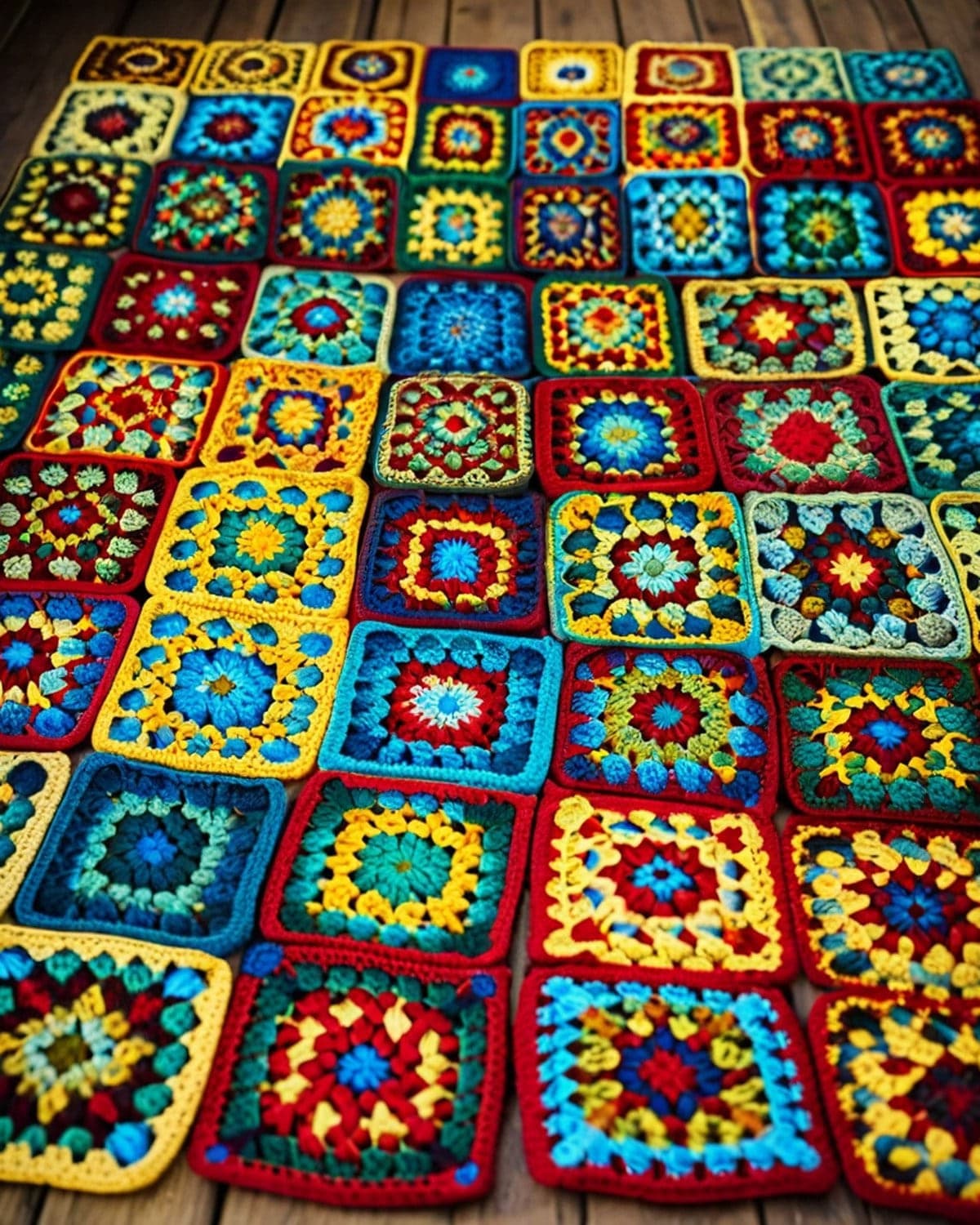
If you'd rather make small pieces, crochet one granny square per day and join them at the end of the year. Each square can show the day's high in the centre and the low on the outer round, or use one colour for the whole day.
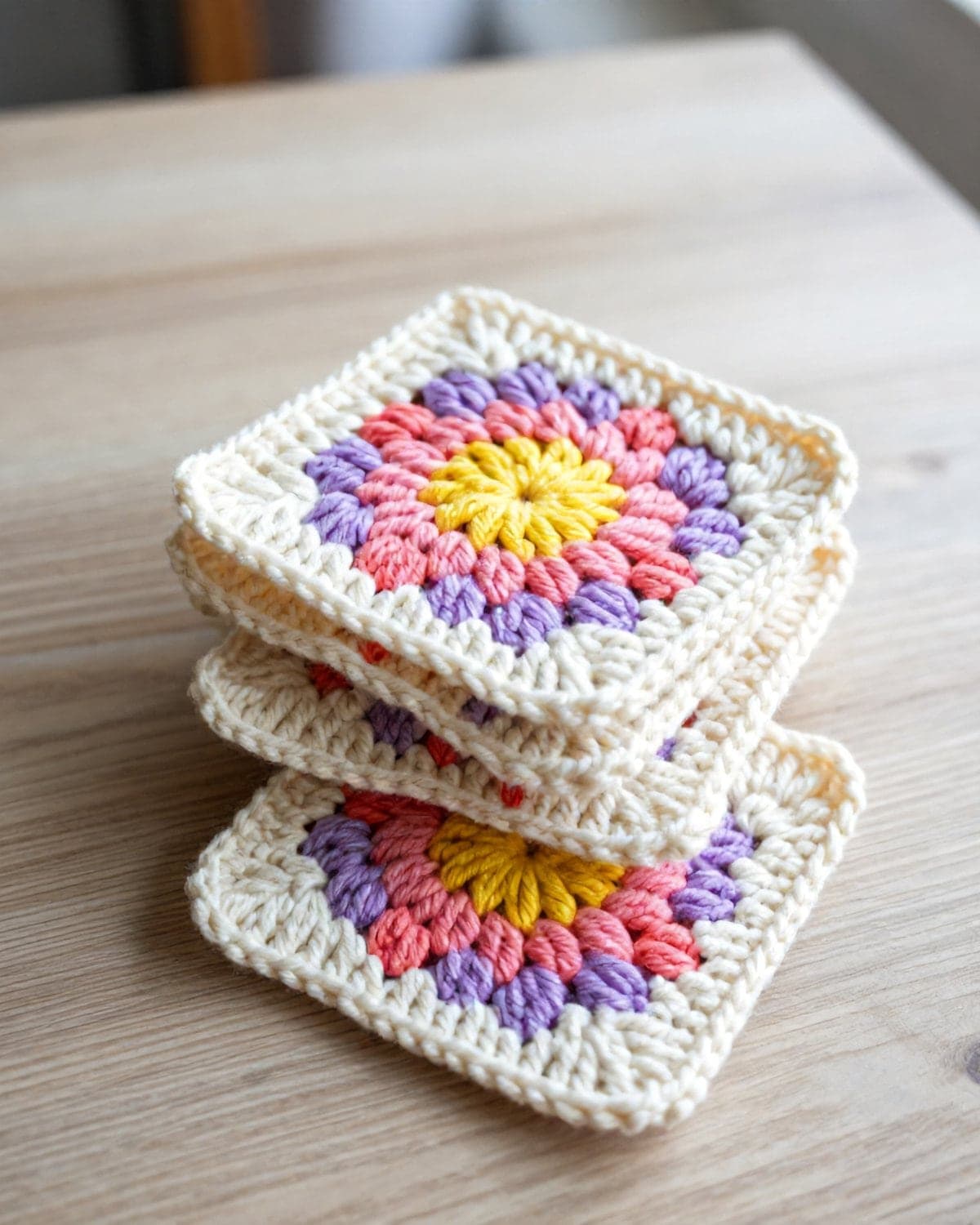
- Make a 3-round granny square for each day, about 8 cm (3 in) in DK. See how to crochet a granny square for the pattern.
- A year gives you 365 squares. Lay them out 19 squares wide by 19 squares long (361 squares). Use the 4 extra squares for a pocket, a label or the four corners of the border.
- Joined, the blanket is about 150 × 150 cm (59 × 59 in).
Squares are easy to carry around, and you can join them month by month so the work doesn't pile up.
Method 3: a stripe a week
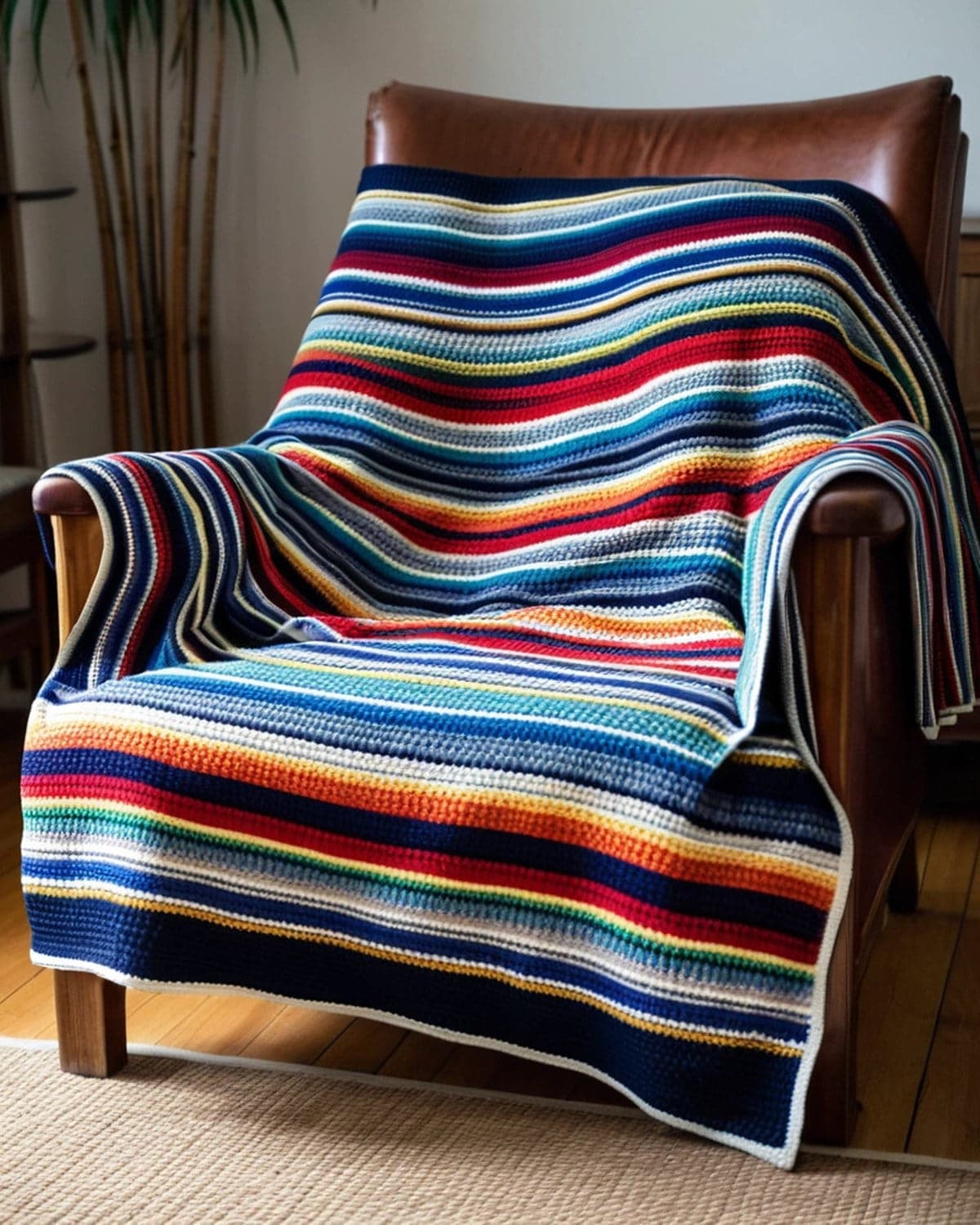
Short on time? Crochet a weekly stripe. Each Sunday, work 6 rows of moss stitch in the colour of that week's average high. A year makes 52 stripes, 312 rows in total, and a blanket of about 130 to 150 cm (51 to 59 in) long.
How much yarn?
For a 110 cm (43 in) wide moss stitch blanket, each row uses about 2.5 m (2.7 yd) of DK yarn. A year of rows uses roughly 900 m (980 yd) plus the border.
Because you don't know in advance how hot or cold the year will be, buy one 100 g ball (about 250 to 300 m) of each colour to start, and two of the middle colours that you'll use most often. Buy more as you need them, from the same yarn range.
Adding month markers
It's nice to be able to read the months in the finished blanket.
- A divider row: at the end of each month, work one row in a neutral colour, such as grey or cream.
- A contrast stitch: make a small knot or embroider a French knot at the edge for the first day of each month.
- Birthdays and special days: add a row of a special colour, or sew on a tiny heart.
Borders
A border frames the colours and hides the ends of rows.
- Simple: 3 rounds of sc in navy or charcoal, with 3 sc in each corner.
- Month colours: one round in each of the year's most used colours.
- Picot edge: 2 rounds of sc, then (sl st in 3 sts, ch 3, sl st in the first ch) all around.
- Ripple border: for a playful finish, borrow the edge from the easy ripple crochet blanket.
Tips to keep going all year
- Log every day, even if you don't crochet. A notebook or a spreadsheet works well.
- Catch up weekly. Seven rows of moss stitch take about an hour.
- Weave in ends as you go. Don't leave them for December.
- Keep the colours organised. A small bag or box for each colour saves tangles.
- Start on any date. A birthday, a wedding day or the first day of school all make lovely start dates.
- Share it. Many people post a monthly photo; it's very motivating to see the colours build up.
Common problems and fixes
 One colour dominates. Your temperature ranges are too wide for your climate. Adjust the chart for the rest of the year, or use the next colour for the upper half of that range.
The blanket is getting wider. You're adding stitches at the ends of rows. Count the stitches every week.
The blanket is too long. Use a lighter yarn, a smaller hook or a stitch with shorter rows, such as single crochet in the back loop only. Or switch to weekly stripes.
The edges are full of loose ends. Weave them in weekly, or crochet over them as you start each row.
I missed a week. Look up the past temperatures and catch up. That's why it helps to keep a log.
Other weather blankets
Once you've made a temperature blanket, there are many other ways to record a year in yarn.
- Sky blanket: one row a day in the colour of the sky at noon: blue, grey, white or pink for a sunset.
- Rain blanket: a neutral row on dry days, and blue rows for rainy days, darker for heavier rain.
- Mood blanket: one colour for each feeling, a gentle way to look back on a year.
- Daylight blanket: a row a day in shades from dark to light, following the length of the day.
- Garden blanket: the colour of whatever is flowering in your garden that week.
The same methods work for all of them: a row a day, a square a day or a stripe a week. For official records of your local weather, your national weather service, such as the US National Weather Service, is the most reliable source.
Frequently asked questions
When should I start a temperature blanket? 1 January is the classic start, but any meaningful date works.
How many colours do I need? Usually 10 to 12. Fewer colours make wider bands; more colours give a more detailed picture.
What's the best stitch for a temperature blanket? Moss stitch is popular because each row is short, so a year doesn't get too long, and it lies flat. Single crochet in the back loop is another good choice.
Can I use the high and the low temperature? Yes. Work two rows a day, or a two-colour granny square with the high in the centre and the low on the outside.
How long does a temperature blanket take? About 10 to 15 minutes a day for a row, so roughly 80 hours over the year.
Can I make one for a past year? Yes. Historical weather data lets you make a blanket for a birth year, a wedding year or any year you'd like to remember.
What to make next
- For a picture or pattern made of colour, try the corner to corner crochet blanket.
- For a classic beginner blanket, see the easy crochet baby blanket.
- For a colourful square to use in method 2, try the crochet flower granny square.
- For a chunky, quick throw, try the chunky crochet blanket for beginners.
There are more blanket patterns in the blankets section.
Save it for later
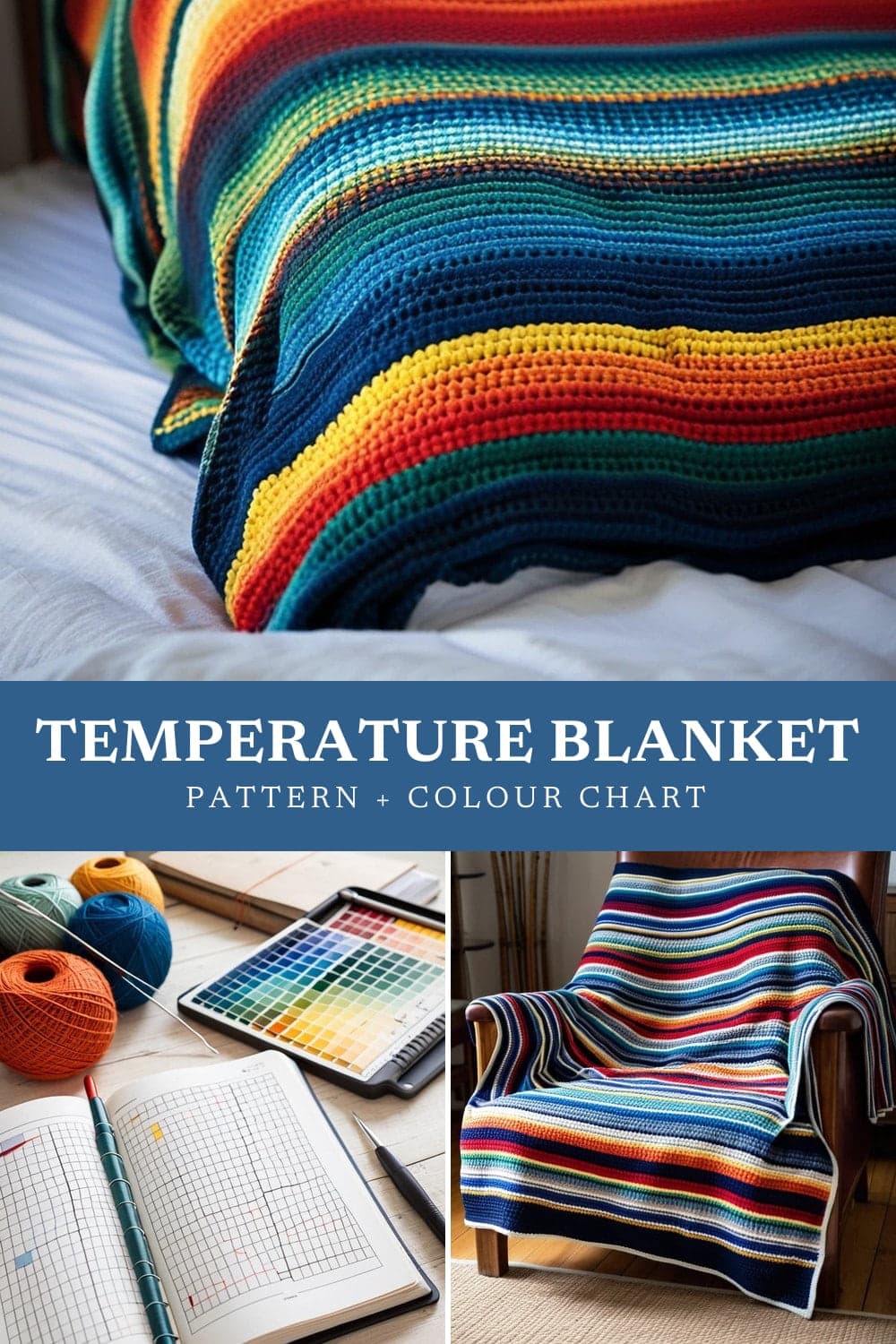
Pin this to your Pinterest board so it's there when you're ready to stitch.
Keep stitching
Related crochet projects
Blankets Crochet Hexagon Blanket: Free Granny Hexagon Pattern
8 min read
Blankets Corner to Corner Crochet Blanket: Easy C2C Pattern for Beginners
10 min read
Blankets Easy Ripple Crochet Blanket: Free Chevron Pattern for Beginners
10 min read
Flowers Crochet Flower Granny Square: Easy Sunburst Pattern for Beginners
13 min read